

























































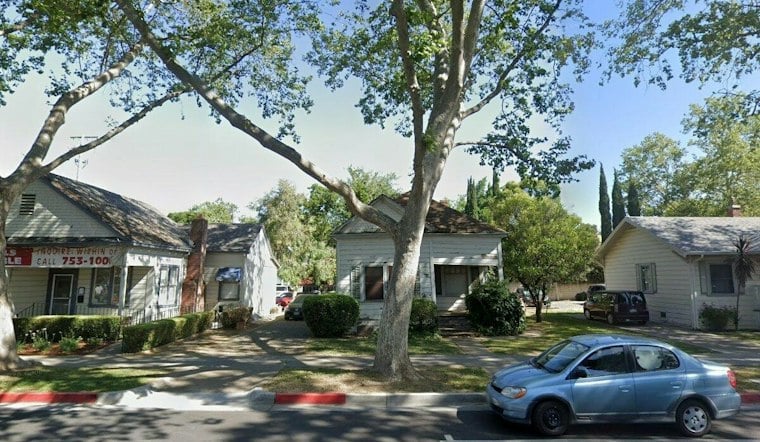
A 121-year-old house at 509 3rd Street in Davis is on track for demolition after the city’s appeal window closed Friday night with no formal challenges filed, clearing a path for officials to approve the teardown within the next several weeks. The home has sat empty for years, and its owner describes it as dilapidated, crumbling, and a magnet for unhoused campers — while at least one local preservationist calls the loss heartbreaking.
How the Demolition Request Moved Through City Hall
The City of Davis confirmed it received a request to demolish the structure and was processing it under Municipal Code Section 8.19, the city’s Demolition Ordinance, according to City of Davis public hearing notices. The city set a public-comment period running from Sept. 13 through Sept. 28, 2026, a span of 15 elapsed days, per the same notice. As reported by CBS Sacramento, no appeals were submitted by the deadline, and the city is expected to approve the demolition in the coming weeks.
Davis’s municipal code lays out why that review mattered: no demolition permit may be issued, nor may demolition occur within the city, without one, and structures at least 50 years old — which the 509 3rd Street house clears by seven decades — trigger additional historic-review procedures under a separate ordinance section tracked by the city’s codified demolition rules. If a building is ultimately not designated a historic resource, the code states plainly that a demolition permit shall be issued.
A House With Roots Back to 1897
The home appeared on a 1907 Sanborn fire insurance map, and Yolo County archives estimate it was actually built around 1897, per CBS Sacramento’s reporting. It was constructed for Lawrence L. Bowen, an owner of the long-closed Lillard & Bowen meat market, and by the 1930s the building had been transformed to house several businesses, including the Harold Grady music studio and the E.W. Berger radio repair shop. The city found in 2023 that the home was not historically significant, formally declaring it ineligible for historical-landmark designation that year.
Veronica Tramontini, who the station reports has traveled the country helping seniors and towns preserve history, said she finds the planned demolition heartbreaking. By her own account, she did not file an official appeal with the city — a step CBS Sacramento’s report notes would have cost several hundred dollars. The home’s owner, Andrew Dowling of Dowling Properties, filed the petition to demolish it and said the building is an eyesore, a safety hazard, and a campsite for unhoused people.
A Shelved Apartment Plan and an Uncertain Future for the Lot
Dowling Properties had previously proposed a five-story apartment complex on the block, but the company pulled that proposal. Dowling said the project was too risky and would not have made money, according to the station’s account — notably, the development would have been required to include affordable housing. Dowling Properties says it has no active plans for the lot after demolition and could potentially sell it.
Sherri Metzker, community development director for the City of Davis, said development feasibility hinges on financing, labor, and material costs, and that the city is trying to add housing supply amid California’s broader housing crisis, per the same CBS Sacramento report. The city is focused on infill development and is currently drafting its 2050 General Plan, with a community feedback meeting scheduled for Wednesday, October 14.
Davis’s Bigger Housing Squeeze
The 509 3rd Street case lands amid years of pressure on Davis to build more. The city was previously named one of 61 California jurisdictions whose housing element was considered out of compliance by the state, which left it subject to the builder’s remedy — a legal mechanism that generally limits a city’s ability to deny qualifying projects that include affordable units, according to The Sacramento Bee. The Bee also reported that state officials pointed to more than 260 housing units removed from a project called University Commons as a factor worsening the city’s shortfall, and that a 2020 regional housing assessment found Davis needed to zone land for 2,075 new units this decade, including 930 for very low- and low-income earners. The city received $610,000 in state funding to help build out a more comprehensive housing element, the Bee reported, with officials at the time planning to bring an updated plan to the City Council.
Other infill projects are already reshaping downtown Davis: the Sweetbriar townhomes are under construction at G Street and Sweet Briar Drive, the 240 G Street project is rising as mixed-use apartments, and the former Hibbert Lumber site at 500 G Street — sold after about 70 years in business — is being rebuilt as a mixed-use high-rise. The city is also drafting its 2050 General Plan.
Beyond downtown infill, Davis voters will weigh in directly on growth this cycle: Measure W is on the ballot, asking residents whether to approve the Willowgrove housing development, which would bring more than 1,200 homes to agricultural land on the city’s outskirts. The vote underscores the tension running through the 509 3rd Street case — Davis must meet state-mandated affordable-housing benchmarks even as residents and preservationists wrestle with which buildings, and which farmland, should give way to new construction.





