

























































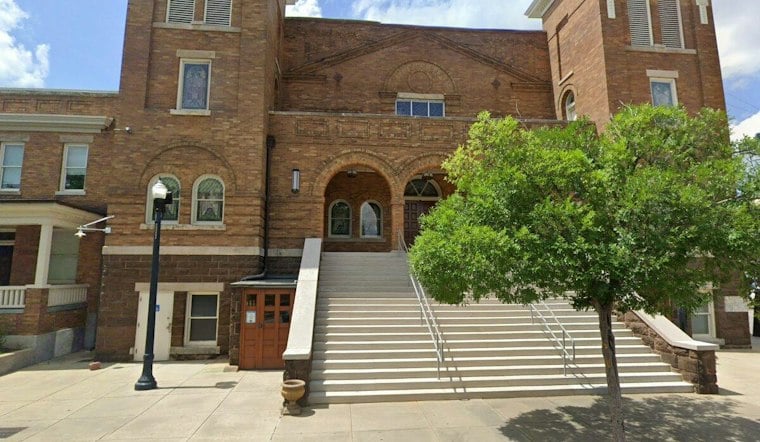
Sixteen Historically Black Colleges and Universities sent their sharpest students to Birmingham this week for the second annual Penny Games, a four-track competition that pits debate teams, esports players and ethical hackers against each other while asking them to solve real problems facing the city. Teams from Oakwood University, Alabama A&M University, Tuskegee University, Texas Southern University and Virginia State University are among those competing, with finals set for Saturday morning at Sixteenth Street Baptist Church.
The event, now in its second year, has roughly doubled in scale since its debut, according to BirminghamWatch. The first Penny Games drew 40 to 50 college students from across the nation, with most visiting Birmingham for the first time, and organizers used that inaugural run to introduce out-of-town students to the city through tours of the Smithfield neighborhood, the Birmingham Public Library's archives and Vulcan Park & Museum. This year's expanded footprint brings together student participants from 16 HBCUs across seven states, per The Penny Games, connecting regional talent with corporate sponsors whose backing ranges from $15,000 engagement tiers up to $250,000 title sponsorships.
Student teams are competing across four tracks this year: the Unheard Arguments debate track, the Unseen Champions esports track, and two tracks added for 2026, Uncredentialed Hackers for cybersecurity and Unfunded Ideas for case study work. In-person debate competitions are being held at the Birmingham-Jefferson Convention Complex, and those sessions are free and open to the public. Cybersecurity teams are competing virtually through Saturday, while esports teams play online until Sunday.
From a Church Basement Bank to a Church Stage
The decision to hold the Penny Games finals at Sixteenth Street Baptist Church is not incidental. The church was where the Rev. William Reuben Pettiford founded the Alabama Penny Savings Bank in 1890 in its basement, creating Alabama's first Black-owned financial institution, according to the Oxford African American Studies Center. Pettiford used Sunday church offerings to capitalize the bank so it could serve Black residents who were excluded from white-owned financial institutions, as detailed by CanvasRebel Magazine. The church itself received $200,000 from the Birmingham City Council in December 2024 toward a planned Education and Visitor Center, part of an ongoing expansion that includes a parsonage museum honoring early 20th-century Black leaders including Pettiford and architect Wallace A. Rayfield.
That history is baked into the Penny Foundation's name and mission. Founder and CEO Lyord Watson previously co-founded the Birmingham Change Fund giving circle in 2003 before launching the foundation as a permanent community chest for Black philanthropy, modeling it in part on Pettiford's bank. Watson earned business and divinity degrees from Samford University before creating the competition, according to the same CanvasRebel profile. Speaking about the games' location, Watson said Birmingham is the perfect place for the Penny Games, per BirminghamWatch's reporting, and added that the competition creates space and opportunity for young people to compete.
From One Debate to a National League
The Penny Games did not start as a four-track spectacle. Its precursor, the 2023 Southern Scholars Debate Classic, launched as an exhibition debate between Samford University and Howard University, a historically Black university in Washington, D.C., paired with a career-prep showcase for high school students. Both that event and its successor were designed to give college students a chance to compete in intellectual games while also promoting those pursuits to younger students, the station reported.
That early debate work has since grown into something more permanent for the city. The Southern Scholars Debate Classic inspired creation of a debate league, and the Urban Debate League built a Birmingham debate league out of the college-level work, which organizers describe as up and running and flourishing. Last year's inaugural Penny Games crowned the Alabama A&M University Debate Team as champion, earning the team a $10,000 prize after three days of debate and esports competition, according to the Penny Foundation's Facebook page. Texas Southern University student Peter Agu won the individual esports championship that same year.
This Year's Debates Tackle Data Centers and Philanthropy
Thursday's opening debate topic focused on the environmental impact of hyperscale data centers, while Friday's round turns to the role of public philanthropy in large communities, according to BirminghamWatch. The debate competition wraps with an exchange on non-violence and social justice. Student teams present their cases on Friday, with Penny Games awards announced the same day.
Pitching a Black Arts District for Ensley
The newly added case study track asks teams to develop proposals for a Black Arts District in Ensley, a historic neighborhood where local arts organization The Flourish Alabama already operates a venue called The Greenhouse. Ensley's 19th Street corridor has become a hub for local creatives through community block parties and arts workshops, The Birmingham Times reported in July.
The student assignment mirrors active city policy. The City of Birmingham's Office of Business Diversity & Opportunity awarded a 2026 Building Opportunities for Lasting Development, or BOLD, grant to The Flourish Alabama to support arts education, artist employment and Black Arts District development in Ensley, part of a program that funds economic development projects across Birmingham's 99 neighborhoods. Students working on the Unfunded Ideas track are effectively drafting solutions alongside a municipal initiative already underway in the same neighborhood.
A Foundation With Deep Local Roots
The Penny Foundation's reach in Birmingham extends well beyond the competition itself. In July 2025, the foundation partnered with the city on a $43,000 incentive program offering $500 grants to Birmingham City School families to combat chronic absenteeism on the first day of school, with two families per school randomly selected for no-strings-attached support, according to Birmingham City Schools. Since its founding, the foundation has managed 40 active funds and fiscal sponsorships, raised more than $4 million from over 855 donors, and assisted more than 100 Black-owned small businesses and nonprofits across Alabama, according to the Penny Foundation.
Watson has framed the Penny Games as part of a broader effort to strengthen Birmingham's pipeline of young talent and connect participating students to employment opportunities, aiming, in his words, to provide important opportunities for students. With finals now set for Saturday morning at Sixteenth Street Baptist Church, organizers are betting that the mix of competition, history and civic problem-solving keeps drawing students back to a city many arrived in for the first time just last year.





