

























































From October 2 through 4, the New York Burlesque Festival presented a multi-night program at Sony Hall, 3 Dollar Bill in Brooklyn and Le Poisson Rouge. Each venue hosted more than ten professional performers, with the program spanning live music, comedy, circus arts, storytelling and vintage-inspired striptease. Performers traveled from as far away as Australia for the festival’s 24th year.
Coverage by amNewYork included the Premiere Party and Saturday Spectacular. Photographers Hailey Hunt and Nina Combs captured scenes at Sony Hall and 3 Dollar Bill. The outlet described the festival as one of the largest and longest-running annual burlesque events.
Performers in the festival lineup included Luma Rouge and Moxie Mayday.
A Festival Built Over Two Decades
The New York Burlesque Festival began in 2003, co-founded by nightlife producer Jen Gapay of Thirsty Girl Productions and burlesque star Angie Pontani, according to Wikipedia. The festival is a multi-venue event, with Sony Hall, 3 Dollar Bill and Le Poisson Rouge hosting performances this fall, regularly featuring more than 100 international performers across its run.
Leadership behind the festival has shifted in recent years. Following the 2023 festival, Pontani retired from co-producing the event after two decades at its helm; Gapay, of Thirsty Girl Productions, is a festival producer, according to the New York Burlesque Festival's own account of its producer history. The festival's reach extends beyond its flagship event; Gapay's team also co-founded the NY Asian Burlesque Festival in 2012 alongside performer Calamity Chang to boost visibility for Asian-heritage performers, and Gapay started the New York Boylesque Festival in 2012, per Time Out.
Venues Steeped in NYC Performance History
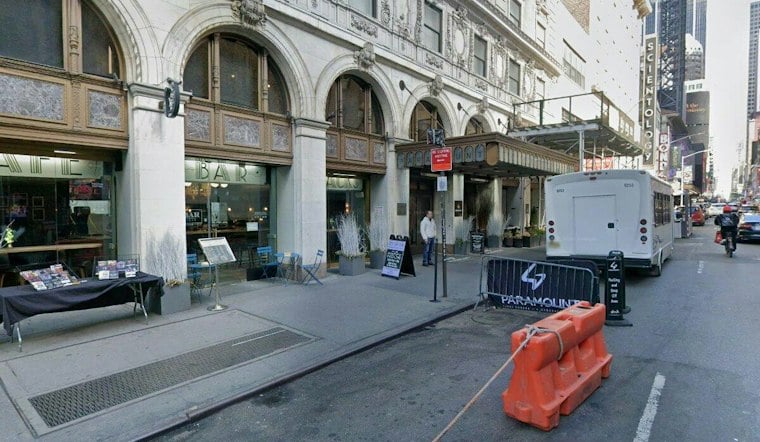
The three host venues each carry their own place in New York's entertainment lineage. Sony Hall was formerly Billy Rose's Diamond Horseshoe.
In Brooklyn, 3 Dollar Bill was one of the festival's host venues.
The Venues and the Wider Nightlife Economy
3 Dollar Bill describes itself as a Brooklyn queer nightclub, live music and performance venue, giving the festival’s Brooklyn stop a distinct performance-space context. Sony Hall, by contrast, was formerly Billy Rose’s Diamond Horseshoe. A citywide study announced by the Mayor’s Office of Media and Entertainment found that New York City nightlife’s five subsectors had a direct economic impact of 196,000 jobs and $19.1 billion in economic output in 2016. Those figures describe the broader nightlife sector, not the festival.
NYC Repealed Its Cabaret-License Requirement
The festival's growth has unfolded against a backdrop of changing rules around dancing and live entertainment in New York. In 2017, New York City amended its 91-year-old Cabaret Law, enacted in 1926, to repeal the cabaret-license requirement for patron dancing at commercial establishments, according to the city's own account of the repeal at NYC.gov.
Beyond the stage, the festival has also offered interactive elements and paraphernalia for purchase. Gapay's résumé outside the festival also stretches into Brooklyn's outdoor spectacle tradition: she coordinated Coney Island USA's annual Mermaid Parade in 2016 and 2017 and was special events director for Astroland from 2003 to 2008; she currently produces special events for Deno's Wonder Wheel Park, according to Thirsty Girl Productions.




