

























































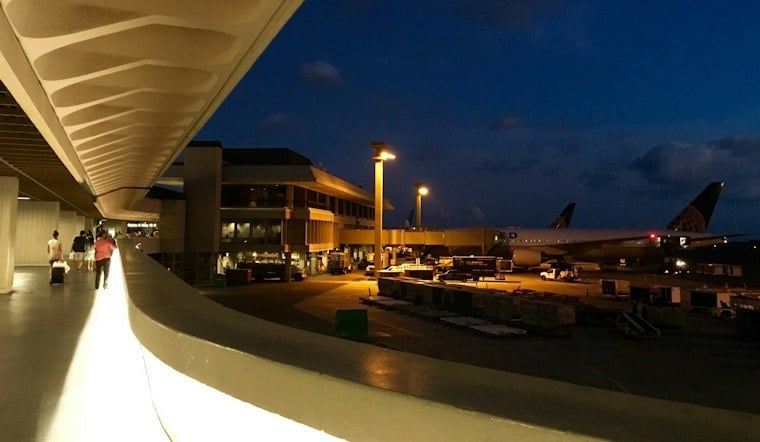
For 258 participants at Daniel K. Inouye International Airport, the rehearsal was a chance to experience air travel without taking a trip. A Hawaiian Airlines Airbus A330 pushed back from its gate and taxied on the tarmac, but stayed on the ground during what the airline called its largest-ever disability practice flight in Honolulu.
Organizers built the exercise around the airport routines that can be unfamiliar or challenging for travelers with autism, sensory sensitivities and other disabilities. Participants checked in, got boarding passes, passed through security, located their gate and boarded, according to Hawaii News Now. The event was organized with Never Quit Dreaming, the Hawaiʻi Autism Foundation and Autism Society of Hawaii.
The exercise was Hawaiian Airlines’ first practice flight using a widebody aircraft, making room for more participants and families than earlier events, the outlet reported. Shelly Parker, the airline’s head of Hawaiʻi Guest Operations, said, “We want every guest to feel welcome and confident when they travel with us.”
A Program With Roots Going Back a Decade
Sunday's event marked a resumption of practice flights in Honolulu, following a similar program the airline ran in 2016, the station's report notes. In the years between, Hawaiian Airlines also hosted The Arc's inaugural Wings for Autism event at Honolulu Airport, an earlier travel rehearsal that drew more than 30 families, according to KHON2. That version of the program also involved the Hawaii Autism Foundation and the Transportation Security Administration, per the same report.
Kristopher Dung, founder of Never Quit Dreaming, said advance practice helps families learn what to expect on a future trip. He described the events as a step toward participants taking part in activities more comfortably on their own, as the Honolulu program has grown from dozens of families to hundreds of participants.
Similar Rehearsals Are Spreading Beyond Hawaii
Disability-focused travel rehearsals are also held elsewhere. Tampa International Airport staged its second annual Wings for Autism event in July, with around 50 children with autism and intellectual and developmental disabilities and their families, according to Tampa International Airport. The Arc Tampa Bay Foundation and Southwest Airlines partnered on the event, where participants practiced airport routines and boarded a Southwest Boeing 737. Registration filled in less than an hour.
Practice Flights and Travel Support
A separate free Wings for All event for Pacific Autism Center for Education families took place at San Jose Mineta Airport on March 1, 2025, according to the Pacific Autism Center for Education. The San Jose event, like the Tampa and Honolulu exercises, offered families a chance to practice air travel; Honolulu’s rehearsal was distinguished by its 258 participants and use of a widebody aircraft. For help with security screening outside a practice event, the Transportation Security Administration says travelers can request a Passenger Support Specialist through TSA Cares at least 72 hours before departure, using its online form or calling (855) 787-2227. TSA also clarifies that airport wheelchair service is provided by the airline, not by TSA.
Federal protections also back up the broader push for accessible air travel. The Air Carrier Access Act makes it illegal for airlines to discriminate against passengers because of their disability, according to the U.S. Department of Transportation. Separately, the TSA Cares program is meant to provide assistance to travelers with disabilities, medical conditions and other special circumstances to help ensure a smooth security screening experience, per the Transportation Security Administration. A 2021 GAO report had previously examined barriers passengers with disabilities face at airports and how the Department of Transportation oversees airlines' disability-related training.
For now, the rehearsal in Honolulu stands as a marker of how far these programs have scaled locally, from a 2016 pilot effort to a 258-person widebody exercise. Whether Hawaiian Airlines plans another round, and on what timeline, wasn't addressed in the airline's comments reported by Hawaii News Now.





