

























































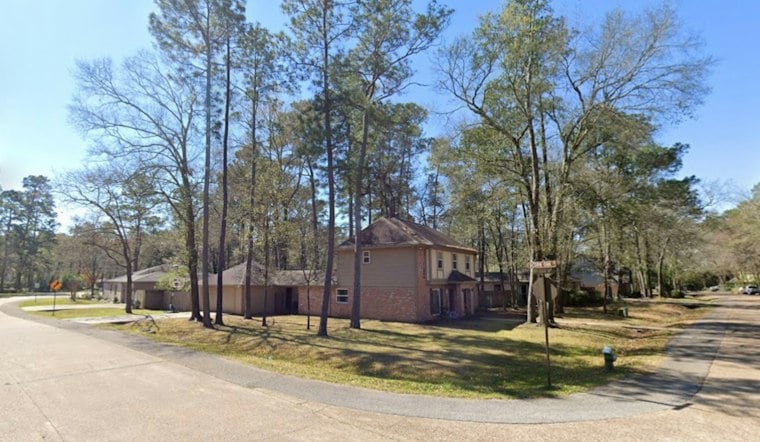
Thirty-two of the 79 homes in Acorn Oak are currently flagged for deed-restriction violations, putting about 40% of the subdivision in active cases. The situation also involves absentee owners, foreclosures and maintenance violations.
The Houston Chronicle reported that a September meeting, where residents raised concerns about squatters and roof damage at a vacant property, prompted the township to form a dedicated task force. The task force stepped up monitoring beyond the standard six-week inspection cycle and opened 16 new cases, the report said. Resident John Makar described the neighborhood as experiencing a “slow deterioration” and pointed to a home on Blackjack Oak Circle with holes in its roof that he said had housed squatters since the owner died several years ago, according to the Houston Chronicle.
A Legal Fight Years in the Making
The township's most advanced enforcement case involves that Blackjack Oak Circle property. The Houston Chronicle reported that The Woodlands Township sued Angela Renee Hopper, independent administrator of the estate of Michael Allen Gray, alleging the yard went unmaintained, pine needles and leaves accumulated on the roof, vines spread over the brick, trash gathered around the home and multiple no-trespassing signs were posted. In November 2023, a Montgomery County court entered a default judgment ordering Hopper to bring the property into compliance and pay $3,031.25 in attorney's fees, the Chronicle reported.
The judgment also authorized township crews to enter the property and address the violations. The Chronicle reported that crews found more extensive structural damage at the back of the home than the original suit described. Development Standards Committee Chairman Arthur Bredenhoft said the township is seeking to amend the judgment and will wait for the court's response.
A Separate Court Precedent
A distinct precedent came in 2001, when the Texas Fourteenth Court of Appeals affirmed a permanent injunction in a Houston deed-restriction dispute over a garage that violated a setback rule. That case concerned construction, not the maintenance problems at the Acorn Oak property.
Why Fines Alone Won't Fix It
The Woodlands can't simply write a ticket. As an unincorporated special-purpose district rather than an incorporated city, the township cannot enact criminal municipal codes or zoning ordinances, according to Woodlands Online. Deed-restriction violations can be pursued through civil court. Under Chapter 209, associations generally must send formal written notices offering a reasonable cure period before fining owners for curable violations, except when an owner received notice for the same or a similar violation in the preceding six months; owners also have a right to a hearing, per RMWBH Law.
In each village, elected volunteer Residential Design Review Committees review applications for property modifications. Covenant Administration handles violation cases, with cases referred to the seven-member Development Standards Committee for formal legal action. Bredenhoft said legal action must be authorized before the process even begins and that the timing of court proceedings varies case by case. Township leaders Kim McKenna and Brad Bailey have both weighed in on the Acorn Oak situation: McKenna noted the enforcement process is the same whether a property is owner-occupied, tenant-occupied or vacant, while Bailey said many subdivision homeowners simply don't live in their homes and that other properties sit in foreclosure, adding that the township is using every legal tool available to remedy the violations.
Data Gaps Complicate the Picture
Township officials acknowledged they lack data on how many Acorn Oak properties are currently in foreclosure and could not say how many homes in the subdivision are owned by nonresident owners, limitations that make it harder to target enforcement efforts precisely. Covenant Administration, the township department handling the cases, assists residents with exterior home-improvement projects and ensures compliance with covenants that function as legally binding deed restrictions — rules that require permits for additions like fences and pools, approval before removing any tree six inches or larger, and homes painted in muted, natural harmonizing colors. The covenants also prohibit fireworks, yard and estate sales, and parking in streets or on lawns, and they cap residents at three outdoor pets.
An Aging Village Shows Its Age
Much of Acorn Oak's housing stock dates to the 1970s, placing it among the oldest homes in Grogan's Mill — The Woodlands' original village, established in 1972 and now home to roughly 5,100 houses across 22 neighborhoods, as previously reported by Hoodline.
Unlike neighboring Oak Ridge North, which tightened municipal short-term rental rules under Texas Local Government Code Chapter 211, The Woodlands' deed covenants cannot restrict rentals outright without explicit language to that effect, a distinction Hoodline has detailed previously. For now, Acorn Oak remains a test case for how far civil covenant enforcement can stretch when nearly half a neighborhood falls out of compliance at once.



