

























































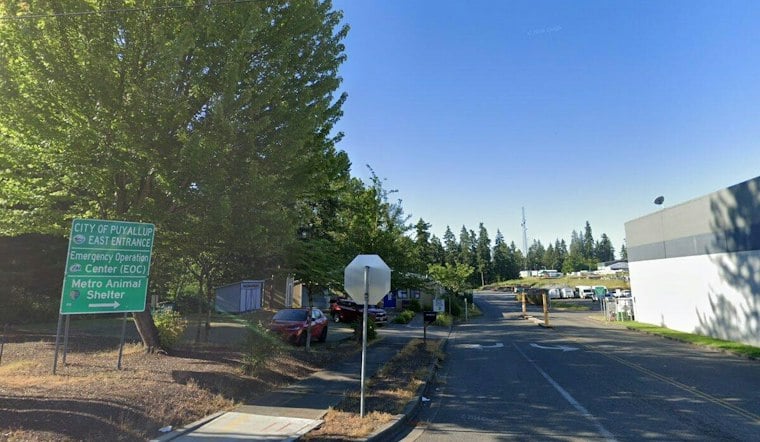
Metro Animal Services took in 44 cats this week after police asked the shelter for help clearing an apartment in Sumner following the owner's death earlier in the week, according to shelter staff. The shelter was already at capacity for cats before the intake, and staff say the sudden arrival has placed significant strain on operations.
According to KIRO 7 News, the owner's family members accepted the shelter's help and pitched in to contain the cats before Metro Animal Services transported all 44 animals to its facility. The shelter has stated this is not a cruelty or neglect investigation. Staff gave the cats examinations, vaccinations, and emergency housing upon arrival, and report the animals range in age from less than a month to 3 years old and are, overall, in good health and friendly with people.
A Shelter Already Stretched Thin
Metro Animal Services is a regional consortium managed and operated by the City of Sumner, with its physical shelter located in Puyallup, providing animal control and sheltering for six eastern Pierce County municipalities as of September 2026, according to the City of Sumner. Those partner cities include Sumner, Puyallup, Algona, Bonney Lake, Edgewood, and Pacific. The shelter's footprint shrank slightly last month, when the neighboring city of Milton officially opted out of receiving animal control and sheltering from the consortium effective September 1, transferring local animal response duties to its own police department; Milton had previously been one of seven participating member cities.
A sudden intake of 44 cats adds substantial pressure to a shelter that was already at capacity. Shelter operations across the partner cities are funded primarily through pet licensing and donations, leaving little financial cushion for an emergency intake of this scale.
The Shelter Is Encouraging Adoptions
The shelter is encouraging adoptions as it works through the intake. Shelter officials say every adoption gives staff and volunteers one more kennel, helping the newly arrived cats decompress and become adoption-ready. The public can adopt other cats and kittens already at the shelter, and officials are also asking for donations of non-clumping kitty litter.
Before any of the 44 can go up for adoption, they need to be spayed or neutered — a process that will determine how quickly the shelter can clear the backlog without compromising standard intake duties across its six member cities. The shelter is also seeking donations toward spay/neuter services, vaccinations, microchips, and other needed medical care, which officials say helps keep adoption fees as low as possible for the public.
How One Home Produces Dozens of Cats
Cases like Sumner's aren't isolated. Veterinary research compiled by Catster shows that an unspayed female cat can produce up to five litters a year, with four kittens on average and litter sizes ranging from one to 12, allowing an unneutered household population to grow exponentially in a short span given that feline gestation lasts roughly 64 to 71 days. That biology helps explain how a single residence can end up housing dozens of animals.
Pierce County has seen the pattern before. In August, animal control officers in neighboring Tacoma rescued more than 60 cats and kittens from an abandoned boat off Owen Beach, an effort featured in a KING 5 News update. Regional shelters have also raised surrender costs to cope with the strain — the Humane Society for Tacoma & Pierce County bumped its base owner surrender fee to $400 per animal in June 2025, citing rising care costs amid persistent overcrowding, and pets spend just over nine days at the shelter on average. Metro Animal Services' own surrender fees are far lower for residents of its partner cities: $75 per adult cat or dog and $15 per kitten under seven months, with a $125 flat fee for non-residents.
Planning Ahead for Pets
Situations like this one point to a gap in estate planning that many pet owners never address. Under Chapter 11.118 of the Revised Code of Washington, pet owners can establish legally enforceable pet trusts to allocate funds and designate caregivers for their animals after death, a mechanism the state validated in 2001 specifically to ensure trust assets go toward beneficiary pet care. Without that kind of planning, informal pet ownership can leave grieving families and local shelters to absorb sudden financial and spatial strain, as the 44-cat intake in Sumner illustrates.
For now, the priority at the Puyallup shelter is finding space and resources for the new arrivals while continuing to serve its six member cities. Anyone interested in adopting, fostering, or donating litter and medical supplies can reach out to Metro Animal Services directly as the shelter works through the spay/neuter backlog that stands between these 44 cats and new homes.



