

























































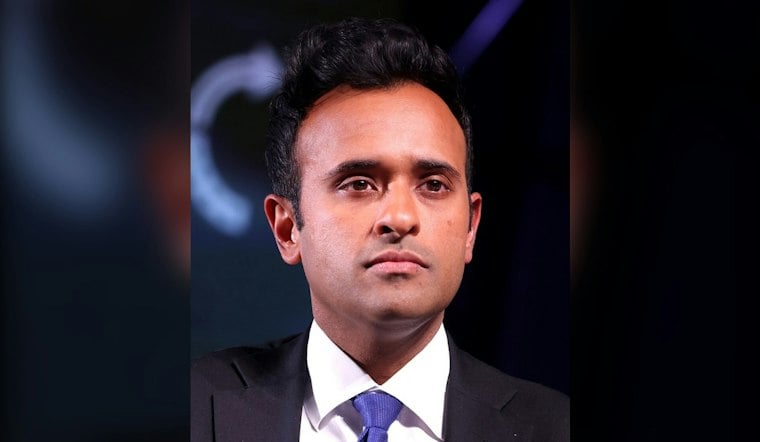
Ohio gubernatorial candidate Amy Acton pulled a larger share of her September campaign cash from small checks of $100 or less than Republican rival Vivek Ramaswamy did, according to a new breakdown of state campaign finance filings. The analysis looked at individual transactions rather than unique donors, meaning it shows how money flowed in, not necessarily how many people gave it.
According to an analysis by Cleveland.com, Acton's campaign took in $2,158,814.11 from positive transactions of $100 or less in September, while Ramaswamy's campaign collected 29.5% of its September individual-contribution dollars from that same small-dollar bracket. Ramaswamy's campaign reported $2,862,585.20 in total individual contributions for the month, the analysis found. The comparison excludes loans, other income, and contributions of goods or services, and it covers September alone rather than cumulative fundraising or total campaign resources.
The analysis also cautioned that it counted individual transactions, not unique donors — so three separate $50 contributions from the same person would count as three transactions in the $100-or-less category rather than one. That means the figures do not establish which campaign had more donors overall, broader support, or less donor concentration, per the same analysis.
September Totals Favor Acton by a Wide Margin
Including organizational contributions, Acton's campaign reported a September monetary total of about $6.07 million, compared with about $3.06 million for Ramaswamy's campaign, the outlet's analysis found. That gap tracks with separate reporting from the Ohio Capital Journal, which found Acton's campaign raised slightly more than $6 million in September, out-raising Ramaswamy nearly two to one that month.
More than $5.5 million of Acton's September contributions came from individuals, and 63% of that amount, or $3.5 million, came from Ohioans, the Ohio Capital Journal reported. The outlet also reported that Acton outpaced Ramaswamy in fundraising in each of the three preceding months — July, August and September.
NBC4 WCMH-TV offered a similar two-month snapshot: in August and September combined, Ramaswamy raised $5.6 million while Acton raised $10.1 million, according to the station's report. The Acton campaign itself announced it raised more than $13.2 million in the third quarter of 2026, including $6 million in September, and said more than 95% of its contributions were $100 or less, according to a statement posted on the candidate's own campaign site.
Ramaswamy Leans on Personal Fortune and Outside Money
While Acton has led in monthly fundraising totals, Ramaswamy has leaned heavily on his own wallet to keep pace. In August and September, Ramaswamy made more than $5 million in loans to his campaign, and in all he has staked more than $36 million of his personal fortune on his bid for governor, per the same Ohio Capital Journal account.
Outside groups have also poured enormous sums into the race. Republican-aligned groups had spent or reserved more than $100 million in advertising in the governor's race, compared with about $40 million from Democratic groups, according to a separate Ohio Capital Journal report. A Super PAC aligned with Ramaswamy, known as V-PAC, reported raising more than $18 million in its most recent quarterly report, and billionaire investor Jeff Yass wrote Ramaswamy a $10 million check through that same aligned Super PAC, the outlet reported.
Through the end of June, Ramaswamy's campaign had reported slightly more than $12 million in direct advertising spending, compared with $3.3 million for Acton's campaign over the same period, according to the Ohio Capital Journal's reporting.
Caveats Behind the September Numbers
The transaction-level comparison comes with several built-in limits. Beyond the donor-count caveat, the figures do not establish whether contributors with Ohio addresses are actually Ohio voters or residents — the data simply reflects addresses listed in the filings, not confirmed residency or voter status.
Both campaigns' filings also included a small number of entries with blank or unclear state information, and those were still counted in the denominator for individual-contribution percentages even though they weren't tallied as Ohio contributions. Acton's filing included one negative $1,000 entry tied to a California address that the underlying export did not explain, and that entry was not categorized among the positive transaction-size totals. Cleveland.com's analysis further noted that stripping out anonymous, trust, LLC, or trustee-labeled entries from the individual-contribution category would not change the transaction-size percentages or reverse either campaign's standing in the comparison.
Acton won the Democratic nomination for governor in May, and Ramaswamy won the Republican nomination the same month, after which Gov. Mike DeWine assigned state security details to both candidates. The September figures represent just one snapshot in a race where both money and messaging are expected to keep escalating heading toward the general election.




