

























































Wisconsin’s 2026 loss of federal CCAMPIS grants leaves student parents facing a patchwork of campus responses rather than a common replacement for subsidized child care. The U.S. Department of Education funded 40 campuses nationwide with just over $71 million, and no Wisconsin school received an award, according to New America and Wisconsin Watch.
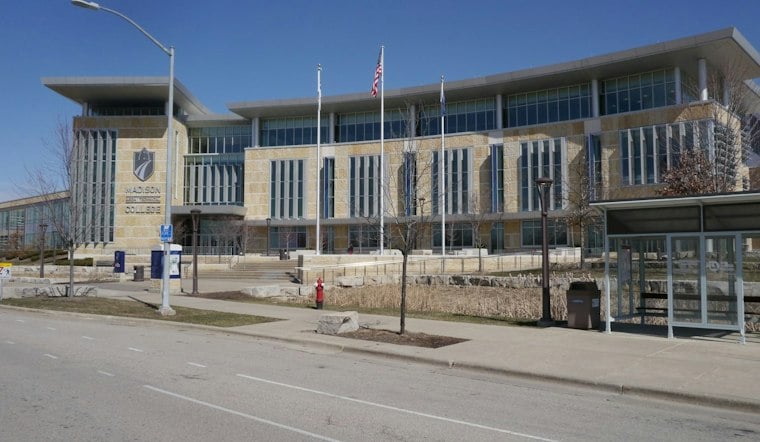
The financial change is already visible for some families. Madison College student Devvin Thomas Sr. said his child care bill rose to $1,700 this fall after previous semester bills as low as $10 or $400, and sometimes nothing, with grant assistance helping cover his son’s care, Wisconsin Watch reported. CCAMPIS commonly covered 75% to 95% of participating parents’ child care bills, the report said.
Replacement support is uneven
Madison College’s immediate response is limited foundation aid: the college provided $30,000 this semester to help families pay 25% of child care costs, according to Wisconsin Watch. The college had received roughly $300,000 a year in federal support over the preceding four years, the report said. That one-semester assistance offers some relief, but it is not the same funding stream or level of support.
Milwaukee Area Technical College has a different, narrower service already in place. Its Little Stormers Village offers free, first-come, first-served drop-in care on weekdays from 9 a.m. to 3 p.m. for children from 6 months through 10 years; students may use it for up to three hours, according to MATC. The college had hoped to use CCAMPIS money to subsidize drop-in care and expand tuition assistance, Wisconsin Watch reported. A limited-hours drop-in center is an option for some needs, not a substitute for ongoing child care.
At UW–Madison, the 2026 award loss ended 27 consecutive years of CCAMPIS support, from 1999 through 2025. The university’s Office of Child Care and Family Resources says its separate Child Care Tuition Assistance Program remains active, however. Western Technical College, which serves about 100 students a year through grant-funded on-campus care, had also planned to use federal funds for staff retention bonuses and student apprenticeships and internships, Wisconsin Watch reported.
The wider constraint is the supply of care
Campus aid operates within a child care market where both prices and provider capacity matter. Wisconsin DCF’s 2026 Market Rate Survey found that median monthly infant-care prices rose from March to December 2025 from $1,447 to $1,587 in urban areas and from $934 to $978 in rural areas. These are category medians, not the prices faced by every family. A separate 2024 Wisconsin DCF report, authored by UW–Madison’s Institute for Research on Poverty, found that providers described mismatches between available places and family needs; some could not enroll more children in high-demand age groups because of licensed-capacity rules.
Staffing presents another documented pressure on providers, though it does not explain why particular colleges lost their federal awards. In a 2024 statewide survey, 35% of providers said keeping staff or filling vacancies had been extremely or very challenging since Child Care Counts stabilization funding was reduced in May 2023. Among providers facing staffing challenges, 52% said they had raised tuition as a result, according to the Institute for Research on Poverty.
A previous renewal gap, but a different funding episode
The 2026 Wisconsin rejections were not the first time a campus faced uncertainty when a CCAMPIS competition was unavailable. The Daily Yonder reported in February 2026 that UW–Whitewater’s grant was due for renewal in 2025 while applications were closed, leaving the campus children’s center and student parents uncertain about its future. That earlier renewal gap is distinct from the 2026 competition in which Wisconsin schools applied and received no awards; it is one example, not evidence of a growing pattern.
New America reports that the Department of Education did not hold competitions in 2024 or 2025, then reopened a four-year competition in 2026. It remains unclear whether another competition will be held in 2027. For Wisconsin campuses, the immediate question is how far their existing aid and services can go while parents continue to seek care in a market shaped by high prices, staffing difficulties and limits on provider capacity.





