

























































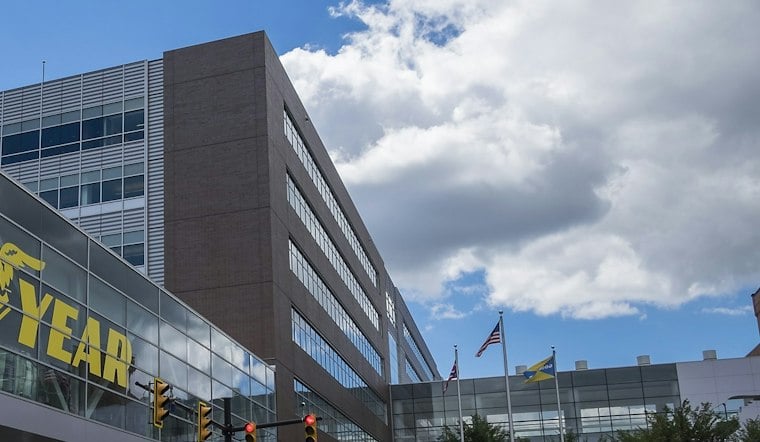
A federal jury in Boston convicted Eric Tabaro Nshimiye, a longtime Goodyear Tire & Rubber Co. engineer from the Akron area, of perjury and obstruction of justice this week, finding that he lied under oath about his role in the 1994 Rwandan genocide. The 54-year-old had spent decades building a quiet professional life in Ohio before his arrest in 2024 unraveled a past prosecutors say he worked hard to bury.
A Verdict Years in the Making
The jury found Nshimiye guilty of four counts of perjury and one count of obstruction of justice, according to the Department of Justice. The charges stemmed from testimony Nshimiye gave during the 2019 immigration-fraud trial of Jean Leonard Teganya, his former college roommate, as reported by wsau.com. Teganya, described as a militia leader, was convicted on several counts and later sentenced to eight years and one month in prison, per Cleveland.com.
When Nshimiye took the stand in that 2019 trial, he denied participating in the genocide or belonging to Rwanda's ruling Hutu-dominated party, the station's report notes. Prosecutors needed only to prove that he lied about his own role in the massacre to secure a conviction, per the same account, and they said he falsified and concealed information about himself to hide his participation.
Allegations From the Genocide
Court filings described a horrifying set of allegations against Nshimiye, who prosecutors said was an ethnic Hutu who joined the Interahamwe youth militia in 1994 while attending medical school at the University of Rwanda in Butare, according to the same Cleveland.com report. The genocide, which targeted the country's Tutsi minority, saw members of Rwanda's Hutu majority slaughter about 800,000 people over roughly 100 days, per that account.
Investigators alleged that Nshimiye and others captured, killed and burned the bodies of 25 to 30 Tutsis who had been hiding in a forest, and that he killed a woman and her 14-year-old son with a machete and a spiked club, the outlet reported. Prosecutors also accused him of instructing militia members to rape and kill six female students at his university, killing one of those students with a spiked club, and killing a Tutsi tailor who made medical coats for doctors at the university-affiliated hospital. Prosecutors further alleged that he raped a woman and marched her to a killing pit, where she escaped, though her children were killed. A trial judge dismissed a separate accusation, per Nshimiye's attorney, that he was with Teganya when militia members rounded up and killed four students in a dormitory.
Nshimiye's Life in Ohio Before Arrest
Before his 2024 arrest, Nshimiye had lived in the United States since fleeing Rwanda and arriving in Ohio in 1995, becoming a U.S. citizen in 2003, according to wsau.com. He worked as an engineer at Goodyear's Akron headquarters for decades, was active in his church, established a foundation to mentor young people interested in engineering, and had a family of four, per the Cleveland.com report. He was also found guilty of lying to Homeland Security Investigations agents during a 2024 interview at Goodyear headquarters.
At trial, his attorney, Maksim Nemtsev, presented six character witnesses, friends and co-workers, who described Nshimiye as a “peaceful man,” the outlet reported. His family attended every day of the proceedings, according to Nemtsev. Prosecutors had dropped a count accusing Nshimiye of lying about his role in the genocide to obtain U.S. citizenship before the case went to trial, and his other convictions will not affect his citizenship status.
Defense Vows to Keep Fighting
Nshimiye's defense argued the charges were based on fabricated accusations and that he was not even in Butare when the violence began, per wsau.com. Kurt Kerns, identified in that report as his lawyer, said the defense team was disappointed with the verdict and would “continue to pursue all avenues of relief.” Nemtsev echoed that sentiment, saying, “We're deeply disappointed by the verdict, but we also respect the jury's role in our justice system,” and adding that he believes Nshimiye is innocent and will continue to fight on his behalf, according to Cleveland.com.
Nemtsev has said he plans to appeal the conviction and asked a judge to release Nshimiye from custody before sentencing, noting that his client has served nearly three years in pretrial detention and that federal sentencing guidelines put his range at about three years. The trial itself lasted nine days and included 21 witnesses, 12 for the prosecution and nine for the defense, before the jury deliberated over parts of two days and returned its verdict this week.
Sentencing Set, Though Date Disputed
Accounts differ on the exact sentencing date: wsau.com reports Nshimiye is scheduled to be sentenced on January 26, while Cleveland.com reports that U.S. District Judge F. Dennis Saylor IV set sentencing for January 27, 2027. Either way, Nshimiye's case follows a pattern of federal prosecutions targeting Rwandans and Rwandan-Americans accused of concealing genocide-era conduct on immigration paperwork, including a case publicized by U.S. Immigration and Customs Enforcement involving a Rwandan woman convicted of visa fraud and perjury over her account of her activities during the 1994 genocide.





