

























































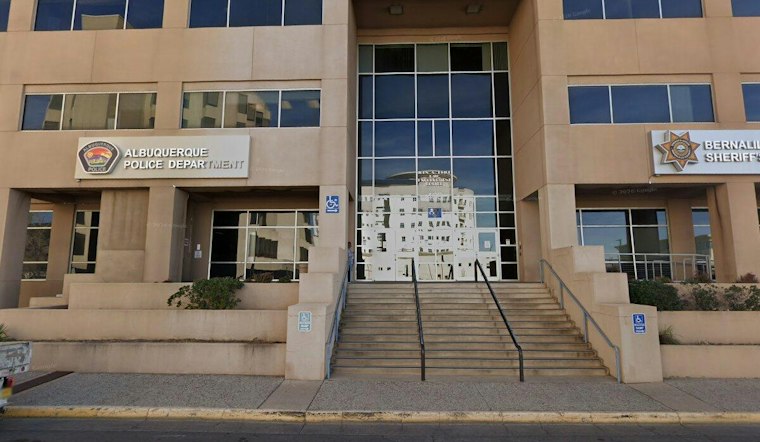
Protesters marched through Albuquerque on Thursday night, walking from Robinson Park to Albuquerque Police Department headquarters as part of a rally against police brutality. Marchers carried signs, chanted along the route, and were accompanied by police who blocked streets as the crowd moved toward APD headquarters, where the demonstration ended on the building's steps.
A Demonstration Tied to National Police Brutality Day
The march fell on National Police Brutality Day, which is observed nationally on October 22 and was established in 1996. As reported by KOAT, protesters used the occasion to call for greater police accountability, with demonstrators saying they wanted change, more support for people in crisis, and real protection from police rather than fear of them. One protester said simply that police repeatedly brutalize and kill people without consequences, and that it is wrong.
Protesters also said they believe several people were unjustifiably killed by police in Bernalillo County this year, though that broader claim reflects the demonstrators' own characterization rather than an independently verified count. The rally echoed an earlier demonstration in June, when protesters and relatives of Jose Armas and Robert Salas marched the same route from Robinson Park to APD headquarters after both men were fatally shot by APD officers within the same week, according to the Daily Lobo.
The Jose Armas Case Remains a Flashpoint
The May shooting death of 23-year-old Jose Armas has remained central to the protest movement. His family called 911 after he was reportedly having suicidal thoughts, and the encounter began as a welfare check, according to KOAT. Armas initially went outside to speak with officers, but police said less-lethal force was used and proved ineffective, after which he returned inside the residence.
Police and the Armas family have offered conflicting accounts of what happened next. Police said Armas fired at officers and that two officers were injured by shattered glass, while the family disputed that version, with one relative telling KOAT, “He did not fire at them. He shot in the air, nowhere near them.” KOAT has reported that body-camera footage shows Armas firing at police inside his home during the May incident.
According to APD, officers Tyler Sanchez and David Werner exchanged gunfire with Armas following a standoff at a North Valley apartment complex on May 26. The station's report noted that APD said the officers were struck by shrapnel from breaking glass after Armas fired at a police vehicle from an upstairs window. APD Chief Cecily Barker said the standoff lasted more than 45 minutes and involved efforts to communicate with Armas and de-escalate the situation, per the same account.
At Thursday's rally, one protester said Armas's family could not be by his side or help de-escalate the situation as APD escalated it instead, and another protester said the officers involved in the shooting remain on the force. The case remains under investigation; as of July, the Multi-Agency Task Force planned to forward its findings to the District Attorney's Office to determine whether criminal charges would be filed, KOAT reported.
A Second Fatal Shooting Fuels the Same Movement
Three days after Armas was killed, 35-year-old Robert Salas died on May 29 at an abandoned Walgreens at Central Avenue and San Mateo Boulevard, according to the Daily Lobo. APD released 58 seconds of body-camera footage showing Salas carrying a knife and running toward an officer before he was shot four times, the outlet reported. The two deaths, coming within a week of each other, helped drive the first wave of protests in June, when marchers called for justice for both Salas and Armas and for others killed by APD officers in recent years, while relatives pressed for released footage and different police responses to mental-health crises. That earlier march ended with a vigil on the APD headquarters staircase, where family members addressed the crowd.
Family members and friends of Armas had already taken that message to the streets days after his death, holding signs reading “Stop police brutality” and “Stop killer cops” and calling for reforms within APD, according to the Albuquerque Journal. City Councilor Nichole L. Rogers had separately flagged the broader pattern, noting that APD deployed deadly force four times within a two-week span and that the department reported six officer-involved shootings so far in 2026, according to a statement from the City of Albuquerque.
Oversight Findings in a Separate APD Case
Apart from the Armas and Salas cases, Albuquerque's civilian oversight process has weighed in on a use-of-force matter stemming from a June 29, 2023 incident, which the oversight board reviewed on January 9, 2025. A findings memo from the Civilian Police Oversight Agency and its oversight board concluded that the use of force in that case was not within policy, agreeing with APD's own determination, and the memo identified potential policy violations and training considerations for multiple officers, according to the City of Albuquerque CPOA/CPOAB findings memo. That finding applies to its own case and was not presented as a conclusion about the Armas or Salas shootings, which both remain under separate review.





