

























































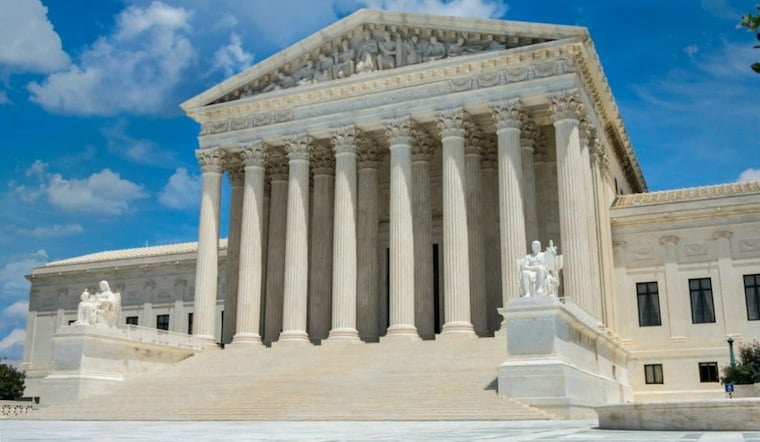
Supreme Court Justice Samuel Alito says there is little the nation's highest court can do to stop the surge of emergency appeals flooding its docket, and he expects the trend to keep going. Alito made the remarks in an interview in his Supreme Court chambers in Washington, D.C., on Sept. 29, 2026, offering a rare public window into how the justices view a shadow docket that has exploded in size during the Trump administration.
“I'm afraid this is going to continue,” Alito said, according to an account relayed by CBS6 Albany, which reported that the justice cast doubt on any judicial fix for the growing backlog of urgent filings. Alito pointed to the increasing use of executive orders in place of congressional action as a root cause, saying that approach has led to more lawsuits and what he called “robust” lower-court rulings that then land on the Supreme Court's doorstep demanding immediate action.
As the Associated Press reported, Alito framed the court as essentially stuck: it has to rule on emergency applications as they arrive, whether or not the volume is sustainable. He also said the flood of applications will likely continue unless something changes — though he did not specify what that change would need to be.
A Docket Reshaped by Executive Orders
The numbers behind Alito's comments are striking. According to the same CBS6 Albany report, Trump has filed dozens of applications for immediate, though temporary, rulings — already exceeding the historic total from his first term. The New York Times reported that the administration's 41st emergency application this term matched the full count filed during Trump's entire first presidency, a threshold detailed in the outlet's recent account of how emergency filings have come to dominate the court's calendar and erode its traditional summer recess. Emergency applications continued through the summer.
The scale becomes clearer against historical context. Reuters has reported that Trump's first administration filed 41 such emergency applications in four years, compared with just eight combined requests from the George W. Bush and Obama administrations over the preceding 16 years. The Brennan Center's shadow docket tracker found that in the first 20 weeks of Trump's second term alone, the administration had already filed 19 emergency applications — matching the Biden administration's entire four-year total.
Trump's Win Rate at the High Court
The Supreme Court has sided with Trump on his emergency requests most of the time, per CBS6 Albany's report on Alito's comments. CNN has reported that Trump has won more than 70% of the emergency cases his Justice Department has brought during his second term, a stark contrast to Joe Biden, who won just over half of his emergency cases, according to the same CNN analysis. Reuters has noted that the court's 6-3 conservative majority includes three justices Trump appointed during his first term.
These wins are not permanent. CNN's reporting emphasizes that decisions on the emergency docket are not final rulings — they typically determine what happens to a policy while litigation over its underlying legality continues in lower courts. One notable exception came in September, when the court kept in place a district judge's injunction against Trump's mail-in voting restrictions, according to CBS6 Albany, rather than allowing the policy to take effect while the case proceeds.
Public Trust Hits Historic Lows
Alito's comments arrive as confidence in the judiciary has cratered. Gallup reported in September that just 46% of U.S. adults said they had a great deal or fair amount of trust in the federal judicial branch, including the Supreme Court — the fifth consecutive year that figure has stayed below a majority, according to Gallup's polling. The court's job approval rating stood at 34%, essentially tied with the record-low 33% measured in July, while 61% of adults said they disapproved of the court's performance altogether.
Taken together, Alito's remarks and the polling paint a picture of an institution under strain from two directions: a caseload reshaped by the pace of executive action, and a public that increasingly says it doesn't trust the result. Alito himself offered no roadmap for relief, saying during an interview in his Supreme Court chambers in Washington, D.C., that the flood of filings is likely here to stay unless the underlying dynamics driving them change.



