

























































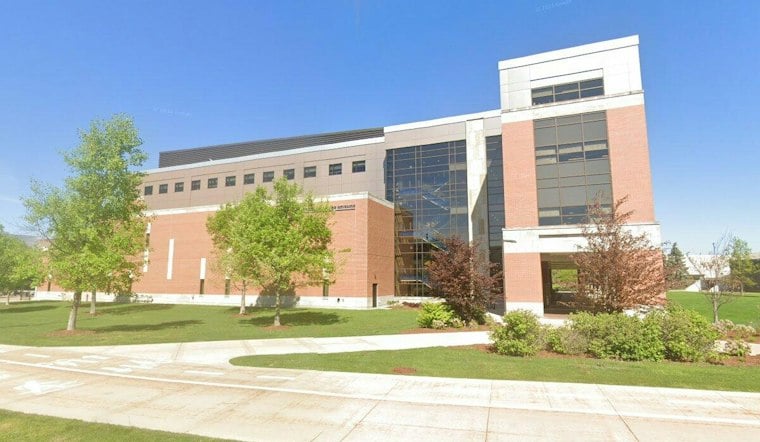
Grand Valley State University is bracing for another smelly spectacle: its corpse flower, nicknamed The Beast, is expected to bloom for the third time in four years. Visitors will be able to see and smell it once it opens, with peak bloom expected later in the week. The rare Amorphophallus titanum lives in the Barbara Kindschi Greenhouse inside the Kindschi Hall of Science in Allendale.
The plant was gifted to the university in 2015 by Tim Strickler, a professor emeritus of biomedical sciences, and has since become something of a campus celebrity under its ghoulish nickname.
A Bloom Schedule That Keeps Defying the Books
Corpse flowers aren't supposed to do this. GVSU's plant first bloomed in April 2022, a milestone GVSU noted typically doesn't repeat for another seven to 10 years. Instead, The Beast bloomed again in June 2024 — reaching full bloom on June 18 before beginning to close the very next day — and now appears ready to do it a third time in 2026, far ahead of the usual interval.
Other institutions describe the species' bloom cycle differently. The Frederik Meijer Gardens & Sculpture Park says a corpse flower typically blooms every seven to 10 years, while the Los Angeles Times reports that Huntington-grown plants bloom every two to three years. Either way, GVSU's plant has outpaced expectations, and the university has said the current timetable is significantly more prolific than anticipated.
Inside the Greenhouse Where The Beast Grows
The corpse flower lives in the tropical room of GVSU's greenhouse, kept at a steady 70 degrees with humidity hovering between 55% and 70%, per the station WOOD TV8. The plant grows in those conditions. The Los Angeles Times reports that its spadix can grow up to six inches a day, and Meijer Gardens describes the bloom as the largest unbranched inflorescence in the plant kingdom.
Native to the rainforests of Sumatra, Indonesia, the corpse flower produces its infamous stench to mimic rotting flesh, luring in flies, carrion beetles and flesh flies that pollinate it. Its stench grows more pungent as the plant reaches peak bloom.
A Brief, Fleeting Window to Catch the Smell
Whenever it finally opens, the window to experience it will be short. A corpse flower bloom lasts only 24 to 36 hours before it begins closing back up, making timing key for anyone hoping to see it. When the plant bloomed in 2022, it drew roughly 3,500 visitors.
The 2024 bloom happened while the plant was on loan to Frederik Meijer Gardens & Sculpture Park in Grand Rapids, where it was displayed in the Grace Jarecki Seasonal Display Greenhouse. Meijer Gardens has its own corpse flower, nicknamed Putricia, which last bloomed back in 2018.
This time, GVSU visitors can obtain a free day parking permit at the Parking Services office near the Lake Michigan Drive entrance, or use pay-to-park options on campus. The university says it will continue providing updates as the bloom progresses.
A Pattern Still Taking Shape
Corpse flower enthusiasm isn't unique to West Michigan. Earlier this year, the Huntington in Southern California prepared for blooms from two of its corpse flowers, Odora and Odorysseus, out of a collection of 43 specimens — one of the largest in North America, according to the Los Angeles Times. Odora had last opened in 2024, while Odorysseus was gearing up for its first public bloom.
Whether GVSU's accelerated bloom cycle reflects a new normal for The Beast remains to be seen. For now, campus officials are simply watching and waiting, ready to throw open the greenhouse doors the moment nature decides it's showtime again.





