

























































What voters would decide
If at least 60% of voters approve Amendment 3 on Nov. 3, the homestead exemption for non-school property taxes would rise to $150,000 in 2027 and $250,000 in 2028. School taxes would remain outside the change; they account for about 40% of an average property tax bill, according to Florida TaxWatch. Starting in 2029, the exemption would be adjusted with the Consumer Price Index, the group says.
The amendment also directs the Legislature to establish a process through which counties and cities could increase the exemption further. That could eventually eliminate all non-school homestead property taxes, but Florida TaxWatch says there is no deadline or requirement for local governments to use the option. The measure does not set aside state money to replace local revenue.
The revenue question
State economists estimate the measure would reduce revenue by $5 billion in its first year and by as much as $12 billion annually when fully phased in, according to Florida Phoenix. Separately, Florida TaxWatch estimates a recurring local property tax revenue loss of nearly $12 billion. At the statewide average non-school tax rate, TaxWatch estimates homes assessed above $250,000 would save $1,035 in 2027 and $2,085 in 2028. Those are estimates, not guaranteed savings for individual homeowners.
Albritton’s position and the political debate
Albritton says rural counties could lose up to 30% of their resources under the measure, with possible consequences for law enforcement, emergency response and infrastructure, according to Florida Phoenix. He represents Charlotte, DeSoto and Hardee counties, as well as parts of Lee and Polk counties, according to Creative Loafing Tampa.
A county budget benchmark
Charlotte County’s adopted FY 2025-26 General Fund budget lists $69,792,284 in ad valorem tax revenue, according to Charlotte County. The budget line gives a dollar amount, but not the share of General Fund revenue it represents or a breakdown of the services it supports, so it does not show which programs could be affected by a revenue change.
The Florida Sheriffs Association, Florida State Fraternal Order of Police and Florida Association of Professional Firefighters also oppose the measure, Creative Loafing Tampa reports. Former Senate President Kathleen Passidomo has said she will vote against it. Albritton has pointed to the Florida Taxation and Budget Reform Commission’s scheduled 2027 meeting as a venue to examine property tax changes; the Florida Chamber of Commerce and Florida TaxWatch have made similar suggestions, according to the same outlet.
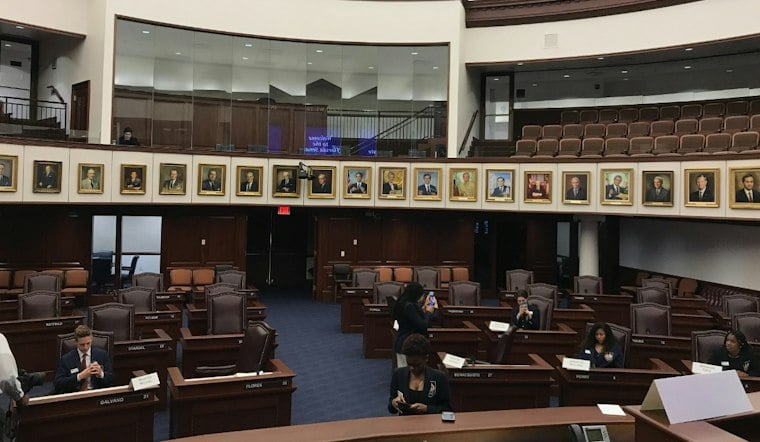
The Senate approved putting the amendment on the ballot in June 2026, during a special session presided over by Albritton, Florida Voice News reports. He had publicly supported the proposal at the time, and Gov. Ron DeSantis had led the push for property tax cuts, according to Florida Phoenix. Albritton’s term as Senate president ends next month, though he remains eligible to serve in the Senate until 2028, Creative Loafing Tampa reports.


