

























































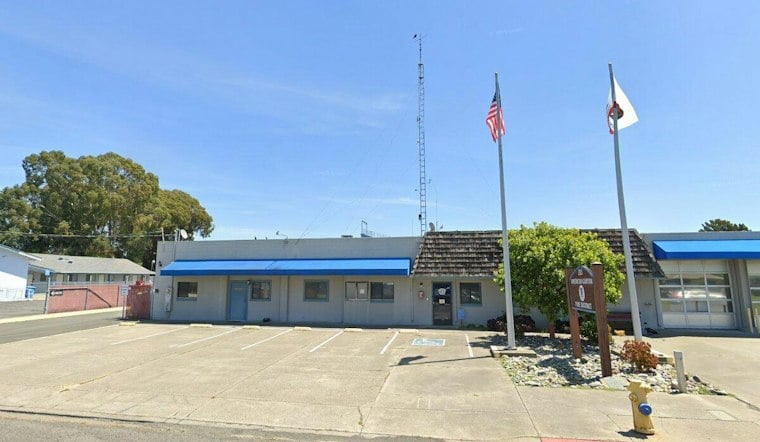
The American Canyon Fire Protection District is relying on reserves to cover a 2026-27 budget gap, while district staff project those reserves will fall to $683,526 by the end of 2027-28 if nothing changes. The board adopted its final budget September 29, with a $1.34 million general fund deficit and a $1.73 million shortfall across all funds. Board members are weighing spending changes and possible new revenue, but a voter-approved measure would take years to deliver money to the district.
That $1.34 million figure actually grew during the budget process, expanding from an earlier projection of $1.17 million after a $250,000 jump in overtime costs and $15,000 in additional legal expenses, according to The Press Democrat. Board member Mark Joseph pointed to a staffing crunch behind the overtime spike, noting that five employees were out on leave for injuries and other reasons, plus one vacant position, driving up the costs. Joseph said the structural deficit is a critical problem requiring dramatic action, while also saying he did not want to see or encourage layoffs.
Where the Money Comes From — and Why It's Not Enough
The district's general fund is budgeted for $8.42 million in revenues against $9.76 million in expenditures for fiscal year 2026-27, which began July 1. Property taxes make up the bulk of that revenue, accounting for 81% of general fund income, or roughly $6.79 million. The annual fire suppression assessment paid by property owners adds about $946,000, or 11% of total revenue, with the remainder coming from service charges, an air ambulance fee, and an ambulance service contract with American Medical Response.
In a staff report, the district attributed the deficit to personnel and operating costs rising faster than revenues, and warned that continued reliance on reserves is unsustainable. Staff projected reserves would fall to $683,526 by the end of fiscal year 2027-28 if no changes are made. The fire district is a subsidiary special district of the City of American Canyon, and its board is made up entirely of city council members, linking the district’s budget decisions to the city’s finances.
Battalion Chiefs and Budget Pressure
Brian Moura, a financial consultant with Regional Government Services, recommended leaving a third battalion chief position unfunded. The role is included in the district’s long-range master plan but was also left unfunded in 2025-26. Moura advised maintaining current service levels rather than pursuing new initiatives and reviewing the annual fire assessment, including the possibility of asking voters to increase it in 2028. He said the assessment is intended to cover the district’s full costs alongside property tax revenue, and noted that earlier property tax assumptions were too optimistic.
Joseph said the district might not be able to afford any battalion chiefs under current conditions. He also urged the board to examine staffing reductions and the timing of revenue expected from projects such as the Giovannoni Logistics Center and Watson Ranch, American Canyon’s largest ongoing housing development.
Development Dollars Slower Than Expected
Acting Fire Chief Cliff Campbell, who joined the district as assistant chief in 2022 after 22 years with the Vallejo Fire Department, told the board that a construction downturn may have made earlier revenue projections overly reassuring. He said cities and fire districts across California face similar funding pressures as costs, including pension rates, rise, and argued that budget decisions should rely on cash in hand rather than anticipated growth. Campbell said the district overspent.
Under the district's development agreement for Watson Ranch, a one-time Fire Mitigation Fee applies only to specific parcels — including Artisan, Harvest, Lemos Pointe, and Napa Valley Ruins & Gardens — while the remaining residential lots are instead assessed through a Community Facilities District special tax rather than the mitigation fee. That parcel-by-parcel structure has made development revenue harder to predict, and it has lagged initial district projections as construction has slowed.
Councilmember David Oro, who also sits on the fire district board, tied the slowdown to broader economic forces, saying national policy decisions — including Trump administration tariffs — have affected municipalities and residents across the country and that prices have risen significantly. Oro said expected housing development and property tax growth had stagnated, and he recommended the board resume its discussion on fixing the structural deficit at a later meeting rather than rushing a decision.
A Possible 2028 Ballot Measure, and a Steep Legal Bar
Tracy Fuller, also with Regional Government Services, told the board that even if a revenue measure passes, the district would not receive the collected funds until December 2029. Joseph likewise said a measure was at least two years away and would depend on voter support. Fuller said assessment revenue alone would be a severe challenge as a way to resolve the deficit.
Any such measure would run into California's Proposition 218, which sets a steep bar for new or increased charges: raising a special parcel tax requires a two-thirds voter supermajority, while increasing a property-benefit assessment instead goes through a weighted property-owner vote that a simple majority protest can defeat, according to SLV Post. Those legal constraints, paired with the City of American Canyon's own request that voters approve Measure P — a 1% local sales tax increase projected to generate $3.7 million annually toward a city General Fund deficit expected to reach $4.1 million over five years, according to SFGATE — raise the prospect that voters could face fatigue before the fire district ever puts its own measure on the ballot.
Project timelines and the local ballot record
Published reports offer some context for the timing of expected development revenue, but do not establish when either project will generate funds for the district. Watson Ranch was projected to take eight years to complete in four phases, according to the Napa Valley Register. The newspaper also reported that the City Council approved the Giovannoni Logistics Center after delaying votes at two previous meetings; that approval alone does not establish when construction or related revenue will occur. A separate Napa County fire-funding effort provides a local precedent, though it used a different tax mechanism. The county’s 2022 Measure L proposed a quarter-cent sales tax for fire services and failed to reach the required two-thirds majority, The Press Democrat reported. It was a countywide sales-tax proposal, not an American Canyon Fire Protection District assessment or parcel-tax measure.
The city has also leaned on tax-sharing agreements tied to planned growth to help close future gaps. In May 2026, the Napa County Board of Supervisors and the fire district approved tax-sharing agreements for the proposed annexations of the 281-acre Hess-Laird territory and the 89-acre Paoli-Watson territory, spelling out how future property tax growth would be divided among the county, city, and fire district. Hoodline previously reported on the 89-acre annexation and the tax-sharing framework tied to the larger Hess-Laird expansion, revenue that remains years away from materializing.
For now, the board approved a motion from Joseph to return in October to continue discussing how to begin reducing the structural deficit, with the next meeting scheduled for October 27. Joseph said the board needs to figure out how to move closer to a balanced budget, while staff have said the district needs to evaluate both spending and revenue options to maintain services and long-term financial stability.





