

























































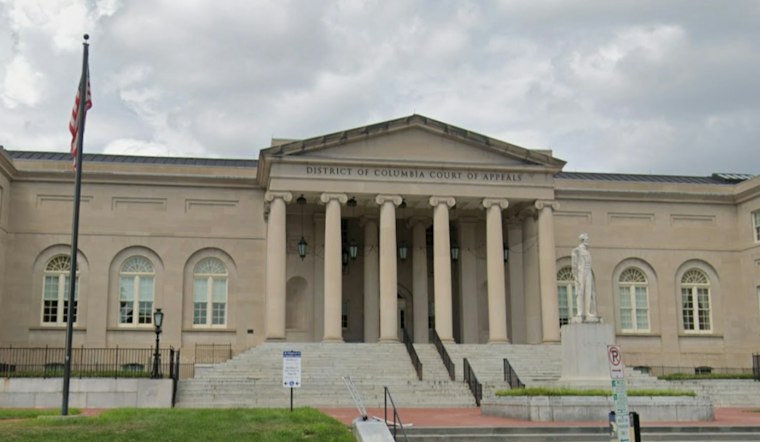
A divided federal appeals panel has handed a win to a coalition of 27 Christian and Jewish organizations fighting to keep immigration agents out of churches and synagogues. The D.C. Circuit ruled 2-1 on Tuesday that the groups can press forward with their bid to block Immigration and Customs Enforcement from making arrests in or near houses of worship, reversing a lower court that had tossed their case as too speculative.
A Policy Reversal That Started the Fight
The case traces back to a January 2025 memo, signed by then-acting Homeland Security Secretary Benjamine Huffman, that rescinded decades of guidance limiting enforcement actions near sensitive locations like churches, schools and hospitals, according to Bloomberg Law. Huffman wrote that bright-line rules about where enforcement could occur were unnecessary, and the Department of Homeland Security directed ICE and Customs and Border Protection officers to instead rely on discretion and, in the memo's words, a healthy dose of common sense. That marked a sharp break from a policy the government had followed since 1993, when it first adopted rules directing immigration officials to avoid apprehensions near schools, places of worship, funerals and religious ceremonies, per the Courthouse News Service reporting on the case. Those protections stayed largely unchanged for more than 30 years until Alejandro Mayorkas revised them in 2021 to require agents to seek headquarters approval before acting at sensitive locations, with narrow exceptions for exigent circumstances such as national security threats or imminent risk of physical harm.
Judge Florence Pan, writing for the majority alongside Judge Robert Wilkins, found that the coalition likely faces imminent harm from enforcement directly tied to the new policy. Pan wrote that the government intends to increase immigration enforcement at sensitive locations and said the coalition had offered specific examples of enforcement activity at or near members' houses of worship. She added that enforcement operations have already begun at or near religious congregations as a direct result of the change, giving the groups a credible threat sufficient to sue.
The Honduran Family's Church Arrest
Central to the coalition's case is the January 31, 2025 arrest of Wilson Velásquez, a Honduran migrant, during a church service in Georgia. Velásquez had traveled to the United States with his wife and three children in 2022 and requested asylum after crossing the border, according to the Episcopal News Service. Immigration officers released him after attaching an ankle monitor, and the family settled near Atlanta, where they attended Pentecostal services several times a week and Velásquez helped with music. He attended all required check-ins at an Atlanta ICE office and had a court date set to present his asylum case before ICE agents arrested him mid-service, telling those present they were looking for people wearing ankle bracelets.
Pan found that freezing the policy change would address many of the harms the coalition identified, though it would not fully restore the enforcement landscape as it existed before January 19, 2025. She said reverting to the earlier Mayorkas-era guidance would likely alleviate some of the asserted injury by discouraging enforcement activity near worship sites, even if it could not undo everything that has happened since.
A Sharp Dissent From Judge Rao
Judge Neomi Rao dissented, arguing that the coalition's asserted harm was speculative and likely carried little to no cognizable impact. She wrote that the religious organizations had offered only speculation that reverting to the prior administration's enforcement guidance would actually change how the current administration carries out its enforcement practices. The majority disagreed, sending the case back to U.S. District Judge Dabney Friedrich, who had denied the coalition's preliminary injunction request in April 2025 after finding the groups had not established standing, as the Washington Examiner reported. Friedrich will now have to reconsider the injunction request in light of the appeals court's findings.
Ripple Effects on Attendance
The coalition's lawsuit, filed February 11, 2025, included The Episcopal Church among its 27 plaintiffs and argued that the threat of immigration raids burdened religious exercise, driving down attendance as congregants feared immigration consequences. Many congregations serving immigrant communities reported decreases in worship attendance and participation in social-service ministries after the policy took effect, per the Episcopal News Service account. The Washington Examiner reported that one Baptist congregation saw a 66% decline in attendance at its English-as-a-second-language classes tied to the policy shift.
Similar disputes have played out elsewhere. The Fourth Circuit in August 2026 upheld a lower-court ruling narrowly limiting warrantless ICE arrests at the Maryland plaintiffs’ houses of worship and requiring agents to follow Biden-era safeguards, after finding that Maryland plaintiffs had specifically tied their attendance losses to the church-enforcement policy, according to the Washington Examiner; the injunction still permits arrests backed by administrative or judicial warrants and certain emergency actions. A Massachusetts federal judge separately blocked ICE in February 2026 from conducting enforcement actions absent exigent circumstances in or around certain houses of worship involved in litigation there, per Bloomberg Law. In California, ICE arrests near two churches in San Bernardino County last year illustrated how expanded enforcement has reached places long considered protected, according to CalMatters.
With the case now back before Friedrich, the coalition's bid for an injunction remains unresolved, leaving open whether ICE will face court-ordered limits on enforcement near the plaintiffs’ houses of worship.





