

























































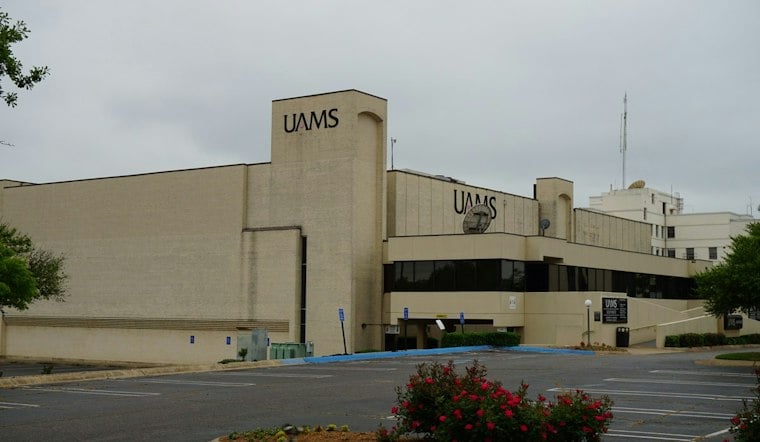
Five students walked into the University of Arkansas for Medical Sciences this fall as the first class in a brand-new effort to fix a problem that has been quietly worsening across the state for years: Arkansas is running out of places for women to safely give birth. The inaugural cohort marks the launch of the state's first-ever nurse-midwifery program, built specifically to put more trained maternity-care providers into communities that have lost them.
A First-of-Its-Kind Program for the State
The University of Arkansas for Medical Sciences welcomed the inaugural cohort of its Nurse-Midwifery Program this fall, according to UAMS, which calls it the first program of its kind in the state. The university's College of Nursing admitted five students into its initial cohort, with the master's-level course of study spanning 2½ years of graduate training and clinical work alongside certified nurse-midwives, advanced practice registered nurses and physicians, per the same source. Per the UAMS College of Nursing program page, the track requires 47 credit hours and 840 clinical hours, and is pre-accredited by the Accreditation Commission for Midwifery Education.
As KATV reports, nurse-midwife Shalyn Calaway said the program trains the next generation of nurse-midwives in Arkansas and aims to expand statewide access to maternal health care. Calaway described certified nurse-midwives as advanced practice registered nurses who specialize in women's health care across a patient's lifespan, providing prenatal care, care during birth, postpartum care, contraceptive management and other gynecological services. The UAMS program page adds that its graduates also provide primary care, well-woman gynecology, family planning, fertility care and newborn care during the first 28 days of life.
Why Arkansas Needs More Midwives Now
The timing reflects a maternity-care landscape that has been shrinking fast. Calaway told KATV that Arkansas has seen its women's maternity care options shrink as labor-and-delivery units close and maternity-care deserts grow, and she said the program hopes to prepare students to serve communities with limited maternal health access. Recent closures have left the state with only 30 hospitals that still provide labor-and-delivery services, according to UAMS.
The numbers back up that concern. In Arkansas, 44.0% of counties are now classified as maternity-care deserts, according to March of Dimes, which defines a maternity-care desert as any county without a hospital or birth center offering obstetric care and without any obstetric clinicians. Five labor-and-delivery units in Arkansas have shut down since 2024, leaving just 30 statewide, the Northwest Arkansas Democrat-Gazette reports. As of its August 2026 report, only 22 of the state's 75 counties had labor-and-delivery units, according to the Arkansas Advocate.
Women living in those maternity-care deserts travel about three times farther on average to reach labor-and-delivery services than women in counties with full access, per March of Dimes reporting. The group also found nearly 58% of rural counties nationwide lack obstetric clinicians altogether, compared with about 19% of urban counties. In Arkansas specifically, there were just 49 clinically practicing certified nurse-midwives statewide as of 2023, the Northwest Arkansas Democrat-Gazette notes. The Arkansas Advocate, citing KFF, reported 38 maternal deaths per 1,000 live births during 2018–2022.
What Midwifery Care Looks Like for Patients
Calaway said nurse-midwifery care emphasizes patient education and shared decision-making, customizing care to clinical needs and patient preferences, including family involvement in birth decisions. She told KATV that nurse-midwives work in hospitals, community clinics or home birth services, and that this model of care is more prominent in other states and countries than it has historically been in Arkansas. She described the care as something that can resemble traditional obstetric care, built around shared decision-making and patient and family involvement.
“Surely your zip code should not determine whether or not you can get quality maternity health care, and we hope to bridge that gap,” Calaway said.
Funding Behind the New Program
Getting the program off the ground required money from multiple directions. The Arkansas Legislature allocated $500,000 in state funding for the UAMS Nurse-Midwifery Program, according to an earlier UAMS announcement. More recently, UAMS said the College of Nursing received Rural Health Transformation Program funding in September. A portion of that Rural Health Transformation funding will go toward mentoring and assisting rural nurses who want to apply for the Nurse-Midwifery Program, as well as providing scholarships, per the UAMS announcement of the inaugural cohort.
UAMS initially planned to accept six students in its inaugural year and later planned to accept five for fall.
A Regional Pattern Taking Shape
Arkansas isn't alone in trying to train its way out of a maternity-care shortage. In Missouri, which currently has no certified nurse-midwife programs at all, the state's Department of Health and Senior Services is partnering with the Department of Social Services and the University of Missouri's Sinclair School of Nursing to train certified nurse-midwives, according to KCTV5. Under that agreement, Mizzou will seek accreditation to open its own program in fall 2029.
The Missouri program is designed to include rural clinical training sites and create opportunities for graduates who agree to work in underserved communities, KCTV5 reports. Missouri is also expanding training for doulas, home-visiting staff and community health workers, along with additional support for maternal behavioral health, according to the same report — a broader regional signal that states are leaning on university training pipelines to patch gaps in rural maternity care.





