

























































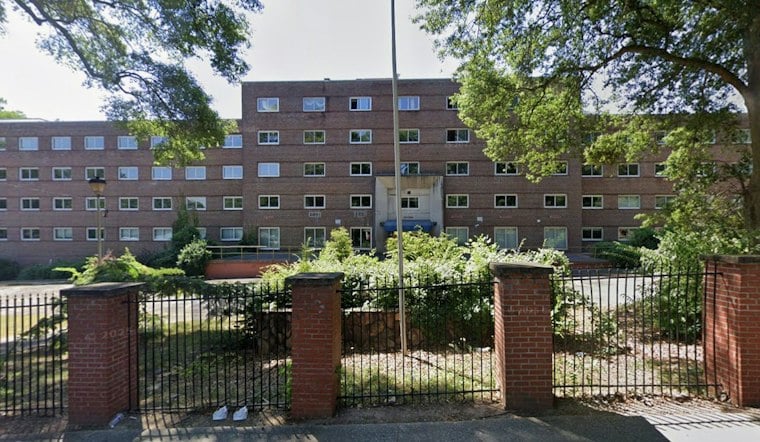
A hotel that once welcomed Black travelers during segregation and hosted jazz legends on Atlanta's west side is being transformed into 102 affordable apartments. The former Waluhaje Hotel and Apartment Complex at 239 West Lake Avenue, vacant for years after serving as a federal job-training center, is now the site of Heritage Village at West Lake, a deeply affordable housing project aimed at some of the city's lowest-income renters.
The Waluhaje opened in 1951, developed by Walter H. “Chief” Aiken as a Black-owned apartment-hotel complex and jazz club, according to Quest Community Development Organization. During the Jim Crow era, the property served African American patrons and residents, per Atlanta Housing, which financed the redevelopment. As CBS News Atlanta reported, the hotel's history as a refuge for Black travelers is central to why its transformation into housing now carries such weight on the city's west side.
A Green Book Stop With a Star-Studded Guest List
The Waluhaje was featured in the Green Book travel guides, the publications that helped Black travelers find lodging and services where they were welcome amid widespread discrimination, according to Quest's account of the site's history. The Green Book itself was first published in 1936 to help African American travelers navigate the country safely during Jim Crow, the Atlanta History Center notes. At the Waluhaje, performers including Duke Ellington, Ray Charles, Dizzy Gillespie and James Brown passed through during the segregation years, per Quest's reporting.
The property's purpose shifted dramatically in 1967, when it was sold and became the Atlanta Job Corps headquarters, Atlanta Housing says. Job Corps ran residential educational and vocational training there until operations ended in 2017, according to Invest Atlanta. A joint venture between Columbia Residential and Quest acquired the site from Job Corps in 2018, setting the stage for its next chapter.
From Vacant Building to 102 Affordable Apartments
The redevelopment will convert the former hotel into 102 one-bedroom apartments, according to the same Invest Atlanta account of the project's progress. The finished development, now branded Heritage Village at West Lake, is planned as a 100 percent affordable multifamily rental property serving households earning no more than 30% of the area median income, per Atlanta Housing. Sources differ slightly on the building's scale: Quest describes a five-story, 61,380-square-foot rehabilitation, while Invest Atlanta characterizes it as a six-story development covering roughly 61,300 square feet.
Twenty-four of the units will be set aside specifically for single men and women ages 18 to 24 who are aging out of the foster care system, a detail highlighted in coverage from the same Invest Atlanta report. The project will also include a community health clinic, Atlanta Housing says, along with units reserved for veterans and people facing homelessness. Job and life skills training and an entrepreneurial incubator space are also planned for the site, adding layers of support beyond housing alone.
Financing the Historic Conversion
Atlanta Housing announced that more than $35 million in financing had closed to bring the project to fruition, a milestone the agency tied directly to preserving the Waluhaje's legacy while addressing the city's affordable housing shortage. Construction was expected to be complete in 2025, according to Invest Atlanta's roundup of the project. The Heritage Village effort is part of a larger push: in 2024 alone, Atlanta Housing approved resolutions to finance and construct 1,039 new housing units citywide, including 903 affordable units, while preserving another 140 affordable units.
For a building that once gave Black travelers a safe place to stay when so many doors were closed to them, the shift to permanent affordable housing closes a loop decades in the making. The Waluhaje's decades as a Job Corps site erased much of its public visibility, but its role in Atlanta's segregation-era travel network is now part of why its redevelopment is drawing attention well beyond the west side.


