

























































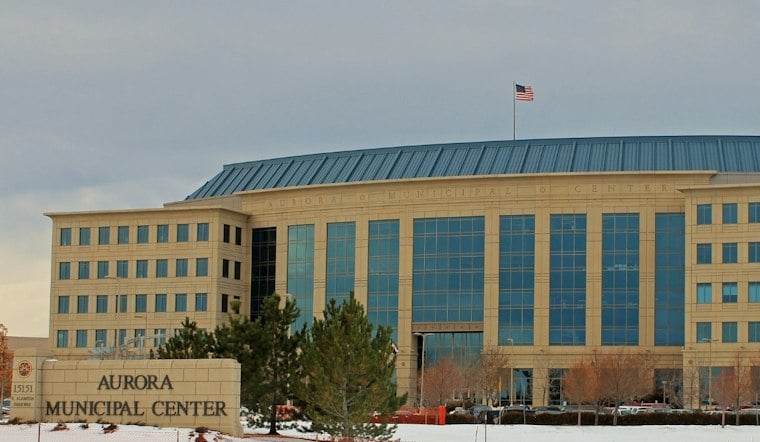
Aurora residents will find a question on their November ballot asking whether to change local election timing: should the city shift its municipal elections from odd-numbered years to even-numbered years, aligning city races with the bigger federal and state contests that already draw Coloradans to the polls? The Aurora City Council voted 6-2 to send the measure forward, setting up a decision that would not take effect until 2030 but could reshape how — and how many — Aurora residents vote for mayor and council in the years ahead.
The ordinance placing the question on the ballot passed the council by a 6-2 vote, according to Sentinel Colorado. Council members Stephanie Hancock and Angela Lawson voted against the measure, while Françoise Bergan and Curtis Gardner were absent for the vote, the outlet reported. If voters approve the change this November, it would go into effect for the 2030 election, according to the same report.
How The Transition Would Work
To make the switch without scrapping Aurora's staggered council terms, the plan includes a one-time adjustment period. Council members and the mayor elected in 2027 and 2029 would serve shortened three-year terms rather than the usual four, according to Sentinel Colorado's reporting — a mechanism also described by CitizenPortal.ai, which reported the charter amendment would appear on the Nov. 3, 2026 ballot with one-time shortened terms built in to keep seats staggered. Per seed reporting from The Denver Post, Aurora would hold its first even-numbered municipal election in 2030, with the next one following in 2032, after which officials would resume standard four-year terms.
The ballot question would affect elections for both the mayor and city council members, per the Post's reporting. Supporters frame the change as a straightforward turnout fix: even-year elections, which coincide with higher-profile federal and state races, consistently draw far more voters than Aurora's standalone odd-year contests.
The Turnout Case, By The Numbers
The gap in participation is stark. Colorado's odd-year elections have averaged just over 41% turnout among active voters over the past decade, according to Colorado Newsline, which reported that figure is roughly half the average turnout seen in midterm and presidential years. Those low-turnout odd-year elections also skew older: in 2025, voters aged 55 and up accounted for more than 54% of ballot returns, while voters 18 to 34 made up just 15%, Newsline reported.
Aurora's own ballot data tells a similar story. About 151,400 votes were cast on a citywide ballot measure in 2024 — a presidential year — compared with roughly 76,400 to 78,900 votes on each of five citywide measures in the 2025 off-year election, according to Sentinel Colorado's analysis. Supporters of Question 3D argue that switching to even years would mean more people voting and that higher turnout would strengthen local democracy, the outlet reported.
Comparisons from other cities back up the turnout argument, at least on paper. Citizens Union data cited by Sentinel Colorado showed El Paso's mayoral turnout jumping from 8% in 2017 to 35% in 2024 after that city moved to even-year elections, while San Francisco's mayoral turnout rose from 36% in 2019 to 76% in 2024. A separate study highlighted by the MIT Election Lab found that when California consolidated municipal elections with statewide ones, turnout among registered voters rose by three percentage points more than expected — about a 5% increase in overall turnout in the 2018 election.
Costs, Crowded Ballots And Voter Burnout
Opponents raise two main concerns. One is cost: even-numbered-year elections are more expensive to run because more people participate and ballots tend to be longer, per Sentinel Colorado. Arapahoe County election coordination also requires additional infrastructure, including more voter service and polling centers, which raises Aurora's share of election costs, according to the Post's reporting. Aurora has not specified an exact cost for making the switch, the Post noted, though the city's recent ballot spending offers a rough benchmark: Aurora paid more than $121,000 to place a single measure on the 2024 ballot and nearly $72,000 for five ballot measures and five council seats in 2025, Sentinel Colorado reported.
Opponents also warn of voter fatigue. Critics fear that campaigning during a busier election season will cost candidates more, and that voters may burn out before reaching Aurora's candidates and ballot issues on what are typically much longer even-year ballots, according to the Post. That concern has research behind it: the MIT Election Lab notes that longer ballots can make it more cognitively difficult for voters to weigh in on every contest, increasing rates of roll-off even as overall turnout climbs.
Aurora Would Join A Growing List
Aurora wouldn't be the first Colorado city to make this leap. Boulder voters approved a similar switch in November 2022 with 63% support, according to Yellow Scene Magazine, and that city's turnout data illustrates the same even-year advantage cited by Aurora's supporters: Boulder saw 83% turnout in its 2018 even-year election and 90% in 2020, compared with just 51% in 2019 and 49% in 2021 during off-cycle contests. Boulder's regular municipal election date is set to align with state and federal elections beginning this November, the outlet reported, and the city used the same three-year transitional term fix Aurora is now proposing, shortening the terms of council members elected in 2023 and 2025. Castle Rock and Parker already hold their municipal elections in even-numbered years, Sentinel Colorado noted.
Aurora's own council discussions have wrestled with the cost tradeoffs in concrete terms. City staff cited example election cost differences of $300,000 for one election cycle versus $70,000 for another, according to a separate CitizenPortal.ai report on the council's deliberations. Aurora voters will now weigh those costs against the turnout numbers when they decide the fate of Question 3D this November, with the outcome determining how the city picks its mayor and council members for decades to come.




