

























































Five-month-old Koen Barnhart is wiggling his legs, moving his ankles, and hitting normal baby milestones that doctors say might not have been possible without an operation performed on him months before he was born. He became the first baby to have spina bifida surgery in utero in Austin, undergoing the procedure at 25 weeks of gestation in January before arriving in April 2026.
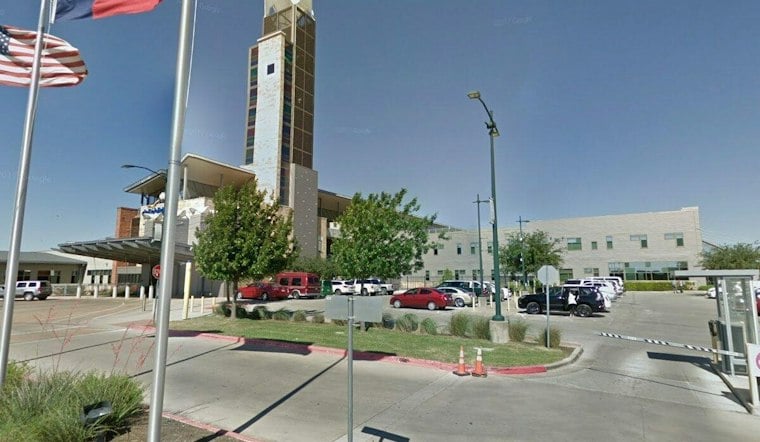
Koen was diagnosed with myeloschisis, the most severe form of spina bifida, after his mother Manda Barnhart received the diagnosis at her 20-week fetal anatomy ultrasound, according to the Austin American-Statesman. Manda and her husband Jeff had been planning a home birth with a midwife, but after the diagnosis they were referred to Texas Children's Hospital in North Austin, located less than a 15-minute drive from their Cedar Park home. The family received a confirmatory anatomy scan the following week, and Manda underwent amniocentesis, an MRI, an ultrasound and blood testing before deciding to pursue fetal surgery if she and Koen qualified.
Texas Children's became the first Austin hospital to perform fetal spina bifida surgery in January, though the Barnharts could have chosen to have the operation done in Houston instead, where the hospital's team has performed these surgeries for 13 years and completed almost 300 fetal spina bifida repairs. The Austin team included Dr. Cara Buskmiller, Dr. Daxa Patel and Dr. Matias Bruzoni. The Austin team ran surgical simulations before the Barnhart operation and had already performed fetal transfusions, bladder duct surgery and surgery to remove a fetal lung mass.
Why the Surgery Happens at 25 Weeks
Koen underwent fetal spina bifida surgery at 25 weeks of gestation. The procedure carries risks, including preterm labor. The field itself has advanced from open surgery to minimally invasive techniques designed to reduce the risk of the mother going into labor, a shift that Texas Children's Hospital attributes to eliminating the large uterine incision required in traditional open hysterotomy, which also lowers maternal risks of uterine rupture and preserves the option of future vaginal deliveries.
Koen underwent fetal spina bifida surgery before birth.
A Recovery Still Being Measured
Koen was born at 38 weeks and spent two months in the NICU, where he needed repair of a small leak at the surgical site and received a skin graft from his right buttock to help close the spinal opening. He has not needed a brain shunt, has movement down to his ankle, and uses a catheter for bladder emptying, though he now has longer intervals between sessions. Dr. Patel told the Statesman that Koen's first year is critical to determine whether he will eventually need a shunt, and said that without the fetal surgery, Koen would likely have needed one and would likely have lacked ankle movement.
Doctors caution that the surgery is not a cure. Babies who undergo it will still need follow-up care and other interventions, potentially including surgical revisions after birth. Dr. Alireza Shamshirsaz, director of Dell Children's Comprehensive Fetal Care Center and chief of fetal medicine and therapy at Dell Medical School, said the goal of these surgeries is to decrease morbidities, not promise a complete fix.
Dell Children's Enters the Field
Dell Children's Medical Center announced its first in-utero spina bifida repair this month, treating a baby with myelomeningocele. Shamshirsaz said the mother and baby are doing well. Dell Children's is also considering fetal surgery for congenital diaphragmatic hernias and in-utero cardiac surgery, with a planned cardiac collaboration involving Dr. Charles Fraser Jr. and the Texas Center for Pediatric and Congenital Heart Disease.
Before these programs launched, families facing fetal anomalies in Central and West Texas had to travel to centers such as Texas Children's in Houston for monitoring, surgery, birth and NICU care, as Hoodline previously reported on the NICU expansion tied to this growing local push. Infants with untreated spina bifida can lose leg, bladder and bowel function and may need brain shunts to drain excess fluid, since the resulting neurological damage is irreversible. Dr. Cara Buskmiller said fetal surgery can make the difference between a child needing a wheelchair and walking, and Texas Children's offers the surgery to children expected to benefit, with gains that may appear in motor movement, brain development or both. Doctors said cases similar to Koen's suggest he has twice the chance of walking by age 2½ compared with a repair performed after birth, and that his estimated need for a brain shunt dropped from 80% with postnatal repair to 40% with the in-utero surgery.
The Research Behind the Numbers
The clinical case for fetal repair traces back to the Management of Myelomeningocele Study, a randomized trial published in the New England Journal of Medicine in 2011 and funded by the NIH. That study, detailed by the Children's Hospital of Philadelphia, found that in-utero repair reduced the need for brain shunts and improved the likelihood of independent walking compared with postnatal surgery.
Nationally, an estimated 1,427 babies are born with spina bifida without anencephaly each year in the United States. Koen's condition was first identified at his 20-week fetal anatomy ultrasound. Public health prevention efforts have also played a role: research has associated folic acid fortification of enriched grain products with an estimated 28% to 35% reduction in national neural tube defect rates, according to research cited in Hoodline's earlier coverage of a drummer living with spina bifida.
Advances in pediatric neurosurgery and multidisciplinary care have also improved long-term outlooks, with roughly 85% of people born with spina bifida now surviving into adulthood. For Koen's family, those national figures are secondary to what they're watching unfold at home: a baby who, doctors say, is meeting normal milestones months after an operation performed while he was still in the womb.





