

























































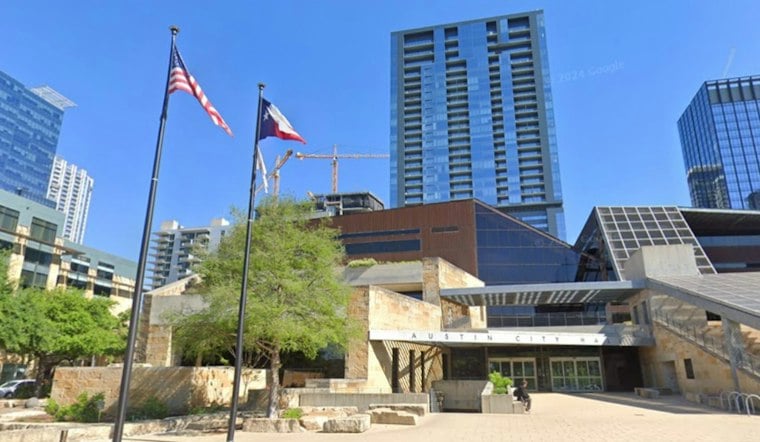
Austin's District 9 City Council race has turned into a proxy fight over the city's aggressive housing reforms, with incumbent Zohaib “Zo” Qadri defending his pro-density record as challenger Rich Heyman and environmental and neighborhood advocate Robin Rather argue the city has let developers write the rules. The district, which stretches from downtown and UT Austin through Central Austin neighborhoods like Cherrywood and Hyde Park, will send voters to the polls on Nov. 3, with early voting already underway. Five names are on the ballot: Qadri, Rich Heyman, Katie Kam, Kai Huang and Dave Thadani.
According to KUT, early voting for the race began Monday, and the district's footprint includes downtown and UT Austin alongside iconic neighborhoods like Cherrywood and Hyde Park. As Axios reports, the contest tests the political clout of established neighborhoods, potentially pitting households in Travis Heights, Bouldin and Hyde Park against voters in Mueller and around the University of Texas. Austin's City Council members are elected through single-member districts rather than citywide at-large races, a structural shift Axios notes underpins how neighborhood-level contests like this one can tip the balance of city housing policy.
Qadri Defends His Record on Density and Homelessness
Qadri, the sitting District 9 representative, is running for reelection on the argument that Austin's land-use rules are badly outdated. Per Qadri, speaking to KUT, Austin's code “hasn't been fully updated since 1984, so we need to continue to work on housing and parking reforms.” He has also staked out a position against Austin Police Department encampment sweeps, calling the practice “extremely inhumane,” the station reports.
In a statement to Axios, Qadri said he and the council delivered results by reforming the city's housing rules, adding, “I want to see an Austin that really works for everyone, where everyone has a chance.” Axios reports he has drawn endorsements from Mayor Kirk Watson, state Rep. James Talarico (D-Austin), labor unions and University Democrats, along with the backing of the Austin American-Statesman editorial board, which praised him for advancing more housing, stronger tenant protections and expanded assistance for people experiencing homelessness.
Challengers Say Reforms Favor Developers Over Neighborhoods
Rich Heyman, a former University of Texas urban-studies lecturer who Axios notes has studied cities for roughly three decades, is Qadri's most well-funded challenger and has earned the Austin Chronicle's endorsement. The paper said it was concerned about what it called the pro-development tilt on the council, according to Axios. Heyman told Axios that council members loosened rules at the behest of developers and corporate interests, describing his colleagues-to-be as “well-meaning liberal-minded people who have been misled by right-wing, libertarian think tanks.” He also argues that rents declined after the pandemic regardless of the city's housing reforms, and that reforms were “pushed through without any protections for neighborhoods,” per Axios.
Heyman has taken particular aim at Qadri's votes tied to the Dog's Head project, a special tax zone the council created for development of 2,600 acres in Southeast Austin anchored by Amazon's robotics division, according to Axios. He has also criticized what Axios describes as his approvals of sweetheart deals, the city's decision to move forward with a new convention center, and an incentives agreement with Southwest Airlines. Speaking to KUT, Heyman said he backs more subsidized housing for low-income residents but wants to make sure development doesn't end up “paving over our city.”
Kam Pitches Engineering Background, Cost-Efficient Government
Katie Kam, a civil engineer and former Austin city planner who has also worked as a science teacher and lecturer, is running on a platform of affordable housing, affordable transportation and what she calls “cost-efficient government,” per KUT. On the West Campus housing debate near UT, Kam told the Daily Texan that renovating existing buildings rather than continuing new construction could add “charm” while also increasing affordability — a contrast with Qadri's push to update the University Neighborhood Overlay to promote denser housing in that area.
Developer-Funded PAC Money Enters the Race
Robin Rather, an environmental and neighborhood advocate, has argued Qadri “doesn't walk the talk” and has not truly addressed affordability or environmental matters as promised, according to Axios. Rather contends Qadri's votes land in line with developers' interests when it counts, and gave the lion's share of money raised in the latest reporting period by Austin United PAC, the chief funder of Zo Must Go, a political action committee that argues Qadri is beholden to developers, Axios reports. Zo Must Go did not return an Axios interview request. Its chief funding in the last reporting period came from Austin United PAC, which, per its own endorsements page, says either Heyman or Kam would be “a step forward” compared with Qadri. Axios notes the same PAC is also backing David Weinberg, who hopes to unseat incumbent Ryan Alter in District 5.
Money Race: Qadri Leads, Heyman and Kam Trail
Campaign-finance reports covering Jan. 1 through June 30 give an early financial snapshot of the race, per Austin Current. Qadri raised $26,151 in that period and reported roughly $152,000 cash on hand, according to the outlet's review of filings, while a separate Axios accounting of the race put Qadri's more recent haul at about $11,500 with nearly $140,000 on hand. The Austin American-Statesman likewise found Qadri led the field in both contributions and spending during the same reporting window.
Heyman raised $18,901 through the same June 30 period, per Austin Current, while Axios cited a more recent figure of roughly $20,000 raised and about $39,000 on hand for his campaign. Kam raised $8,355 over the first half of the year according to Austin Current's review, while Axios put her more recent fundraising at about $10,000 with $7,300 on hand.
Backdrop: A City Reshaped by Rapid Construction
The District 9 race is unfolding against the backdrop of a housing boom that has remade Austin over the past decade. The city added 120,000 housing units between 2015 and 2024, a 30% increase in its housing stock, according to a Pew analysis. Median rent fell from $1,546 in December 2021 to $1,296 by January 2026, and in large apartment buildings, rents dropped 7% from 2023 to 2024 alone — the steepest decline recorded in any large U.S. metro, Pew found.
Those shifts followed a string of policy changes, including the city's 2023 removal of minimum parking requirements for nearly every type of property, per the same Pew analysis. In May, the council approved a new citywide density-bonus program letting developers seek additional height of 15, 30, 45 or 60 feet in exchange for on-site affordable housing or other community benefits, such as wider sidewalks or trees, according to KUT. The short-lived DB90 density-bonus proposal drew criticism over its affordable-housing tradeoff. Austin's population grew about 25% between 2010 and 2019 while rents jumped 93% over the same span, a surge the American Planning Association says helped drive the city's subsequent push for reform; a broader land-development-code rewrite was ultimately halted after legal challenges, per the same report.



