

























































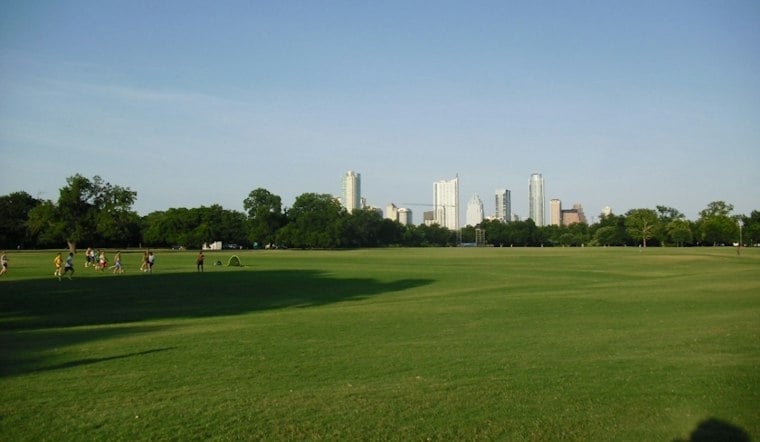
Austin voters head to the polls on Nov. 3 to decide whether the city can borrow $295 million for parks, recreation facilities and libraries, a package split into two separate ballot measures that would fund everything from neighborhood pool repairs to a brand-new library branch in Colony Park. The bond comes eight years after Austin voters last approved money specifically for parks, and it arrives with a price tag that city estimates put at roughly $40 more per year for a typical homeowner's property tax bill.
The package is broken into Proposition A, a $260 million parks bond, and Proposition B, which would set aside $35 million for libraries, according to KUT. Austin voters will vote separately on the two measures, meaning one could pass while the other fails. The parks money would support park buildings and facilities, infrastructure, public pools, and new parks and trails, per the same station's reporting.
Of the library funding, about $20 million would go toward renovating and expanding the Hampton Branch at Oak Hill, while the remaining $15 million would build a new branch in Colony Park, KUT reports. City planning materials describe the Colony Park project as potentially including added library space, renovations and other building upgrades, though specifics have not been finalized.
What the Parks Money Would Actually Build
Proposition A would fund renovations or replacements at four city pools — Garrison Municipal Pool, Big Stacy Neighborhood Pool, Walnut Creek Municipal Pool and Civitan Neighborhood Pool — according to the Austin American-Statesman. The measure would also set aside money to acquire parkland in underserved areas, fund greenbelt expansion to connect trails, and could support land purchases along the Colorado River and a new recreation center in southeast Austin. The Statesman's reporting lists specific sites that stand to benefit, including Riata Neighborhood Park, which would get a replacement playscape, and Brentwood Neighborhood Park, where the bond would pay for new restrooms and a replacement playscape.
More than a dozen other sites would see work under the package, including Jamestown Neighborhood Park, Bolm District Park, Walter E. Long Metropolitan Park, Lantana Neighborhood Park, Commons Ford Park, Guitar Land Park and Old Lampasas Pocket Park, per the Statesman. Additional listed projects touch Williamson Creek Trail, Evergreen Cemetery, the Onion Creek all-abilities playground, Springwoods Park, St. Edward's Greenbelt Trail and Park, Circle C Metropolitan Park and Mount Bonnell Park. The bond would also replace the existing playscape at Zilker Metropolitan Park, according to the same report. The Austin Current separately reported that the parks package includes $35 million for infill parks in park-deficient areas, greenbelts and greenways to increase trail connectivity, and parkland acquisition — including land for that new southeast recreation center.
Conflicting Numbers on What It Will Cost You
Estimates of the bond's financial impact vary depending on which home value and timeframe is used. KUT reports that a homeowner with an average-valued house of $495,000 would pay about $40 more on their annual property tax bill if the package passes. The Austin Current instead cites the owner of a median-valued home of about $485,000 paying roughly $40 more in annual property taxes if both propositions pass. The Statesman's own estimate says the bond would eventually cost the typical taxpayer more than $40 annually once the city issues the debt, likely around 2033.
Those added costs would stack atop an already rising debt-service burden. Without any new bond, the average Austin homeowner was projected to see the debt-service portion of their property tax bill climb from roughly $450 in 2026 to roughly $615 by 2030, according to KXAN, which also reported the city carries $2.4 billion in outstanding debt. General obligation bonds like this one let Austin borrow for major long-term infrastructure and repay that debt through property taxes, rather than funding day-to-day city operations, per Austin's official bond materials from Austin Financial Services.
A Divided Council Vote
The Austin City Council approved the bond package in August on an 8-3 vote, with Mayor Kirk Watson and Council Members José Velásquez and Marc Duchen voting against it, the Statesman reported. All three cited concern that the added tax burden would make Austin less affordable. Watson had also opposed a May council vote that removed a requirement to wait until no more than two years' worth of unissued bonds remained before calling another election — a rule change that cleared the way for this year's bond vote. Watson warned the change could weaken financial policies and public trust, saying, “If we only support financial guardrails until they become inconvenient, then we shouldn't be surprised when the public questions whether we really mean them and frankly, whether we can be trusted.”
Duchen said he was reluctant to support the bond because Austin had asked voters to approve bonds too often and had fallen short delivering projects, pointing to more than $1 billion in unfinished bond projects dating back to 2008, according to the Statesman's reporting. Duchen said he secured support for a six-year bond-cycle resolution in exchange for his eventual backing of the parks measure, calling the trade-off “a big step forward.” He said he opposed a two-year bond cycle because he did not consider it particularly helpful. The City Council unanimously approved that six-year cycle resolution, with Austin's six-year bond-election cycle set to begin in 2028. Council Member Ryan Alter, who co-sponsored the resolution and is running for re-election in November, said it reflected efforts to manage public money responsibly while meeting city needs. Alter and Duchen both said they were not using city resources when discussing their bond positions with the Statesman.
A Backlog of Unfinished Projects
The timing question is complicated by the fact that city financial staff had recommended delaying this bond election until 2028, when earlier bond programs would be considered complete after roughly 90% of their funds were spent, according to the Austin Current. Austin city rules require bond projects to be completed within six years of voter approval, a standard also reflected in a city planning document reviewed by Hoodline. The city launched a public dashboard this month displaying the status of $2.45 billion in bond projects authorized in 2016, 2018, 2020 and 2022; as of publication, Austin had spent $1.72 billion of those displayed funds and canceled more than 60 of the listed projects. The dashboard defines a canceled project as one no longer planned to proceed as originally identified, though its FAQ notes that cancellation does not necessarily mean the underlying community need has been eliminated. Austin's Capital Delivery Services team said the dashboard was designed to promote transparency and accountability by making bond project information easier to access and understand. A city spokesperson said Austin will still have $715 million of unfinished voter-approved bond projects after a planned 2026 bond sale.
Learning From Last Year's Failed Measure
Brian Smith, a political science professor at St. Edward's University, expects voters to be more receptive to this bond because its purpose is clearer and the projects are broadly popular. “Voters have a much clearer picture of a bond than they do with something like Prop Q, which a lot of people just saw as a blank check to the city,” Smith said. Austin voters overwhelmingly rejected Proposition Q in 2025, a measure that proposed a property tax rate increase of more than 20% to fund city services and quality-of-life programs and would have added about $300 a year to the average homeowner's tax bill.
Alyssa Vargas of the Austin Parks Foundation noted that Austin has lagged peer cities on parks funding, telling KUT that cities like Dallas, San Antonio, Fort Worth and Travis County have already received close to $300 million in the last couple of years from bonds. Voting machines were being prepared for early voting at the Travis County Clerk's Office in Austin ahead of the Nov. 3 general election, when voters will cast separate ballots on the parks and library measures.





