

























































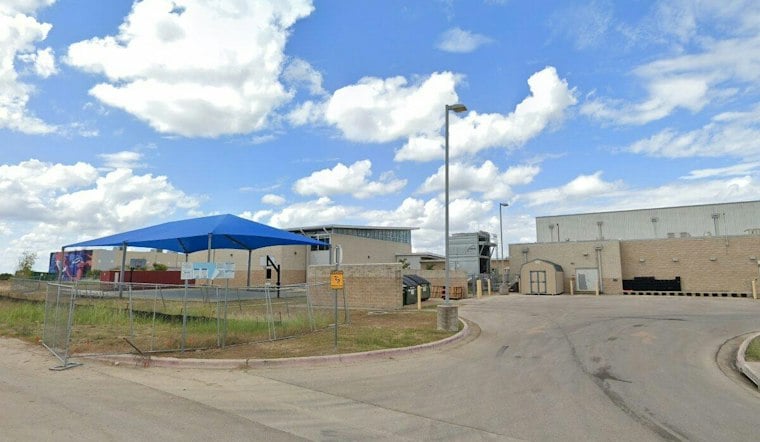
A 208-acre stretch of city-owned land in northeast Austin that has been the subject of planning documents, public meetings and funding negotiations since 2012 is finally showing signs of physical progress. The Colony Park Sustainable Community, located at 7900 Loyola Lane, is moving toward construction on roads, utilities and housing even as one piece of the project, a health and wellness center, has already broken ground.
According to the Austin American-Statesman, the project's first phase of infrastructure work is scheduled to begin construction on March 1, 2027, and finish in September 2028, according to a Texas Department of Licensing and Regulation filing cited by the paper. That first phase, which carries a $45 million cost per the same filing, is set to include roads, sidewalks, utilities, retaining walls, drainage infrastructure and stormwater facilities. Separately, Catellus Development Corporation has said groundbreaking for street and public utility infrastructure was estimated for 2026, an earlier timeline than the TDLR filing describes for the formal first phase.
A Health Clinic Already Has Shovels in the Ground
While the broader infrastructure timeline still involves dates on paper, one Colony Park building is already under construction. Central Health broke ground in May 2026 on the Colony Park Health & Wellness Center, a $37 million, 34,000-square-foot facility at 6420 Helen Miller View, according to Central Health. The center is projected to open in summer 2027 and will offer primary care, integrated behavioral healthcare, specialty and dental services, and an on-site pharmacy, the health district says.
The clinic builds on a presence CommUnityCare has maintained in the area since 2019, when it began with a mobile medical clinic, according to Central Health. Central Health also noted that no Board action was taken and no specific items were deliberated at the groundbreaking and celebration event held for the center.
Decades of Planning Behind the Dirt
The roots of Colony Park trace back to 2001, when Austin purchased 258 acres near Loyola Lane and Colony Loop Drive for $3 million, per the Statesman's reporting. The city developed 50 acres into the Turner-Roberts Recreation Center, leased part of the land to Austin Independent School District for Overton Elementary School, and transferred the remaining 208 acres to the Austin Housing Finance Corporation for future housing development.
A federally funded planning effort began in 2012, which lines up with the Colony Park Sustainable Community Initiative that Urbanize Austin reports launched that year through a $3 million grant from the U.S. Department of Housing and Urban Development. Austin adopted the Colony Park master plan in 2014, and residents from Colony Park and surrounding neighborhoods advocated throughout the process for affordable housing, better transportation systems and improved access to essential services, the Statesman reports. Colony Park residents reviewed Catellus's plans at an open house at the Turner-Roberts Recreation Center in May 2018, and the city selected Catellus as its development partner that same year after a national search, according to Catellus.
That search came after decades of neglect in the surrounding neighborhood. Since it was annexed by Austin in 1973, Colony Park has gone without equitable access to healthy food, transit, health care and jobs, according to the city, as reported by KXAN. The USDA classifies Colony Park's census tract as a food desert, the Statesman notes, which is part of why the development sets aside 10 acres for a full-service grocery store.
What Gets Built, and Who Can Afford It
The Colony Park Sustainable Community Development Agreement was formally signed on August 15, 2024, according to CDC Colony Park Holdings. Zoning for the project allows up to 3,000 residential units and 960,000 square feet of commercial and civic space, per the Statesman's account, with plans calling for a mix of single-family homes, townhomes, apartments and mixed-use buildings. Catellus separately projects the development will include approximately 230,000 square feet of mixed-use office and institutional space and about 130,000 square feet of mixed-use retail space, while Urbanize Austin reports more specific housing figures of 1,072 single-family homes and 831 multifamily apartments.
Affordability is written into the zoning. At least 20% of homes must be affordable to qualifying households, with renter households eligible at up to 60% of the area's median family income and homebuyers eligible at up to 80%, the Statesman reports. A city resolution reviewed by the City of Austin similarly requires that 20% of total residential units go to households earning 80% or less of the Austin metro area's median family income. Catellus separately describes the target as 20% workforce affordable housing.
Estimates of the project's total price tag vary by source. KXAN has reported the entire project costs $257 million, while Community Impact has described it as a project costing more than $300 million. Separate from that overall figure, parking and accessibility work tied to the development is planned to cost $350,000 and is scheduled to begin in the first half of 2028, according to the Statesman.
Parks, Trails and a Walkable Vision
Colony Park is envisioned as a neighborhood where residents can live, work, shop and access everyday services without relying entirely on cars, the Statesman reports, with a proposed town center on Loyola Lane meant to serve as the neighborhood's commercial hub. Design plans aim to place all residents within roughly 600 feet of publicly accessible open space, and the community is expected to benefit from future transit investments, including a proposed Green Line commuter rail connection through Project Connect.
Open space figures also differ across sources. The Statesman's reporting describes at least 41.65 acres of open space planned, while Catellus has put the figure at 42 acres of parks, trails and open space, and KXAN has cited 53 acres of parks, open spaces and trails tied to 1,200 permanent jobs the project is expected to create. Plans call for approximately 2.5 miles of multi-use trails and parks and greenways connecting homes to Overton Elementary School, the Turner-Roberts Recreation Center and the planned Loyola Town Center.
Community Impact has drawn a comparison between the Colony Park effort and Catellus's earlier work transforming Austin's former airport site into the master-planned Mueller neighborhood, noting it is the same development partnership behind both projects. More than a decade after the city first began planning, Colony Park's path from blueprint to built neighborhood is still underway, with a health clinic rising first and the larger residential buildout still tied to construction dates still ahead on the calendar.





