

























































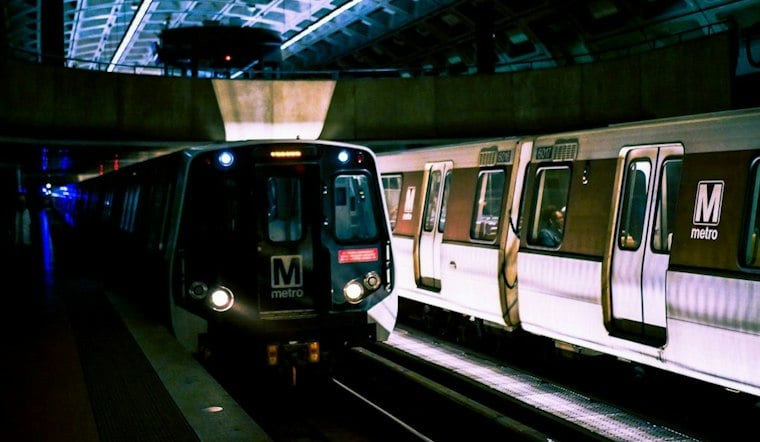
The dispute in Azusa centers on where late-night train clearances happen and what follows. Residents near the APU/Citrus College station have told local news outlets that some people removed from trains enter nearby residential areas; residents attribute reports of break-ins, package theft and other problems to that pattern. City officials say they have sent Metro three letters seeking changes and have received no satisfactory response.
Why Late-Night A Line Trains Stop in Azusa
Azusa officials say passengers are removed from trains while they are serviced in the city, although the A Line's official terminus is several stops away in Pomona, according to NBC Los Angeles. The Los Angeles County Sheriff's Department confirmed to the station that deputies clear trains in Azusa to prepare for maintenance. Metro has said the final two A Line trains stop there because continuing to Pomona would leave crews about 45 minutes to complete their overnight work.
Anthony Lujan, whose home overlooks the APU/Citrus College station, told NBC Los Angeles that he regularly sees people being ushered off trains in the early morning. “They go into the community,” he said. Lujan has been photographing and recording activity near the station since March. He told KTLA that homeless people are removed from trains and roam into the community. Surveillance footage he supplied reportedly shows people climbing over a metal gate into a nearby residential complex.
Residents Report Break-Ins, Theft and Public Urination
Lujan said residents have dealt with people showing up at their front doors, stealing packages and breaking in, according to KTLA. Azusa Mayor Edward Alvarez said he has seen an uptick in reports of public urination and defecation but said the city doesn’t have the resources to address the concerns. The recent activity has also led police to remove benches in the courtyard near the station, the outlet reported, and Azusa's police chief said people have pulled wiring out from light poles either to steal it for copper or to charge their phones.
Azusa city manager Sergio Gonzalez has questioned Metro's scheduling rationale. He noted that the last train in Azusa runs at 1:30 a.m. and service does not resume until 4 a.m., a gap he said does not add up. Gonzalez has also asked why trains could not stop at Glendora or San Dimas before continuing to Pomona. He has called for fare gates and stronger enforcement, saying the city needs action rather than more studies.
City Says It Sent Three Letters, Metro Weighs Fare Gates
Azusa has sent three letters to Metro, and Alvarez said the city has received no satisfactory response. He has proposed installing fare gates and ending the practice of removing riders in Azusa, arguing that the current arrangement adds pressure to a city without the resources to manage the consequences. Alvarez said Metro is taking no action. Gonzalez has separately said Pomona may be better positioned to handle people seeking shelter because the city has a 400-bed facility.
Metro says it is studying whether fare gates can be installed at the Azusa station, per KTLA, and points to its broader safety and outreach programs. According to Metro's own Safety Team page, outreach partners work to secure shelter beds for people sheltering on the system late at night and at the end of service, while Transit Security Officers enforce the code of conduct and fare payment across the system. Metro's care teams can also draw on five dedicated beds through a partnership with the city of Pomona to connect people with services. A meeting between Azusa city managers and Metro representatives was reported as scheduled for November 5.
Not Azusa's Problem Alone
Azusa's concerns have a precedent in Long Beach, where residents and business owners also objected to Metro's end-of-line policy, telling the City Council it contributed to the city's homelessness problems, according to ABC7. A Metro assessment found an average of 39 unhoused people were removed from the final two Long Beach trains each night and said accommodation and support services could be difficult to access after clearances. The complaints prompted calls for Metro to reconsider its approach; the Metro board later discussed the impacts of overnight clearances and possible outreach services.
What the records show about outreach and earlier clearances
According to LA Metro, its systemwide outreach teams connected 2,709 people to interim or permanent housing in fiscal year 2025, about 50.5% above the agency’s goal of 1,800. That total documents overall housing connections, but does not show whether people affected by overnight clearances in Azusa received referrals or whether the clearance policy changed. A February 14, 2023, City of Long Beach memorandum records a Metro survey that identified 234 unhoused riders deboarding the A Line in Downtown Long Beach over six evenings—an average of 39 per night. It documents an earlier dispute at a different end-of-line location, but does not establish comparable shelter capacity or conditions in Azusa.
Systemwide, Metro has reported broad improvement on homelessness and safety measures. Homelessness on Metro's rail and bus system has dropped by 57% since 2024, according to the Los Angeles Times, with a point-in-time count taken the evening of January 20 estimating 395 to 517 unhoused individuals on the system, down from more than 1,000 in 2024. The same count found violent crime down more than 22% since 2024. Even so, Azusa officials say the overnight clearances in their city continue to strain local police and residents, and they are pushing for fare gates and changes to how and where riders are removed from late-night trains, a dispute described by the New York Post.





