

























































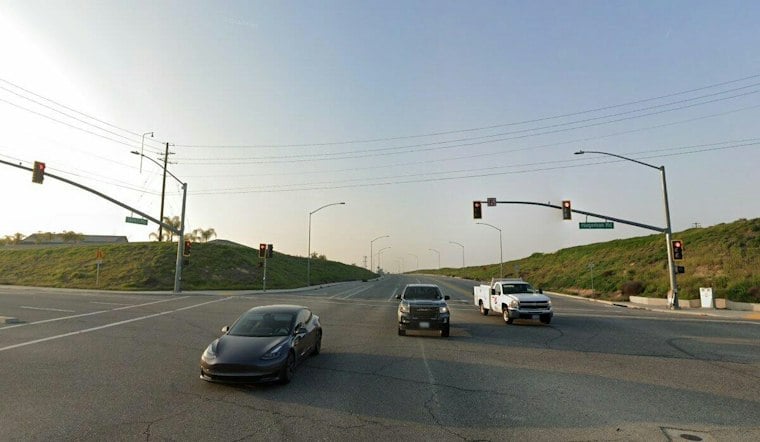
More than 1,000 registered sex offenders are listed on California's Megan's Law website as living in Bakersfield, but a review of addresses within five miles of a local newsroom turned up listings that correspond to intersections, a commercial truck lot, and at least one location that doesn't seem to exist at all. No one has determined whether any of the registrants tied to those addresses actually broke the law, but the findings raise pointed questions about how closely anyone is checking the information the public is told to trust.
The review, conducted by Eyewitness News and detailed by KBAK, found listed addresses that appeared to correspond to intersections or locations without an apparent residence. Reporters visited the sites in person, including the intersection of Hageman Road and Santa Fe Way, and an address near Williams Street and California Avenue where an online search did not identify any corresponding address at all. Another listing led to a commercial truck lot, where the owner and others told the station they were not aware of anyone living or staying overnight on the property.
What the Registry Is Supposed to Do
California's Megan's Law website is designed to give the public information about registered sex offenders, drawing from a database the state says supports monitoring and registration of more than 120,000 people statewide, according to the California Office of the Attorney General. The state itself warns that the registry's information may contain errors and omissions. As of this writing, the public-facing site has shown a notice that it is temporarily down for maintenance.
Under state law, registrants who change residence or become transient must update their registration within five working days with a local law enforcement agency, which then forwards that information to the California Department of Justice, according to the state's own summary of registration requirements posted on meganslaw.ca.gov. The DOJ says it updates the public website daily based on what local agencies report. People who regularly reside at more than one address are required to register in each jurisdiction, regardless of how many nights they actually spend there, per California Penal Code section 290.010. Those registering as transients face a separate, lifelong registration requirement under Penal Code section 290.011.
Inside Bakersfield's Compliance Checks
At the Bakersfield Police Department, clerks handle registrations and distribute lists of people who have failed to comply, per the station's reporting. Detective Michael Broida, who works in the department's special victims unit, told the outlet that an address reported as an intersection or a taco truck is itself a sign the registrant isn't in compliance. He said officers have other responsibilities and cannot personally check every case, but that the department can and will investigate specific reports of possible violations, adding that arrests follow when there is probable cause. Broida said he wished the department had a dedicated unit tasked with locating every sex offender found out of compliance.
The station also interviewed journalist Chris Hansen, known for NBC's To Catch a Predator, who said he wasn't surprised that convicted sex offenders try to evade monitoring and detection. Hansen said monitoring compliance becomes difficult when agencies lack the resources to verify registrations, and that insufficient investigative staffing can allow people to lie about where they actually live. He called for agencies to work together to develop solutions and strengthen oversight.
A Pattern With a Longer History
Bakersfield's findings echo a broader, long-documented problem with matching registry addresses to licensed facilities statewide. A 2011 audit found more than 1,000 state-licensed facilities whose addresses matched those of registered sex offenders, according to CNN. That included 677 facilities serving children, such as foster and group homes, and 385 facilities for vulnerable adults. The state auditor at the time said almost 600 of those roughly 1,000 matches were high risk and needed immediate investigation. State social services and county child-welfare agencies eventually investigated 99% of the matches and began legal action against eight facility licensees, though the Department of Social Services cited a lack of resources as the main reason it hadn't built an automated matching system in the first place.
A follow-up audit from the California State Auditor found that Social Services had since begun regular address comparisons but still needed to be more accountable for the matches and better document its investigative procedures.
Fresno Weighs a Different Approach
The oversight debate has surfaced recently in Fresno, where the City Council voted 6-0 to direct the city attorney to draft an ordinance requiring licensing for commercial group homes and capping them at one per council district, according to GV Wire. The proposal could limit the city to no more than 42 such group-home units even though more than 1,300 registered sex offenders live in Fresno. Councilmember Mike Karbassi said the city currently has no registry showing how many commercial group homes exist or how many registrants live in them, asking, “How do we know how many we have if we don’t have a registry?”
Attorney Janice Bellucci said her organization would sue Fresno if it adopts an ordinance limiting sex-offender housing, arguing that state law preempts local restrictions in this area. The same report noted that among 1,922 people released through California's Sex Offender Management Program in 2020-21, 2.4% were convicted of sex offenses during the following three-year monitoring period.
Back in Bakersfield, no findings have established that any individual registrant broke the law, and it remains unclear how many questionable addresses are currently listed or which agency bears responsibility for correcting them. What the review does make clear is that the gap between what the registry says and what exists on the ground is real enough that detectives, journalists and city councils across the state are all asking versions of the same question: who is actually checking?




