

























































A federal appeals court has upheld a ruling against Catholic Relief Services, finding the Baltimore-based charity illegally cut off health coverage for a gay employee's husband. The 4th U.S. Circuit Court of Appeals, in a split 2-1 decision handed down this past Friday, rejected the charity's argument that its religious beliefs entitled it to deny the benefits, closing out a legal fight that stretched back nearly a decade.
The case centers on John Doe, a pseudonym used in court filings, who worked as a data analyst for Catholic Relief Services. According to the Maryland Daily Record, the charity had provided health benefits to Doe's husband for several months after he was hired in 2016, before human resources discussions over Catholic doctrine led the organization to revoke that coverage in October 2017. Doe declined alternative compensation arrangements CRS offered and filed a complaint with the Equal Employment Opportunity Commission in 2018, according to CaseMine.
Writing for the majority, Judge Henry F. Floyd found that Title VII's religious-employer exemption does not cover sex discrimination, even when the discrimination is religiously motivated, per the Daily Record. Floyd also wrote that the church autonomy doctrine can shield decisions involving ministerial employees but does not extend to lay workers like Doe. The court concluded that neither Title VII nor the Maryland Fair Employment Practices Act shielded Catholic Relief Services from liability, and that the First Amendment's free exercise clause offered no protection either.
A Years-Long Legal Battle Through Two Courts
The ruling caps a long procedural road. In August 2022, U.S. District Judge Catherine C. Blake found Catholic Relief Services liable for sex discrimination under Title VII and the Equal Pay Act, according to VitalLaw, and following a bench trial, the district court awarded $60,000 in damages under state law in April 2025. Along the way, the case prompted the Maryland Supreme Court to weigh in: in August 2023, the state's highest court answered certified questions in a 4-3 decision, clarifying that the Fair Employment Practices Act's religious exemption only protects employers from claims brought by workers whose job duties directly further the entity's core mission, according to Justia.
The 4th Circuit panel also dismissed Catholic Relief Services' appeal on the federal Equal Pay Act claim as moot, finding that a prior damages stipulation between the parties meant the outcome could not change the overall monetary recovery, per CaseMine's report on the ruling. Legal arguments throughout the litigation leaned heavily on the U.S. Supreme Court's 2020 decision in *Bostock v. Clayton County*, which held that Title VII's ban on sex discrimination inherently covers sexual orientation discrimination, according to the National Employment Lawyers Association.
Majority Rejects Broad Religious Immunity Claim
Catholic Relief Services had argued that its actions were rooted in sincerely held religious beliefs, the Daily Record reported. Floyd, however, described the immunity the charity sought as extremely broad and nearly unbounded, writing that Title VII and state employment law already provide exemptions above and beyond what the Constitution requires. The 4th Circuit majority also ruled that the federal Religious Freedom Restoration Act cannot be asserted as a defense in employment discrimination lawsuits between private parties, holding that the law only restricts government action, according to a separate filing noted by Justia.
That RFRA question carried extra weight because the U.S. federal government had intervened in the appeal in support of Catholic Relief Services, arguing alongside the charity that religious organizations should be shielded from private anti-discrimination claims under statutory and constitutional religious protections, according to Baptist News Global. Judge James Andrew Wynn joined Floyd's decision and wrote separately to criticize the dissent as misleading, accusing it of effectively declaring religious law supreme over secular law and raising what he called serious reservations about judges acting as historians, per the Daily Record.
An 88-Page Dissent Warns of Restricted Religious Freedom
Judge A. Marvin Quattlebaum Jr. dissented from the majority in an 88-page opinion, describing the decision as stunningly restrictive of religious freedom. Nearly 40 pages of his dissent trace historical background on the government's role in religious affairs, concluding that the nation's founders understood churches to hold autonomy over questions of faith, doctrine, or church governance, the Daily Record reported.
Civil rights organizations celebrated the outcome. The American Civil Liberties Union, Americans United for Separation of Church and State, and the National Employment Lawyers Association had all filed amicus briefs supporting Doe, arguing that religious exemptions do not grant blanket immunity from civil rights laws to private nonprofit employers, according to the American Civil Liberties Union. Rachel Laser, president and CEO of Americans United for Separation of Church and State, said in a statement that religious freedom does not license discrimination or harm against LGBTQ+ workers, adding that employers cannot deny benefits to LGBTQ+ employees based on religious beliefs.
A Baltimore Institution With Global Reach
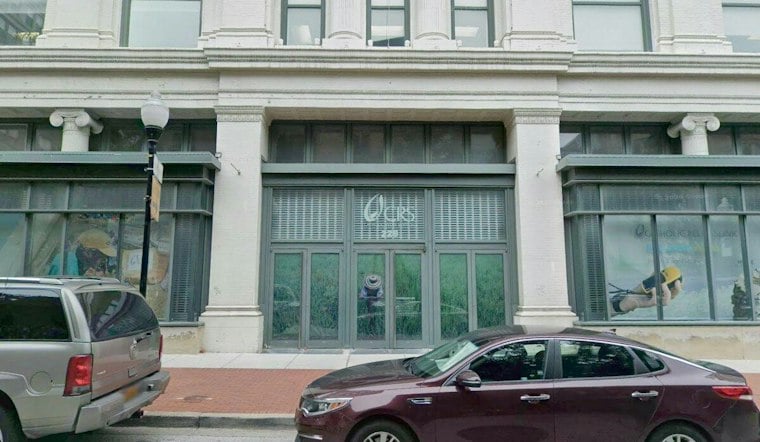
Catholic Relief Services is headquartered on West Lexington Street in downtown Baltimore. Founded in 1943 by the U.S. Conference of Catholic Bishops, the organization now operates in more than 100 countries with over 5,000 employees worldwide, the vast majority of whom are lay workers not required to adhere to Catholic religious beliefs, according to Forbes. The charity reported roughly $1.3 billion in total revenue in fiscal year 2024, with public sector grants historically supplying about half of its operating budget, per the same Forbes report.
Catholic Relief Services did not immediately respond to a request for comment, according to the Daily Record. Given Quattlebaum's dissent and the federal government's involvement as an intervenor, the charity could still seek review before the full 4th Circuit panel or petition the U.S. Supreme Court, leaving unresolved how higher courts might ultimately balance church autonomy against federal civil rights protections.




