

























































The University of Maryland, Baltimore has shut down the ROAR Center, a program that offered legal help, counseling and other support to victims of violent crime, and notified all seven staff members that they would lose their jobs after completing at-home assignments. The closure strips Baltimore of a service that its founding director says nothing else in the city replicates.
ROAR, which stands for Rebuild, Overcome, And Rise, was founded in 2019 as a project of the University of Maryland Francis King Carey School of Law to combat gun violence in Baltimore, according to the Maryland Daily Record. Over the years it served hundreds of victims of nonfatal gunshot wounds and family members of homicide victims, according to founding executive director Lydia Watts. UMB spokesperson Alex Likowski told the paper that financial considerations were part of the reasoning behind the closure, while also saying the university determined that a different service-delivery structure was needed to keep serving clients and the surrounding community.
Watts said she was escorted out of her office on Friday, though she will continue to be paid through the end of the fiscal year in June. In the meantime, the paper reports, she has been assigned to prepare a 15-slide presentation on trauma-informed client interviewing and representation and the ethical considerations involved in representing crime victims — an oddly bureaucratic coda for a program she said she was surprised to see end.
Funding Cuts Collide With a Disputed State Picture
Watts attributed part of the shortfall to a cut of more than one-third in ROAR's funding under the federal Victims of Crime Act from the previous fiscal year to the current one, per the same report. That federal money flows through the U.S. Department of Justice, and the Maryland Governor's Office of Crime Prevention and Policy, which has broad discretion over how those dollars are spent, has narrowed eligibility for victims services funding in recent fiscal years. State law requires at least $60 million a year to be spent on victims' services.
Accounts of that $60 million figure diverge depending on the source. A Maryland legislative House Appropriations Committee summary states that victim services were fully funded at the statutorily mandated level of $60 million, while the Office of Gov. Wes Moore announced that more than 120 victim-service programs across the state received $60 million in combined federal and state VOCA funding for fiscal 2026. Neither figure specifies how much of that total, if any, reached ROAR directly.
Where ROAR's Work Goes Next
Most of ROAR's duties are set to shift to the EMBRACE Initiative, an entity housed under UMB's provost's office that says it seeks to address systemic inequality by integrating academic expertise with grassroots leadership. EMBRACE can take on case management, mental health services and policy advocacy, but UMB has acknowledged it lacks the capacity to continue ROAR's legal representation of clients. The university is working on a contract with a nonprofit legal services provider to fill that gap, Likowski said, but confirmed it is not yet final.
EMBRACE's own track record centers on different kinds of support. Since its Resource and Reentry Center launched — opening in a donated storefront in December 2021 before moving into a new space in January 2024 — the initiative has logged more than 8,600 interactions with community members and helped them achieve more than 3,700 tangible goals, according to the University of Maryland, Baltimore. Those goals have included securing jobs, enrolling in drug treatment and obtaining identification documents. The university describes EMBRACE's model as spanning violence prevention, youth leadership development, system transformation and trauma-informed care, with employment assistance and vital records among the most requested services, alongside housing, behavioral health support, expungement, vocational training and transportation help. Legal representation for crime victims, the kind ROAR specialized in, is notably absent from that list.
A Legal Legacy and an Unfinished Move
ROAR's reach extended into the courtroom in ways EMBRACE has not replicated. The center operated what it called a first-of-its-kind medical-legal partnership for gun-violence survivors alongside the University of Maryland Medical Center, Shock Trauma and Violence Intervention Programs, according to the ROAR Center's own website. ROAR also played a key role in a class-action lawsuit over Baltimore police seizing crime victims' property as evidence, a case that settled in 2024 and required the Baltimore Police Department to train, supervise and discipline employees to ensure lawful searches and seizures, per the ROAR Center.
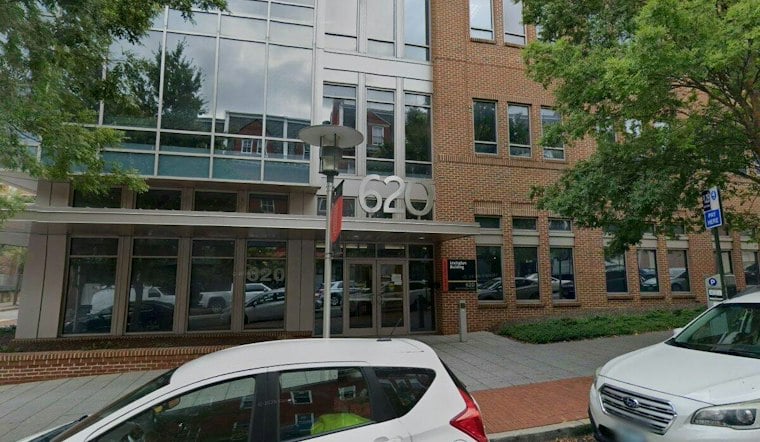
The closure arrives just as ROAR was preparing to move into a newly renovated office in West Baltimore once used by Juanita Jackson Mitchell, the first Black woman to practice law in Maryland and the first woman to graduate from the University of Maryland School of Law. That office space will remain in use once ROAR's work shifts over to EMBRACE, though the symbolism of the transition was not lost on Watts, who told the Maryland Daily Record that no one else in Baltimore does what ROAR does and that she hopes clients and their families keep getting the help they need.




