

























































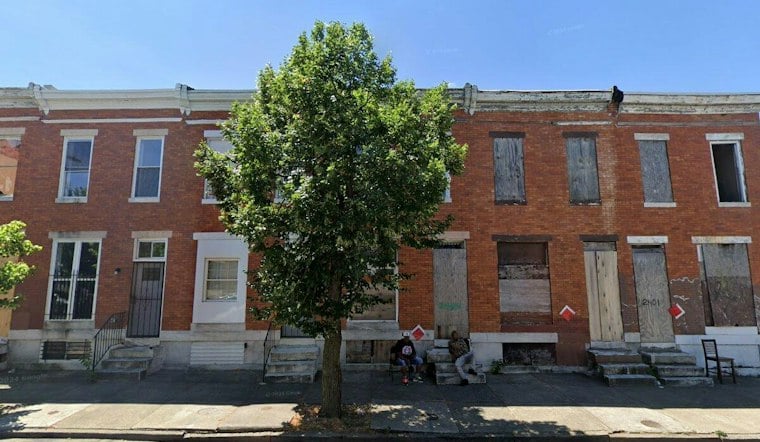
A Baltimore City Circuit Court judge did not hold back Wednesday when it came time to sentence a man convicted in a daylight shooting on East Oliver Street, telling the courtroom that the police investigation behind the case was a “terrible job.” Judge Catherine Chen sentenced Nathaniel Green, 44, to 20 years of active prison time, part of a 35-year sentence with all but 20 years suspended, for a shooting that left a man wounded in the upper chest.
A Scathing Rebuke From the Bench
Chen's criticism of the Baltimore Police Department's work on the case was sharp and direct, according to Baltimore Witness, which reported that the judge said the department “did a terrible job” investigating the shooting. The outlet's reporting on the case identifies the shooting as connected to the 2400 block of East Oliver Street, and describes the police investigation as including an inadequate interview with the victim. Despite her criticism of the investigation, Chen also said she had a lot of compassion for Green, whom she sentenced for his role in the shooting.
The case drew separate coverage of the trial itself, which culminated on July 17 when a jury found Green guilty on eight of 11 charges, per the same news organization's account of the verdict. Those convictions included first-degree assault, reckless endangerment, numerous firearm charges and attempted voluntary manslaughter — the latter a downgrade from an original attempted first-degree murder charge. Jurors acquitted Green of one count of reckless endangerment and of attempted second-degree murder, and deadlocked on a separate firearm-possession count.
What Happened on Oliver Street
According to the seed facts in Baltimore Witness's coverage, the victim had been walking with his girlfriend to a store when an altercation broke out between the two men in broad daylight. The victim was shot in the upper chest and ran door to door seeking help before a bystander called 911. Police say they later identified Green through a database built from witness accounts and surveillance footage.
Green's defense maintained throughout the trial that he acted in self-defense, claiming the victim had threatened him with a baseball bat that was left at the scene overnight. The defense also argued that the state's case was undermined by missing surveillance footage, the absence of DNA or ballistics testing, and limited witness testimony — gaps the defense said left prosecutors unable to prove Green's guilt beyond a reasonable doubt, per the verdict report.
Prosecutors Push Back, Green Speaks Out
Prosecutors saw the case differently. A prosecutor said the case was disturbing on many levels and argued that Green's behavior represented a threat to public safety, according to the reporting on the sentencing. In his own remarks, Green pointed to his struggles, saying, “I want help with my drug addiction, that's my downfall. I'm very religious now.” Court records referenced in the coverage note that Green has grappled with both drug addiction and mental health issues.
It's worth noting that different pieces of reporting on this case have described the shooting date differently — one account tying it to July 1 on the 2400 block of East Oliver Street, and another identifying the case as stemming from an Aug. 15, 2025, shooting at the same block. Baltimore Witness's reporting has not reconciled that discrepancy.
A Broader Pattern Under Federal Watch
Chen's blunt assessment of the police work lands against the backdrop of years of federal oversight of the Baltimore Police Department. The department has operated under a consent decree monitored by the U.S. District Court for the District of Maryland, which meets monthly with the city, police and an independent monitoring team to track compliance. The U.S. Department of Justice joined the city and BPD in reporting on that progress in February 2025.
That oversight has tracked real gains, even as problems with speed persist. The monitoring team found that 72% of BPD misconduct investigations were rated very good or excellent, up from just 23% six years earlier, according to Police1's reporting on the consent-decree process. Only 3.3% of investigations in the team's 2022 sample were graded poor, compared with 19% back in 2018.
Still, timeliness remains the department's stumbling block. The consent decree requires misconduct investigations to wrap up within 90 days, but Police1 reported that in 2022 only 32% of investigations met that window, with the average case dragging on for nearly 180 days. Deputy Commissioner Brian Nadeau has said the average length of a Public Integrity Bureau investigation had improved to 136 days by early July, still well short of the 90-day target.




