

























































For generations of Baltimore kids, the Bunny Man was not a cartoon character but a warning — a tall, sometimes naked figure in bunny ears said to lurk in the woods near Hanlon Park, Pigtown, and Cherry Hill. Parents changed routines, kept children off wooded sidewalks, and walked them to church to avoid him. Decades later, the legend has faded for many younger residents who have simply never heard of him.
A Hatchet Through a Windshield in Fairfax County
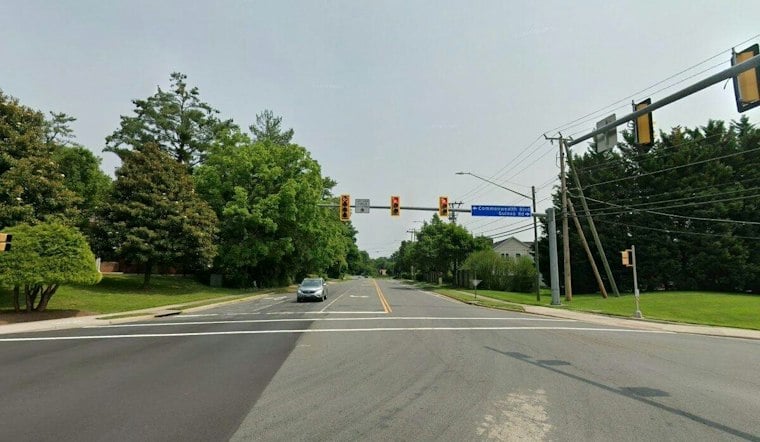
The story traces back to real events far from Baltimore. As The Baltimore Banner reported, the Bunny Man legend originated in events dating to 1970, when an Air Force Academy cadet and his fiancée told police that a man in a white suit with long bunny ears approached their car in Fairfax County, accused them of trespassing, and threw a wooden-handled hatchet through the windshield. According to Washingtonian, that confrontation happened on October 18, 1970, near Guinea Road, and involved Robert Bennett and his fiancée. Neither was hurt, the outlet reported.
About two weeks later, a private security guard named Paul Phillips encountered a man in a bunny costume holding an ax at an unoccupied house and was threatened, per the same account. Fairfax County police investigated but ultimately deemed the case unsubstantiated and inactive. The two encounters were also reported by the Washington Post at the time, according to the Banner.
From Northern Virginia to Maryland Classrooms
The Bunny Man folklore spread from Northern Virginia and Washington, D.C., into Maryland, carried largely by word of mouth among children, the Banner reported. In 1973, University of Maryland student Patricia Johnson studied Bunny Man stories for a folklore class and interviewed Prince George's County high school students about their own experiences with the legend, preserving more than 40 interviews now held in the university's folklore collection. That collection, the University of Maryland reports in its own account of the legend, spans 141 linear feet of material gathered by students from the 1960s through the 1980s — some of it describing a 6-foot-tall, hatchet-wielding man in a furry rabbit costume.
One 1973 interviewee, Pam Beasley of Upper Marlboro, told researchers that the figure would simply walk up and down the street scaring people in cars, according to Maryland Today. But Johnson's interview subjects varied widely in their accounts — some described the Bunny Man as harmless, while others claimed he damaged property, hurt people, or killed them, the Banner reported. Stories collected over the years included claims that he cut off animals' heads in Palmer Park, chased children from parks while targeting anyone with the middle name Denise, and was once ambushed by children with chalkboard erasers after allegedly wandering onto school grounds in Landover.
Baltimore's Own Encounters With the Legend
By the time the legend took root in Baltimore, it had become a fixture of childhood warnings across multiple neighborhoods. Some believed the Bunny Man lived in Gwynns Falls/Leakin Park, while others said he haunted the pathway near the West Cold Spring Lane apartments and the train tracks running through Pigtown and Cherry Hill, according to the Banner.
Reggie Graves, who in the late 1980s cut through Hanlon Park woods on his walk home from the former William H. Lemmel Middle School in West Baltimore, recalled being warned along with classmates never to walk alone through the trees because of the Bunny Man. Graves said he and his friends once threw rocks and sticks at a man they spotted in the woods, then ran when he gave chase — and for a moment, he said, they thought they'd escaped him. In East Baltimore during the 1990s, Dominique Bagley and friends approached a tree line near Bocek Recreation Center where teens said the Bunny Man lurked; Bagley said that part of the park was simply forbidden. Terrod Roberts, now 34, remembered running through Pigtown streets as a young child in the 2000s and later making sure to travel toward Carroll Park woods only in the company of older kids once neighborhood talk of the Bunny Man took hold.
A Real Crime Became Entangled With the Myth
Some of the darkest Bunny Man stories allege he molested, raped, or killed people — allegations that, per the Banner's reporting, appear tied to an actual Baltimore crime from April 1968. That month, West Baltimore experienced attacks and murders involving boys, as police investigated two crimes over roughly a week, including a case in which four boys were lured into the woods and beaten and molested by a man. Four boys disappeared around the same time. Murder victims were between 5 and 10 years old, and several were sexually mutilated, according to the Baltimore Sun's reporting cited by the Banner.
Police arrested 18-year-old Reginald Oates after a stakeout at Leakin Park, and according to reports cited by the Banner, he was carrying a paper bag containing parts of victims' bodies at the time of his arrest. Oates was later found incompetent to stand trial and sent to Clifton T. Perkins State Hospital; per the Maryland Department of Health, he remains under state care and custody.
Why the Legend Endures — and Why It's Fading
University of Maryland, College Park English department instructor Mike Olmert, who taught there for more than 30 years, said people create stories like the Bunny Man to make sense of a confusing world and to feel some sense of control over it, according to the Banner's reporting. That instinct may explain why the legend spread so widely among children, even as its sinister edge has dulled over the decades — the Banner reports that the Bunny Man's frightening image has lost much of its power, and that younger generations often haven't heard of him at all.
The legend's Virginia roots, meanwhile, have only grown more elaborate with time. Washingtonian reported that the story of the Bunny Man has overtaken the documented truth, absorbing added elements like a bridge, murder tales, and an asylum narrative that were not part of the original incidents. The Fairfax Station bridge near Clifton, Virginia, is now labeled Bunny Man Bridge on Google Maps and functions as a destination for curiosity-seekers near the site of the alleged first appearance — a spot that, according to USC's Folklore Archive, has also drawn younger high schoolers looking to party. The town of Clifton has leaned into the legend with T-shirts and a haunted Halloween attraction, Washingtonian reported, even though no one has ever publicly come forward to claim they were the real Bunny Man.





