

























































A 33-year-old Baltimore man pleaded guilty this week to federal drug and firearms charges stemming from a December 2023 foot chase that ended with him sprawled in the grass, a loaded handgun still gripped in his left hand and a loaded magazine lying near his right. Quran Cox now faces a potential sentence ranging from a mandatory five years up to life in prison when he returns to court in December.
U.S. Attorney for the District of Maryland Kelly O. Hayes announced Cox's guilty plea on Monday, appearing alongside leadership from the Bureau of Alcohol, Tobacco, Firearms, and Explosives, the Baltimore City State's Attorney's Office, and the Baltimore Police Department, according to the U.S. Department of Justice. The case, filed under docket number 1:24-cr-00086 in the U.S. District Court for the District of Maryland, saw Cox enter his plea in that same courthouse Monday, per the U.S. District Court for the District of Maryland.
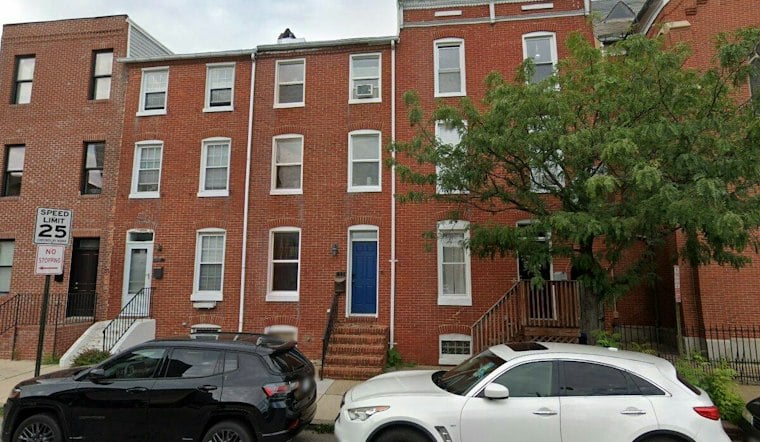
The case began when a Baltimore police detective was monitoring the 100 block of West Hamburg Street through a CitiWatch camera and spotted Cox holding and manipulating what looked like a package of drugs, according to CBS Baltimore. Officers moved in, and Cox took off, running down an alley and into the courtyards of a nearby apartment complex with police in pursuit, the outlet reported. Officers can be heard ordering him to stop running, stop digging and put it down, per the station's account, before Cox slipped and fell on the grass.
What Police Found at the Scene
When officers reached him, they found a firearm in his left hand and a loaded magazine near his right, per the same account. The gun itself had one round in the chamber and six more in the magazine. Officers recovered 53 gelcaps of fentanyl, 22 bags of cocaine, and $167 in cash, the station reported.
Gelcaps are a standard street-level packaging format used by narcotics distributors across Baltimore to divide individual doses of fentanyl and heroin for sale, according to the U.S. Department of Justice. Detectives also recovered a key to Cox's vehicle, which was parked on the same block, the article notes. A K-9 unit performed an exterior scan of the parked car and got a positive alert, leading officers to find 14 additional rounds of ammunition tucked in the driver's door pocket, the Justice Department said.
Federal Charges Carry Steep Mandatory Minimums
Cox pleaded guilty to possession with intent to distribute fentanyl and cocaine, which carries a maximum sentence of 20 years, and to possession of a firearm in furtherance of a drug-trafficking crime, which carries a maximum sentence of life in prison, per CBS Baltimore's reporting. Under 18 U.S.C. § 924(c), that firearm charge also carries a mandatory minimum of five years that must be served consecutively to any sentence for the underlying drug charge, according to the Spodek Law Group. Federal law gives judges no discretion to run that sentence concurrently with the drug conviction.
Cox's prosecution was brought under Project Safe Neighborhoods, a Department of Justice initiative revitalized in May 2021 that pools federal, state, and local law enforcement resources to target violent crime and gun offenses, the Justice Department said. The investigation that built the case against Cox was a joint effort among the ATF's Baltimore Field Division, the Baltimore City State's Attorney's Office, and the Baltimore Police Department, according to a statement posted on the U.S. Attorney's Office for Maryland's Facebook page.
Surveillance Network Played Key Role
The CitiWatch camera that first caught Cox manipulating the suspected drugs is part of a citywide network of more than 700 city-operated closed-circuit cameras that law enforcement monitors in real time to spot criminal activity, according to CBS News. The system covers high-activity corridors throughout the city and has become a routine first step in cases like Cox's, where a single camera feed can trigger an in-person police response within minutes.
Cox's case also fits into a much larger pattern of federal gun prosecutions nationwide. U.S. Sentencing Commission data for fiscal year 2025 shows 2,384 federal cases included convictions under 18 U.S.C. § 924(c), with 69 percent of those involving basic firearm possession or carrying tied to the same five-year mandatory minimum Cox now faces, according to the U.S. Sentencing Commission.
When Cox appears before a U.S. District Court judge on December 9, the court will weigh statutory sentencing factors under 18 U.S.C. § 3553(a) in setting his final prison term above the mandatory minimum, per the Justice Department. Those factors require judges to evaluate criminal history and offense severity before imposing a sentence beyond the statutory floor.





