

























































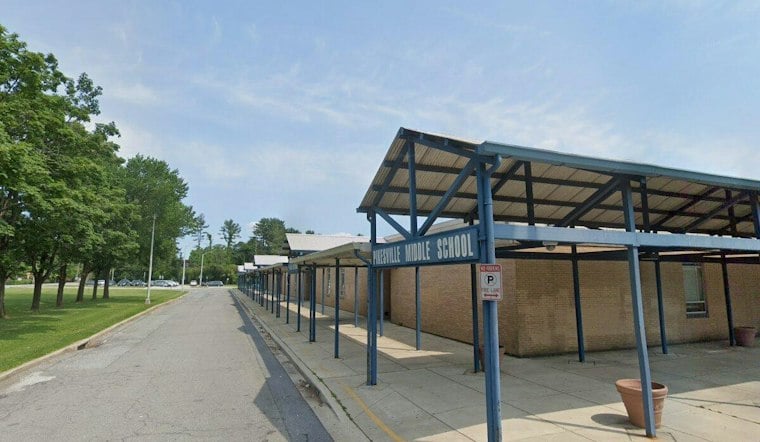
A Baltimore nonprofit founded by a survivor of gender-based violence is betting that the best way to stop intimate partner abuse is to teach teenagers how to spot it before it happens. Mónica Guerrero Vázquez, president and CEO of the TAMOJA Foundation, has been taking that message directly into Baltimore-area schools, most recently at Pikesville Middle School's Hispanic Heritage Month celebration, where she spoke to students and parents about recognizing the warning signs of intimate partner violence.
Guerrero Vázquez launched TAMOJA in 2023 with a team of advocates and mentors, according to the Maryland Daily Record, and the organization later opened an 18-month Leadership Academy in 2025 to train combined adult and youth cohorts in gender-based violence prevention. The pilot cohort includes 14 participants — seven adults and seven teenagers — who meet monthly in person and also take part in webinars and office hours, according to CBS News. Participants receive a stipend as they work through curriculum focused on breaking stigma, healing pathways and trauma-informed prevention.
A Multigenerational Approach Built Around Survivors
Guerrero Vázquez has described herself as a survivor of gender-based and intimate partner violence, framing her prevention work as part of her own healing journey, per the same CBS Baltimore report. She has said gender-based and intimate partner violence is a human rights issue, and that prevention starts with recognizing warning signs before violence ever happens. She wants young people who feel uncomfortable in a relationship to know it's okay to ask for help.
TAMOJA operates around three pillars — awareness, education and empowerment — aimed at giving communities tools to understand and discuss violence openly. At the Pikesville event, the foundation set up a booth in the school cafeteria and distributed prevention materials in both English and Spanish, with help from community liaison Xochitl Lopez. The celebration reportedly drew a large crowd, according to the report.
Why Pikesville Middle School Became A Focal Point
Pikesville Middle School transitioned into a community school and expanded its English for Speakers of Other Languages program in response to rapid demographic growth among its immigrant student population, the same outlet notes. Principal Nicole Bridges has positioned the school as a hub for exactly the kind of outreach TAMOJA is offering, and Guerrero Vázquez has said schools are central spaces for breaking stigma and connecting with young people. She has indicated plans to deepen TAMOJA's work with schools going forward, with eventual graduates of the Leadership Academy expected to help grow prevention messaging and sustain the program through future cohorts.
Guerrero Vázquez's day job gives the effort institutional weight. She has served as executive director of Johns Hopkins University School of Medicine's Centro SOL since 2018, after joining the organization in 2014, leading initiatives to expand healthcare access and build career pathways for bilingual staff, according to the Maryland Daily Record. Centro SOL previously developed Teen Testimonios, a school-based cognitive behavioral trauma intervention designed for newly arrived immigrant Latino middle and high school students in Baltimore, according to Johns Hopkins Medicine — a model that echoes TAMOJA's school-based, culturally adapted approach.
Public Health Credentials And A Statewide Honor
Born in Ecuador and raised in Madrid, Spain, Guerrero Vázquez moved to Baltimore in 2011 and earned a master's degree in public health from Johns Hopkins Bloomberg School of Public Health while pursuing a doctorate in health equity and social justice, according to Voyage Baltimore. In 2017, she was selected as one of eight inaugural Bloomberg Fellows at the Johns Hopkins Bloomberg School of Public Health, focusing her fellowship on adolescent health and violence prevention. She now holds public policy appointments including a seat on the Governor's Commission on Suicide Prevention representing the Hispanic/Latino community and co-chair of a subcommittee on the Baltimore City Trauma Informed Care Taskforce.
That body of work is part of why Guerrero Vázquez is being honored with a 2026 Maryland Hispanic Leadership Award, presented by The Daily Record and the Maryland Hispanic Chamber of Commerce. The awards recognize leaders across six categories — business, law, government, nonprofits, health care and higher education. She is one of six nonprofit honorees this year, alongside Mariana Izraelson, executive director of Grassroots Crisis Intervention in Howard County, an organization that operates a 24/7 crisis hotline and an 89-bed emergency shelter, according to CBS News.
The Statewide Backdrop Driving The Urgency
The Maryland Network Against Domestic Violence recorded 47 deaths tied directly to intimate-partner violence across Maryland in 2026, with nearly 37% of those cases involving a suicide or attempted suicide, Hoodline previously reported. Firearms were involved in 75% of Maryland's 56 domestic violence fatalities in 2022, according to legislative testimony before the Maryland General Assembly, which has fueled efforts to mandate earlier firearm surrender under protective orders. The World Health Organization has found that nearly 1 in 3 women globally have experienced partner or sexual violence during their lifetimes.
Against that backdrop, Guerrero Vázquez has cast TAMOJA's work as filling a gap that exists before crises reach emergency rooms or courtrooms — reaching students and parents early, in English and Spanish, inside the cafeteria of a middle school rather than after violence has already occurred. How TAMOJA plans to scale its 14-participant pilot cohort to reach a larger share of Baltimore's growing immigrant student population remains an open question for the young organization as it looks toward future Leadership Academy cohorts.





