

























































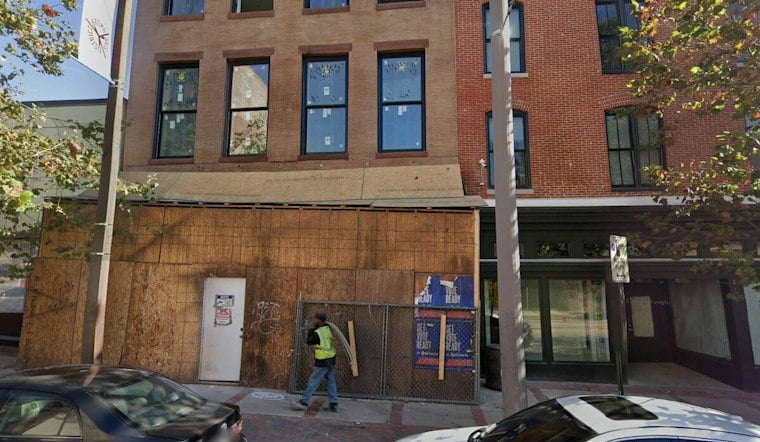
Baltimore officials want to spend $8.5 million buying back a cluster of Howard Street apartment buildings the city once sold off for just $175,000 — and the Board of Estimates was set to vote at its Wednesday meeting, but City Administrator Faith Leach requested a delay shortly before it began. The proposal would turn the 52-unit Howard Row apartments at 407-417 N. Howard St. into bridge housing for homeless families transitioning to long-term subsidized housing, but pushback from a city councilman and the agency overseeing downtown development has pumped the brakes until October 21.
A Deal Decades in the Making
The numbers behind the proposed buyback trace back nearly three decades. Baltimore acquired all but one of the Howard Street parcels in 1998 for $514,900, then bought a sixth property in 2003 for a combined total of $684,900, according to The Baltimore Banner. The city then sold the deteriorating buildings to Poverni Sheikh Group for just $175,000, a price reflecting how far gone the properties were at the time.
That steep discount wasn't unprecedented for the corridor. When the Baltimore Development Corp. selected Poverni Sheikh Group's redevelopment proposal for properties at 407–415 N. Howard St. in May 2017, the developer offered $75,000 for five vacant buildings that city appraisers had valued at $609,950, according to the Maryland Daily Record. Baltimore Development Corp. economic development officer Brian Greenan said the vacant Howard Street structures were in extremely rough shape and among the most obvious blight on Howard Street heading toward Oriole Park at Camden Yards.
From Blight to Modern Apartments
Poverni Sheikh Group rehabilitated the Howard Row buildings in 2018, converting them into modern apartments ranging from studios to two-bedroom units, complete with granite countertops, stainless steel appliances, laminate floors and in-unit laundry, per the Banner's reporting. Then-Mayor Catherine Pugh attended the project's groundbreaking. The developer had already proven out this playbook nearby with Howard Crossing, a similar adaptive-reuse project in the 600 block of North Howard Street that turned vacant city properties into mixed-use retail and housing, the Daily Record reported.
Howard Row sits inside Baltimore's 117-acre Bromo Arts and Entertainment District, an area created to foster live-work spaces for artists and business owners through tax incentives, according to the Daily Record. That context matters to Councilman Zac Blanchard, who has raised concerns about using the location for transitional housing even though he supports having the proposed housing downtown generally.
Why The Vote Got Delayed
Of the 52 total units at Howard Row, 38 apartments are currently occupied and 14 sit vacant, and the Mayor's Office of Homeless Services intends to phase in placements as tenants move out, the Banner reported. Families would receive priority placement, with stays intended to last up to three months before residents move toward long-term subsidized housing, and CORE DC is expected to manage the building.
The Baltimore Development Corp. asked city officials to delay the vote, and its president and CEO, Otis Rolley, said the organization needed more time to provide the Board of Estimates with a recommendation. That request, combined with the vote's deferral shortly before Wednesday's meeting, pushed formal consideration to October 21.
A Pattern of Hotel-to-Shelter Conversions
The Howard Row proposal would extend a string of recent city purchases aimed at expanding emergency and transitional housing. In February 2024, Baltimore's Board of Estimates approved $18.4 million to acquire two downtown hotels — the former Sleep Inn & Suites Downtown Inner Harbor and Holiday Inn Express Baltimore-Downtown — adding 132 beds of shelter capacity, a deal Hoodline detailed in its coverage of the city's ARPA-funded hotel purchases. Last October, Baltimore added the former Fairfield Inn & Suites on South President Street to its shelter portfolio for $13.3 million, a property that can house 145 women daily.
But those hotel conversions have come with costs beyond the purchase price. An August Baltimore Inspector General report identified significant maintenance defects, including elevated mold levels and non-functioning ventilation, across three former hotel sites operated as shelters by the Mayor's Office of Homeless Services, as Hoodline reported in its investigation into mold and pest problems inside city shelters. Separately, housing advocates called for state-level licensing and health standards for emergency facilities after a September 2025 survey.
The Broader Homelessness Picture
Baltimore's January 2026 Point-in-Time count recorded 1,595 individuals in emergency shelters and transitional housing, a 12% drop in overall homelessness from 2025 even as chronic homelessness rose 7%, according to Community Housing Associates. The Howard Row debate underscores the tension city leaders face: finding enough bridge housing to meet that need while weighing how converting freshly renovated apartments above retail space into transitional units might affect the Bromo Arts District's commercial recovery.
For now, the question of whether Baltimore will pay nearly 49 times what it once sold these Howard Street properties for remains unresolved. The Board of Estimates is scheduled to take the matter up again on October 21, giving the Baltimore Development Corp. two more weeks to deliver the recommendation Rolley said the board needs before casting a vote.





