

























































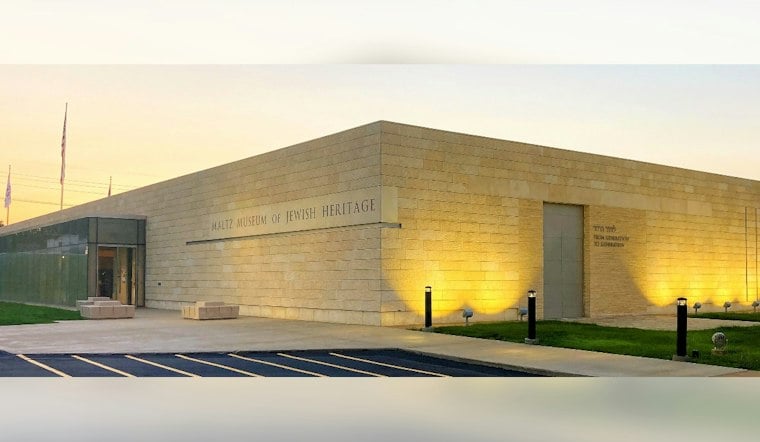
More than 100 paintings, drawings, and sketches by Holocaust survivor Boris Lurie go on public display this weekend at the Maltz Museum in Beachwood, including private War Series works the artist made upon arriving in New York and never exhibited during his lifetime. The exhibition, titled Boris Lurie: Nothing To Do But To Try, opens Sunday, October 18, at the museum's location at 2929 Richmond Road and runs through January 27, 2027.
The show arrives in Beachwood after traveling to other museums following its debut in New York, according to Cleveland.com. The exhibition originally premiered at the Museum of Jewish Heritage in New York City in October 2021 as that institution's first contemporary art exhibition, and it was later extended there through late 2022 due to high visitor interest, according to the Remember the Women Institute. The exhibition is organized jointly by the Maltz Museum and the Boris Lurie Art Foundation. Sara Softness, the Maltz’s director of curatorial affairs, curated the earlier New York exhibition at the Museum of Jewish Heritage.
A Teenager's Life Shattered in Riga
Lurie was born in Leningrad, now St. Petersburg, Russia, and his family moved to Riga, Latvia, when he was about one year old, the report notes. He was just 16 when Nazi occupation upended his life there. Lurie and his father, Ilya, were imprisoned in labor and concentration camps, while his mother, grandmother, sister, and girlfriend were murdered during the Holocaust.
Those family members were among the victims of the Rumbula Forest Massacre on November 30 and December 8, 1941, when approximately 25,000 Latvian Jews were murdered, according to the Museum of Jewish Heritage. Rumbula stands alongside Babyn Yar as one of the largest two-day mass shootings of the Holocaust, the museum notes. Lurie and his father both survived and emigrated to the United States after the war, with Boris arriving in 1946, per the Cleveland.com account. After his Counter-Intelligence Corps service in Europe, Lurie immigrated to New York, according to the Times of Israel.
Paintings Born of Grief, Kept Hidden for Decades
After his Counter-Intelligence Corps service and immigration to New York, Lurie created the War Series as a private catharsis, according to Cleveland.com. Key pieces in the series include Portrait of My Mother Before Shooting (1947), the Museum of Jewish Heritage notes. He kept the series private throughout his life, and this exhibition marks the first time the War Series has ever been shown publicly.
Sara Softness, who curated the show, said Lurie kept working until he mastered a painting technique, and that his work cannot be reduced to a single experience or identity, per Cleveland.com's reporting. Lurie deplored the investment art market and resisted its blandishments; he rarely showed his art after the 1970s and almost never offered it for sale, according to Jewish Currents. The War Series was never exhibited during his lifetime.
From Private Grief to Public Provocation
Lurie's War Series stands in contrast to the confrontational public art he became known for later. In 1959, he helped found the radical NO!art movement alongside Sam Goodman and Stanley Fisher, using negation and provocative subject matter to challenge Pop Art, Abstract Expressionism, war, genocide, racism, and consumer culture, according to the Ben Uri Gallery. The movement, Cleveland.com reports, challenged prevailing ideas about art and society writ large.
Lurie preserved objects, documents, and memorabilia in a personal archive.
What Visitors Will See in Beachwood
Stephanie Stebich, who leads the Boris Lurie Art Foundation, said the artist's archive includes a remarkable collection of photographs, per Cleveland.com.
The Maltz Museum's staging reportedly includes an expanded layout with additional early New York-era works not shown at earlier tour stops, and the show pairs artworks with personal items Lurie retrieved from his family's Riga Ghetto apartment, according to the Boris Lurie Art Foundation.




