

























































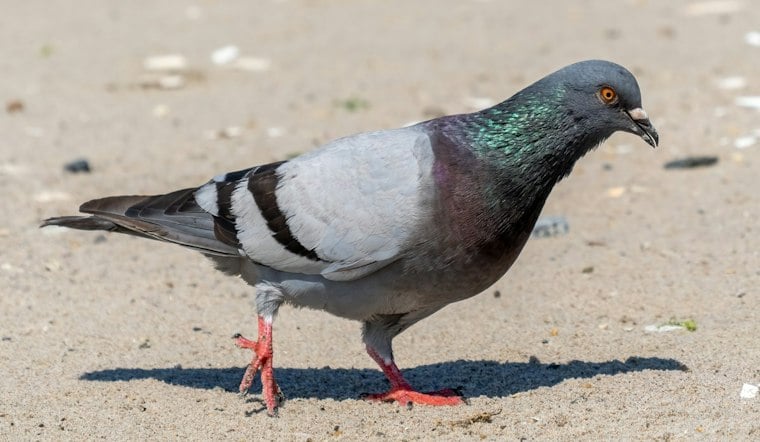
George McKenzie Jr. grew up in Bedford-Stuyvesant, Brooklyn, carrying a gun in his backpack to school, surrounded by friends and cousins caught up in street life. Today he is a wildlife photographer and National Geographic Explorer who has shot animals from the Arctic to Africa, a path he says began not with ambition for conservation but with an interest in impressing women.
McKenzie dropped out of high school and has said gun violence was a constant presence in his childhood, according to CBS News New York. He has said he began photography because he thought women liked photography, a motivation that led him, with encouragement from mentors, toward subjects he had direct access to in his own neighborhood — starting with pigeons, which he has called his “spark animal,” according to the Unseen Story Foundation. He has said he had beautiful and intelligent birds right where he grew up, long before he ever pointed a lens at an alligator or a panther.
From Brooklyn Streets to Everglades Alligators
McKenzie is now one of few African-American wildlife photographers working in his field, and he has said he rarely saw people who looked like him while pursuing his dream. He has also said, half as a running joke, that he has never lost a bet challenging people to name a Black wildlife photographer from an urban environment whose first language is English, per the CBS New York report. That isolation shaped the turn his career eventually took in Florida.
His breakthrough came when he approached Florida nature photographer Carlton Ward Jr. and declared his ambition to become the first Black wildlife photographer from Bed-Stuy, Brooklyn, according to WUSF. Ward hired him to film wildlife in the Everglades, giving McKenzie his first real-world encounters with wild alligators and native predators, the station reported. From there, his camera opened many doors, taking him into remote field photography he had never imagined doing in New York.
Camera Traps and the Florida Wildlife Corridor
McKenzie's field photography now relies heavily on remote camera traps to document endangered species, including the Florida panther and black bear, across the Florida Wildlife Corridor, the Lake Wales Ridge, and the Okefenokee Swamp, per Reach The World's profile of his work. The non-invasive technique lets him capture nocturnal and elusive animals that would otherwise be nearly impossible to photograph, bridging scientific ecological monitoring with public awareness of the species he tracks.
His story has also become the subject of a 15-minute documentary, titled The Book of George, directed by Danny Schmidt and presented by LA Times Studios. The film, which follows McKenzie's transformation from Brooklyn to Florida, screened at major environmental film festivals including Telluride Mountainfilm, Jackson Wild, and Banff, according to The Explorers Club. It anchors an impact campaign promoting youth diversity in conservation. Production was carried out by Pure Gold Pictures and SLOMotion Film, backed by a tax-deductible fiscal partnership with the CREW Land and Water Trust, which manages thousands of acres of protected watershed in southwest Florida, according to Danny Schmidt Films. The documentary held its regional Florida premiere in September 2025 at the Tampa Theatre as part of a showcase hosted alongside the Florida Wildlife Corridor Foundation and Wildpath, screening alongside other films focused on native species like the Florida Grasshopper Sparrow.
In 2022, McKenzie was selected as an honoree for The Explorers Club 50, an award recognizing 50 extraordinary leaders around the world changing the face of field research and exploration, per the Club's community page.
Bringing Bed-Stuy Kids Into the Field
Back home in Brooklyn, longtime friend Perry Easton, a Bed-Stuy artist, has said drugs, prostitution and gangs were among the challenges facing young people in the neighborhood growing up alongside McKenzie. Easton has said watching McKenzie's career inspired him to explore his own artistic talents, and that McKenzie's success showed their upbringing need not determine their futures. Easton has also said people can mistakenly believe their circumstances are all they can achieve, per the CBS New York account.
McKenzie now works to help young people find opportunities beyond their immediate surroundings, and he has said his own background helps him connect with the students he teaches, many of whom come from backgrounds like his. That mission runs through the Unseen Story Foundation, which he leads as president and principal officer. State filings show Unseen Story Foundation Corp. was registered as an active Florida nonprofit on August 5, 2026, based in Lake Placid, Florida, operating as an IRS-recognized 501(c)(3) public charity focused on introducing underserved youth to creative storytelling and conservation careers, according to the Florida Division of Corporations. The foundation offers free photography camps and workshops that introduce young people to careers in conservation storytelling.
In September, the foundation organized a field workshop bringing high school students from Miami's William H. Turner Technical Arts High School to a working cattle ranch in Lake Placid for hands-on experience in agricultural science and visual storytelling. Participants took part in a cattle pregnancy check and interviewed working ranch technicians to learn how economic decisions shape land management, according to a post on the foundation's Instagram
account.
A Persistent Gap in Conservation
McKenzie's advocacy for representation is set against stark industry numbers. A 2022 diversity audit by The RACE Report, covering 91 surveyed environmental and conservation organizations, found that only 7 percent of employees identified as belonging to ethnically diverse backgrounds, according to Inclusive Boards. Industry researchers describe a persistent “green ceiling” in conservation, where non-white representation remains well below broader population averages.
For McKenzie, who once went to school with a gun in his backpack and now documents panthers and black bears across protected Florida landscapes, that gap is the reason his foundation keeps bringing Brooklyn-style kids into the field. His camera, he has said, opened many doors — and he is spending his career trying to prop a few more open behind him.





