

























































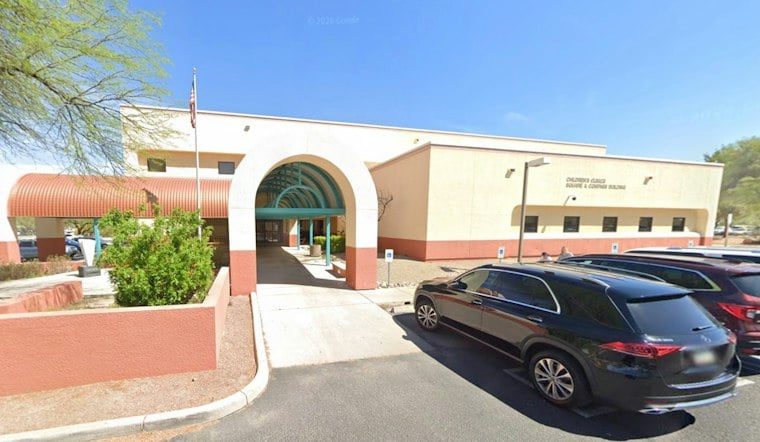
Sometime between 5 p.m. Wednesday and noon Thursday, a bronze statue that has watched over sick kids at a Tucson children's clinic for decades simply disappeared. The figure, known as Mamie, stood in the courtyard of the Square and Compass Children's Clinic on the Tucson Medical Center campus, and its sudden absence has left staff and families searching for answers.
Tucson police currently have no suspects and are waiting on possible security footage from Tucson Medical Center that could show who took the statue, according to kgun9.com. The clinic has also reached out to local scrap yards in case someone tries to sell the piece for its metal, the station reports. As KVOA reported, clinic representatives say the statue was taken from the Square & Compass courtyard and are asking anyone with information about the theft or its whereabouts to come forward.
The statue carries the name of former first lady Mamie Eisenhower, and the clinic's executive director, Amy Burke, said it means far more to the facility than its metal value. “It's a symbol of hope for the clinic,” Burke said, per the same account. Clinic officials hope Mamie can be returned to the courtyard so she can continue comforting patients, as she has for generations of kids who passed through the facility's doors.
A Fountain, Then a Courthouse Patio, Then a Clinic Courtyard
Mamie's history in Tucson stretches back more than 70 years. In the early 1950s, civic patron Ted Walker donated a fountain and the bronze statue, calling it Mamie, for display in the Pima County courthouse patio, according to tucsonsentinel.com. Passersby tossed coins into the fountain for years, and county employees collected that change and donated it to the children's clinic, the outlet notes. That tradition ended by the early 1980s, when too many coins were being stolen and Walker shut the program down, per the same report.
Exactly when Mamie made her way from the courthouse to the clinic courtyard is contested in the historical record. KGUN9 reports the statue was donated by the Pima County Courthouse and moved to the clinic's new building along Wyatt Drive in 1990, while the Tucson Sentinel's account places the move in 1992, after the courthouse patio underwent what it describes as a controversial remodel that prompted Walker to find Mamie a new home at the Square and Compass facility. Either way, the statue had stood watch over the clinic courtyard for decades before it vanished this past week.
A Clinic With Deep Roots in Southern Arizona
The Square and Compass Children's Clinic has served families in the Tucson area since 1947, when it opened as the region's first sanctioned polio rehabilitation center during the height of the national epidemic, according to childrensclinics.org. The clinic settled into a permanent location in 1950 before relocating to its current 50,000-square-foot facility on the Tucson Medical Center campus in 1991, the organization's history page states.
Today the facility, located at 2600 N. Wyatt Drive, partners with Children's Clinics to treat kids with complex medical conditions, offering more than 25 medical and dental specialty clinics alongside primary care, behavioral health, and therapy services under one roof. Children's Clinics says it connects families with more than 70 pediatric specialty and subspecialty physicians, part of what it describes as a comprehensive, multidisciplinary medical home for children with special needs.
For now, the investigation into Mamie's disappearance remains open. Clinic officials are asking anyone with information about the theft or the statue's location to come forward, and residents can also report tips anonymously by calling 88-CRIME. Until then, the courtyard where Mamie once stood sits empty, waiting for a symbol that has offered comfort to Tucson's youngest patients for more than three decades to come home.


