

























































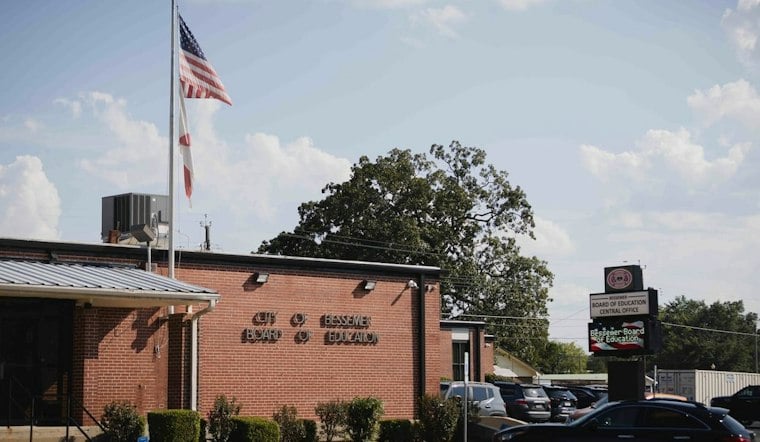
Bessemer City Schools' school board gathered for a meeting on Oct. 20, the first time members convened since the Alabama State Department of Education barred the board from holding its regular sessions earlier this year. The newly seated board, now led by President Lee Jones and Vice President Darryl Aikerson, is meeting again, according to Superintendent Michael Turner — even though the district remains under state intervention.
A Board Reshaped by the Ballot Box
Five of the board's seven seats changed hands in the most recent city election, according to a Bessemer City School System statement, bringing a largely new slate of members into a district still operating under outside oversight. As reported by al.com, former Vice President Jones was elevated to board president, while newcomer Aikerson was elected vice president, and the Oct. 20 session marked the first meeting for the district's newly seated board. The gathering came roughly nine months after the Alabama State Department of Education suspended the Bessemer City Schools Board of Education from regular meetings in January, a move that limited the elected board to an advisory role, with members permitted to meet only when approved by the state superintendent or the district's Chief Administrative Officer, per the same outlet's earlier reporting.
That suspension followed the Alabama State Board of Education's unanimous vote to intervene in the district in August 2024, a decision an intervention resolution from the Alabama State Board of Education says was meant to address deficiencies in board governance, finances, personnel, facilities and student learning. The district's enrollment and staffing figures vary by source — aldailynews.com has reported the system serves about 2,800 students across seven school buildings and employs roughly 425 people, while al.com has put enrollment at about 3,000 students and staffing at just under 240.
Academic Indicators Trending Upward
Even under state control, Bessemer City Schools has worked toward academic improvements, with district officials saying the system demonstrated measurable improvement across all indicators on the state report card. Chronic absenteeism fell from 25.53% in the 2023-24 school year to 21.55% in 2024-25, and district officials project the rate could fall further to 10.23% for 2025-26 once state data are finalized, the school system said per the same al.com report. Dual enrollment also climbed, growing from 63 students in fall 2025 to 98 this year — a 55.6% increase.
Classroom performance edged up as well: reading proficiency rose from 10.4% in fall 2025 to 11.1% in fall 2026, while math proficiency ticked from 5% to 5.2%, the outlet's reporting shows. Those gains build on figures reported by ABC 33/40, which found Bessemer's 2024-2025 state report card score reached 75, up six points from the previous year, with the district's graduation rate improving from 71% to 85%. Second-grade reading proficiency also climbed, moving from 58.5% in 2024-25 to 64.6% in 2025-26, according to the Alabama Reflector.
Accreditation Still Under Review
Despite the academic momentum, Bessemer City Schools' accreditation status remains unresolved. The status changed from “Accredited” to “Accreditation Under Review” because of the state intervention, ABC 33/40 reported, and the district is working toward restoring its accreditation through COGNIA, according to the school system. That accrediting agency outlined six improvement priorities for the district at the time, spanning board training, employee hiring policies, board-role strategies, strategic-plan revisions, progress management and two-way communication with the community.
Bessemer isn't alone in this position. Sumter County Schools also carries an “Accreditation Under Review” designation and remains under state intervention, ABC 33/40 has reported. More broadly, Bessemer City, Dallas County and Sumter County schools were all placed under intervention by the state between 2023 and 2025, per the Alabama Reflector's reporting.
For now, the Bessemer City School System says it aims to strengthen effectiveness, accountability and educational quality as it continues working under state oversight. The board's return to the table marks a procedural milestone, but as the district's own statement makes clear, intervention itself has not ended.





