

























































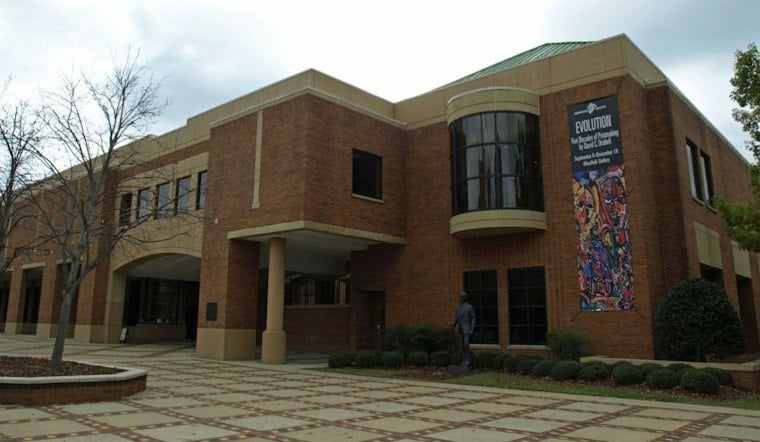
Alabama has more historically Black colleges and universities than any other state in the country, and starting this Friday, the Birmingham Civil Rights Institute is giving all 14 of them a dedicated spotlight. The new exhibit, called “Historically Black,” opens Oct. 23 in the Odessa Woolfolk Gallery and runs through Dec. 12, showcasing memorabilia, archival photos and artifacts that trace nearly 160 years of achievements and traditions across the state's HBCU network.
According to AL.com, the exhibit will illustrate the traditions and impact of each of the 14 schools, alongside an interactive photo rotunda and a gathering space in what the museum calls “The Yard.” The Birmingham Civil Rights Institute describes HBCU-inspired installations, photo moments, the Rotunda, meeting spaces and a courtyard. Alabama's 14 HBCUs include roughly eight four-year institutions—two public and six private—along with five community or technical colleges and Gadsden State, which is also a two-year institution, per Acolyte Living.
A Network Rooted in Reconstruction
Among the schools being honored, Alabama State University traces its founding to 1867 during Reconstruction, and Talladega College is Alabama's oldest private HBCU.
That history isn't just academic. Nationally, HBCUs make up just 3 percent of four-year non-profit colleges but produce 20 percent of all Black college graduates and 25 percent of Black STEM graduates, per the Alabama Office of Civic Engagement. In Alabama specifically, the same UNCF economic impact report found that the state's HBCUs generate $1.4 billion in total annual economic impact and directly or indirectly support 13,434 jobs.
Student Activists Who Shaped Civil Rights History
The exhibit's timing also ties into a deeper civil rights legacy that AL.com's reporting traces directly to the schools themselves. Miles College students organized the Selective Buying Campaign in 1962, boycotting segregated downtown Birmingham department stores and providing what the newspaper describes as a blueprint for the 1963 Birmingham campaign. That 1962 student boycott was organized by student leader Frank Dukes.
Other HBCU students pushed the movement forward in their own cities. Alabama State students demanded desegregation during sit-ins at the Montgomery courthouse, Tuskegee University students teamed up with civil rights leaders to register Black voters, and Alabama A&M students ignited civil rights demonstrations in Huntsville after staging sit-ins at segregated lunch counters, per the same AL.com account.
New Leadership, New Mission
Deborah Bowie, who became president and CEO of the Birmingham Civil Rights Institute in December 2025, framed the exhibit as a reminder that HBCU history is American history. Bowie told AL.com she hopes visitors will understand that Alabama's HBCUs advanced civil rights and that the schools and the institute share a goal of raising the next generation of social justice leaders. She said Alabama's HBCUs were centers of activism, organizing and social transformation that helped change American history, and that HBCU students helped lead change rather than wait for others to do so.
Bowie previously served as chief of staff to former Birmingham Mayor Larry Langford and worked in local news media before serving as interim city manager in Gainesville and, most recently, overseeing a federal grants portfolio at the University of Central Florida, according to the Birmingham Times. Her appointment comes as the institute, which marked its 25th anniversary in 2017 and reaches more than 150,000 individuals annually, continues to expand its reach. The Birmingham Civil Rights Institute is part of the Birmingham Civil Rights National Monument, and in April 2026 the institute opened KultureCity's 1,000th sensory room for visitors with sensory sensitivities and neurodivergent conditions.
An Opening Night Open to Everyone
The institute will host an RSVP-required opening reception for “Historically Black” this Friday, Oct. 23. Attendees can explore the exhibit, snap photos at their alma mater's display, grab food in The Yard and hear live music, per AL.com's reporting. Bowie said the reception isn't limited to students and alumni — fans, family and friends are welcome too.
The exhibit's debut lands squarely in the middle of Birmingham's biggest HBCU season. The Magic City Classic, billed as the nation's largest HBCU rivalry football game and featuring Alabama A&M and Alabama State, has been played at Legion Field since 1945 and generates between $20 million and $26.4 million in total economic impact while drawing more than 60,000 spectators and roughly 200,000 visitors over the week, according to Yellowhammer News.





