

























































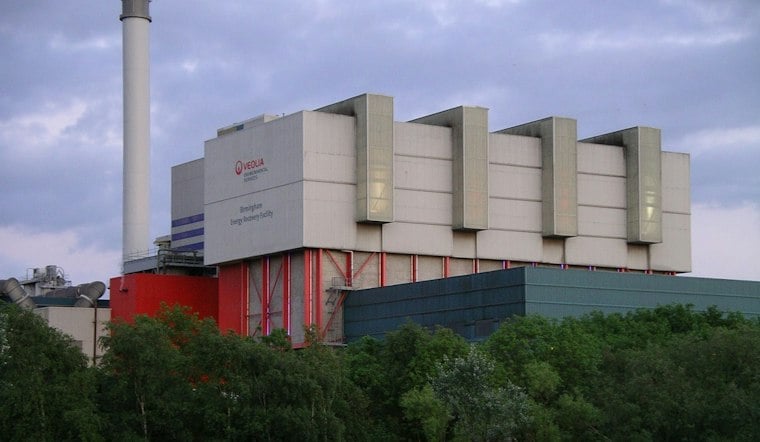
A Birmingham company has acquired a long-running power plant in Middle Georgia that supplies electricity to Georgia Power and steam to a nearby Frito-Lay factory. Harbert Management Corporation announced the purchase of Mid-Georgia Cogen, a dual-fuel, combined-cycle cogeneration facility in Kathleen, Georgia, just south of Warner Robins, with the deal paired to a freshly inked two-decade power contract set to begin in 2028.
Harbert, headquartered in Birmingham, described the facility as a 317 MW plant in its own announcement, as reported by AL.com. Other accounts of the plant's size vary: Utility Dive put the capacity at roughly 323 MW, while a facility database drawing on federal energy data lists three generating units totaling 323 MW of nameplate capacity in one spot and describes it elsewhere as a 308 MW plant, according to interconnection.fyi. The discrepancy underscores how differently the plant's output has been characterized across sources, even as the basic contours of the deal are not in dispute.
Mid-Georgia Cogen first came online in 1998 and has operated under a long-term power purchase agreement with Georgia Power ever since, a relationship Harbert's announcement calls a defining feature of the asset. That arrangement is now being extended: the plant secured a new 20-year power purchase agreement with Georgia Power that kicks in come 2028, according to Harbert's own release.
A Plant That Does Double Duty
Beyond sending electricity to the grid, Mid-Georgia Cogen plays a second role that sets it apart from a typical gas-fired power station. The plant supplies thermal output to an adjacent Frito-Lay manufacturing facility, which uses the steam for food production and heating, per Utility Dive's reporting. That dual-fuel, combined-cycle design is part of what makes cogeneration plants like this one attractive to buyers looking for assets already embedded in an industrial supply chain.
Financial terms of the sale were not released. Utility Dive reported that the company declined to disclose the purchase price or other details of the transaction, leaving the overall value of the deal unknown.
Harbert's Pitch for the Purchase
Claude Estes, head of Harbert Power, framed the acquisition as a natural fit for a firm that has spent decades investing in generation assets. He described the plant as an attractive addition to Harbert's portfolio and an opportunity to apply the company's experience supporting a utility partner's long-term objectives, according to Harbert's announcement. The company says it has invested in power assets for four decades, deploying more than $13 billion in capital across renewable energy, dispatchable generation and distributed generation, and that this deal expands its portfolio of power generation assets further.
It is not Harbert's only recent move into generation assets outside Alabama. The firm separately acquired Papago Storage, a 300-megawatt battery energy storage project in Maricopa County, Arizona, and earlier in 2026 brought the 150-megawatt Justice Battery Energy Storage project online in the same Arizona county, according to IREI.
Why Georgia Power Wants More Capacity
The Mid-Georgia Cogen deal lands as Georgia Power works to line up new generation to meet a surge in projected demand. The utility has filed a request with the Georgia Public Service Commission for an all-source request for proposals covering projected capacity needs in 2032 and 2033, according to a Georgia Power announcement. That proposed process would seek between 2,000 and 6,000 megawatts of new dispatchable capacity, spanning thermal generation, energy storage and battery storage paired with renewables.
Georgia Power has pointed to explosive growth in large commercial and industrial demand as the driver behind the push. The utility says 32 large-load customers have committed to receiving approximately 15,600 MW of electric service, with 21 of those projects already under construction. That follows the Georgia Public Service Commission's earlier approval in December of roughly 9,900 MW of combined-cycle gas turbines and battery storage, including storage paired with solar. Georgia Power has said its broader generation plan would provide annual savings of $102 for the typical residential customer starting in 2029.
A separate federal filing tied to the plant, listed in FERC's eLibrary system, identifies a Form 556 filed under docket QF96-26 for Mid-Georgia Cogen L.P., according to records from the Federal Energy Regulatory Commission's eLibrary.





