

























































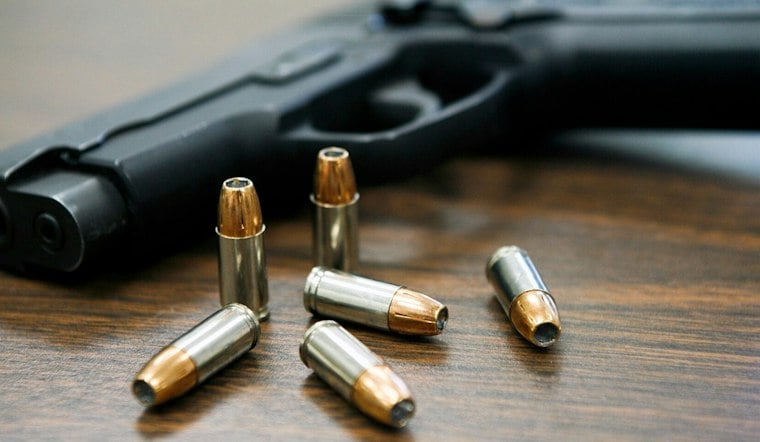
Birmingham police could soon get new technology designed to connect shootings involving the same firearm more quickly, after the city's public safety committee recommended transferring an existing police technology contract from Evidence IQ to LeadsOnline this week. The hope, according to officials, is that faster ballistic leads could help investigators solve cases that might otherwise stall for lack of a connection between crime scenes.
The committee discussed the contract change Tuesday, as reported by WBMA. Birmingham and Evidence IQ executed their original agreement in January 2025, and that deal runs through January 31, 2028. LeadsOnline acquired Evidence IQ, and Lt. Gillian Robertson told the committee the transfer would allow the department to receive new equipment under that same contract window. The recommendation now heads to the full city council for consideration before anything is finalized.
What the New Equipment Would Actually Do
The technology at the center of the proposal is called IBIS ClearCase, which analyzes shell casings using ballistic imaging and is designed to cut analysis time from days or weeks down to hours or minutes, per WBMA's reporting. LeadsOnline describes ClearCase as an automated system that captures high-resolution images and runs ballistic-analysis software to sort cartridge cases and search for possible links within an agency's own caseload. The vendor says the system can process up to 20 cartridge cases in under 20 minutes and can group casings by firearm in under 45 seconds apiece.
ClearCase also identifies caliber, estimates how many firearms were likely involved in a set of casings, and can help select which cases should be submitted to the National Integrated Ballistic Information Network, or NIBIN, the vendor says. Notably, ClearCase images cannot go directly into NIBIN — per LeadsOnline, casings must be re-acquired on a separate IBIS BrassTrax system before formal NIBIN entry. NIBIN itself allows participating federal, state and local agencies to compare ballistic evidence across cases and develop investigative leads, according to the Crime Gun Intelligence Centers program description.
Birmingham's Existing ATF Partnership
This potential equipment transfer follows Birmingham's broader move into ballistic-matching technology. The city council approved a separate agreement with the ATF in July 2025 that gives Birmingham access to NIBIN for up to three years at no cost to the city, as AL.com reported at the time. Under that agreement, a NIBIN Enforcement Support System was to be established and installed for the Birmingham Police Department to support efforts around reducing firearm violence, identifying shooters and referring cases for prosecution. The ATF has said NIBIN automates ballistics evaluations and provides investigative leads in a timely manner.
What the Committee Didn't Say
For all the promise, Tuesday's committee meeting left plenty unanswered. It did not establish the cost of the proposed equipment, nor did the discussion include the equipment's price at all, according to WBMA. The meeting also didn't clarify whether the city would pay anything beyond the existing contract terms, and it did not establish when the equipment would actually become operational. The Birmingham Police Department has not said when ClearCase would be in use, has not identified a local investigation where ballistic evidence linked separate shootings, and has not said what measures it plans to track to assess the system's impact. By publication time, the department had not responded to a request for an interview, a demonstration, cost details or information about how the technology was evaluated, per WBMA's reporting.
How Ballistic Matches Work — and Their Limits
A potential ballistic match can help investigators connect crime scenes, but it does not identify who actually fired the gun. Dr. Kristin Elink-Schuurman-Laura told WBMA that a ballistic link between crimes indicates the same firearm was used, not who was holding it at the time — meaning investigators still need other evidence, such as video, eyewitness accounts, DNA or fingerprints, to identify a specific person. She also said computer-generated results should be treated as possible matches requiring expert review, not conclusions on their own.
Elink-Schuurman-Laura added that research on NIBIN suggests timely ballistic leads can help investigations, and she found that a timely NIBIN hit increases the likelihood of an arrest. Still, she noted that research on the broader question is limited, and those findings do not establish how ClearCase specifically will perform in Birmingham. She said investigators themselves are best positioned to explain whether these leads prove useful in practice. A 2025 internal developmental study cited on LeadsOnline's website reported 99% caliber accuracy and 85% accuracy in identifying the exact firearm cluster — figures that are vendor-reported and do not establish whether the system actually helps solve shootings.
Mixed Results Elsewhere
Other departments that have adopted similar systems describe tangible speed gains. The Volusia Sheriff's Office in Florida adopted IBIS ClearCase and said the machine generates a report on the gun used within minutes — a sharp contrast to the up-to-a-year wait investigators previously faced for shell-casing information from the Florida Department of Law Enforcement, according to WESH. The system there has also flagged when a shell casing recovered in one case matched evidence from a separate county's case. Virginia Beach, meanwhile, became the first department in Virginia to install an IBIS ClearCase machine, and a forensic supervisor there told WAVY that faster ballistic intelligence helps detectives start running down leads sooner than the old method of examining each shell under a microscope.
Not every account of NIBIN's track record is so upbeat. A separate, lower-confidence federal research snippet obtained from the Office of Justice Programs stated that criminal investigators in a sampled study rarely used NIBIN hit reports to identify unknown suspects in violent cases, and that hits seldom assisted in arrests. That finding sits in tension with Elink-Schuurman-Laura's research, underscoring how much hinges on local follow-through: the ATF itself has said NIBIN's effectiveness depends on timely evidence entry, intelligence referrals and immediate investigative follow-up, not the technology alone.
For Birmingham, the ultimate payoff — whether faster leads actually translate into more identified suspects, more arrests or fewer repeat shootings — depends on what investigators can establish after the fact. Clearcase leads may give detectives a lead sooner, but that lead is only the starting point of an investigation, not its conclusion. The proposal now awaits a vote from the full city council.





