

























































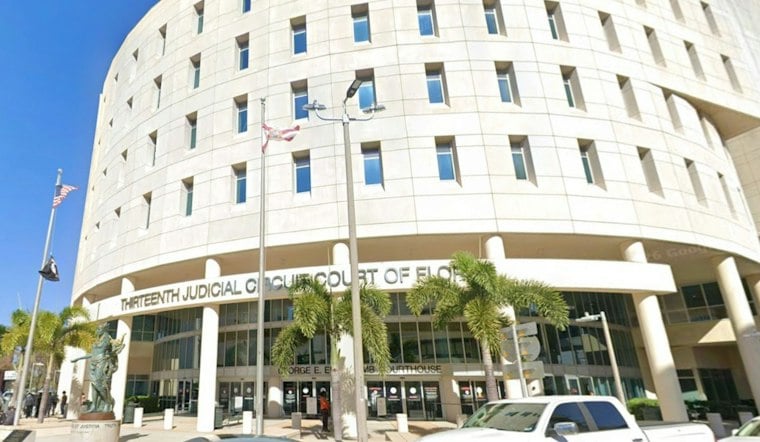
A Hillsborough County judge has denied a defense motion to dismiss the murder case against 74-year-old Robert Kessler, who appeared in court in a wheelchair and argued that his blindness makes it impossible for him to meaningfully participate in his own defense. The ruling clears the way for Kessler's long-delayed trial in the 2021 killing and dismemberment of 47-year-old Stephanie Crone-Overholts, whose remains were discovered in Tampa's McKay Bay, to move forward as scheduled.
Kessler's attorney told the court that her client can see shapes but cannot make out faces, people, or objects, and that most of the evidence shown during motion hearings was not meaningfully accessible to him, according to 10 Tampa Bay. She argued that his inability to see evidence or identify witnesses violates his constitutional rights, and specifically that he could not properly confront a witness who identified him in court. She clarified, however, that she was not arguing every criminal case involving a blind defendant should be dismissed.
Prosecutors pushed back in a written response filed October 5, arguing that the Sixth Amendment's confrontation clause does not require defendants to physically see witnesses, since the Constitution guarantees the right to challenge testimony through cross-examination under oath and allows jurors to observe a witness's demeanor themselves. The same filing noted that Kessler's attorney remains free to question witnesses on his behalf. Prosecutors also said the exact degree of Kessler's blindness remains unknown, adding that he underwent cataract surgery and then refused prescribed postoperative medication, which they said caused complications with his vision. Kessler's defense has maintained that his medical records document the blindness.
Judge Calls Argument Rare but Not Grounds for Dismissal
The judge described the blindness argument as a fascinating discussion, noting that few similar cases exist nationwide, per the same report. The court is now seeking a qualified reader to describe visual evidence and courtroom proceedings to Kessler as the case moves toward trial. The judge also noted that Kessler's case is the oldest pending case in Hillsborough County and repeatedly asked Thursday whether prosecutors and the defense could resolve it without a jury trial, raising the possibility of a plea deal. Both sides said a plea deal was not happening.
This is not the first evidentiary fight Kessler's defense has waged. In September, Circuit Court Judge Christopher Sabella denied a separate motion to suppress evidence, ruling that items collected from Kessler's Lutz home during the 2021 search warrant execution were legally obtained and admissible at trial, according to WTSP. The defense had contended investigators exceeded the geographical and physical scope permitted by the original warrant.
Nearly Five Years Since the Discovery in McKay Bay
Kessler faces charges of first-degree murder and abuse of a dead body in the death of Crone-Overholts, whose dismembered remains were first discovered near the 22nd Street Causeway Bridge in McKay Bay. A fisherman found a severed human leg bearing a distinctive tattoo reading “Sean, Zach, and Greg” — the names of her sons — which allowed police to identify her after releasing public photos, according to the City of Tampa.
Tampa Police have said Crone-Overholts had recently moved to Florida from Erie, Pennsylvania, and was living in her car when she met Kessler at a local McDonald's, after which he offered to let her stay at his Lutz home, per FOX 13 Tampa Bay. Investigators first took Kessler, then 69, into custody on November 23, 2021, on unrelated drug charges while executing a search warrant at his home, before formal murder charges followed, as reported by CBS News. During a search of Kessler's home and minivan days earlier, on November 19, 2021, forensic investigators recovered blood matching Crone-Overholts.
Court documents filed by Hillsborough County prosecutors in November 2021 indicated that multiple witnesses saw Kessler throwing bags and storage bins off a bridge into McKay Bay before his arrest, according to the Hillsborough County State Attorney's Office. Erie Police in Pennsylvania confirmed that Crone-Overholts' mother filed a missing persons report on November 11, 2021 — the same day her leg was discovered in Tampa — after receiving a final text message from her daughter saying she needed help.
Years of Competency Proceedings Delayed Trial
The case has faced multiple long-term delays since 2022, largely driven by repeated court-ordered psychological evaluations addressing Kessler's mental competency to stand trial, according to WFLA. Under Florida Rules of Criminal Procedure 3.211 and Chapter 916 of the Florida Statutes, legal competency focuses strictly on a defendant's mental capacity to consult with counsel and understand court proceedings, meaning physical impairments like blindness do not automatically establish legal incompetence, per the Florida Legislature.
Kessler is scheduled to return to court on October 20, with jury selection set to begin October 26. His trial is expected to last approximately two weeks.




