

























































Residents report failed calls and poor data, sometimes despite full bars. For more than a month, residents across Longmont and Niwot have been dealing with dead zones, with complaints dating to early September, and now Colorado’s congressional delegation is demanding that federal regulators and wireless carriers stop pointing fingers and fix it.
U.S. Rep. Joe Neguse, along with Sens. Michael Bennet and John Hickenlooper, sent a letter on October 13 urging the Federal Communications Commission and the National Telecommunications and Information Administration to meet with carriers and restore service in Boulder County, according to 9News. The outlet’s Steve on Your Side team had already been investigating phone problems reported by more than 100 people in the two towns before the letter went out.
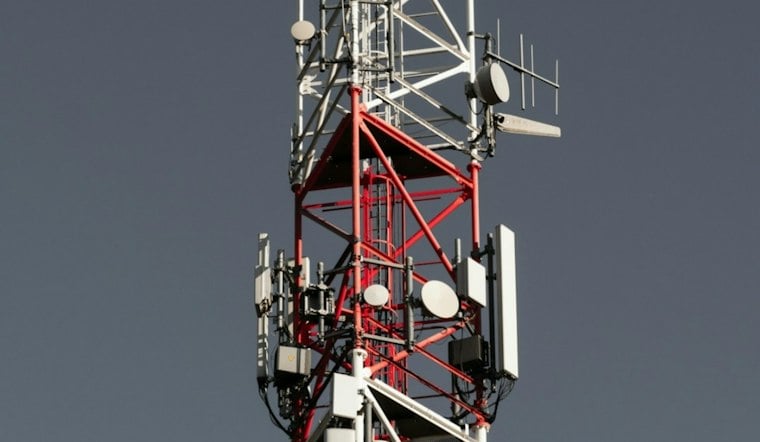
The culprit, per that investigation, is not a broken tower or a storm-damaged line. AT&T, Verizon and T-Mobile altered their signals to comply with federal law near a research site north of Boulder, and those adjustments are what triggered the coverage problems now frustrating residents. The timeline lines up with a broader federal compliance push: federal officials discovered carriers exceeding quiet zone signal limits in 2024, and compliance efforts that began in January 2025 culminated in actual power reductions across Boulder County in September 2026, according to Inside Towers.
A Legal Quiet Zone Near Boulder
The Table Mountain Radio Quiet Zone protects research at the site, including work by the National Oceanic and Atmospheric Administration and the U.S. Geological Survey, per 9News. Federal guidance recommends coordinating with the Commerce Department for transmitters within 80 kilometers (50 miles) of the site; federal regulations limit signals received at the site, with tiered consultation distances, according to the Federal Register.
The field site spans roughly 1,800 acres. Guidance recommends coordinating with the Commerce Department about fixed radio transmitters within 80 kilometers, with closer stations subject to tighter review depending on power and antenna direction.
Full Bars, No Connection
In their letter, the lawmakers wrote that the signal adjustments appeared to significantly downgrade coverage for Boulder County consumers, with Longmont and Niwot constituents reporting they could not make calls or use data despite devices showing full coverage, per 9News. Longmont City Council member Jake Marsing and other council members were the ones who first alerted Neguse’s office to the problem, prompting the congressman to say the situation warranted a response.
“We decided to take decisive action and call on federal regulators, agencies and carriers to resolve the public safety issue,” Neguse said, according to 9News. The delegation addressed its letter to both the FCC and NTIA, asking the agencies to meet with carriers as soon as possible and to update congressional offices and local governments on the outcome.
Wildfire Fears Loom Over the Outage
The stakes go beyond dropped calls. Boulder County is prone to rapidly escalating wildfires, and the 2021 Marshall Fire killed two people and burned more than 1,000 structures. Neguse said people typically learn about emergencies from friends, loved ones, social media, calls or text messages, and that some Marshall Fire residents only received evacuation alerts through phone calls or texts from people they knew, according to the letter cited by 9News. That history is why Neguse said he views reliable cell service as a public safety imperative, not just a consumer annoyance.
The Boulder County Office of Disaster Management has sought to clarify one critical distinction amid the panic: outgoing 911 calls from cellphones will still route through any available cellular tower regardless of a caller’s carrier, but incoming Wireless Emergency Alerts and standard text notifications may fail to reach phones sitting in dead zones, according to CBS News. The outage has also hit city hall directly. CBS News reports that city-issued cellular phones have become unusable for Longmont local government officials across large portions of the city.
Local Officials Offer to Speed Up Permits
Longmont City Council member Jake Marsing has asked carriers to specify what they need, with fast-track permitting a possibility, according to CBS Colorado. Carriers still had not provided a definitive timeline for completing network upgrades as of this month, the station reported. Colorado’s congressional delegation has discussed potential legislative options internally.
Under FCC procedures, formal consumer complaints forwarded to carriers require a written response within 30 days, though standard commercial mobile licenses enforce regional coverage benchmarks rather than address-specific service guarantees, according to Wireless Estimator. That framework explains why residents filing complaints have not seen immediate fixes, even as pressure mounts on all three carriers.
What Happens Next
The letter from Neguse, Bennet and Hickenlooper sets no deadline for the agencies to act, and Neguse has called it the first volley rather than a final demand, per 9News. His office has begun receiving a response at the staff level, and Colorado’s congressional delegation has discussed potential legislative options internally. Neguse said he hopes the issue will be resolved in the coming weeks.
Neguse told 9News he has been in contact with one of the agencies since sending the letter, and that the NTIA is committing to meet with the cellphone carriers. Some carriers have indicated there should be significant progress by the end of November, he said. “The time for assigning blame had passed,” Neguse said, adding that the NTIA and the carriers must provide quick and prompt solutions that resolve the issue for local residents. He urged residents to keep contacting his office and local leaders, and to continue filing justified complaints with the FCC.





