

























































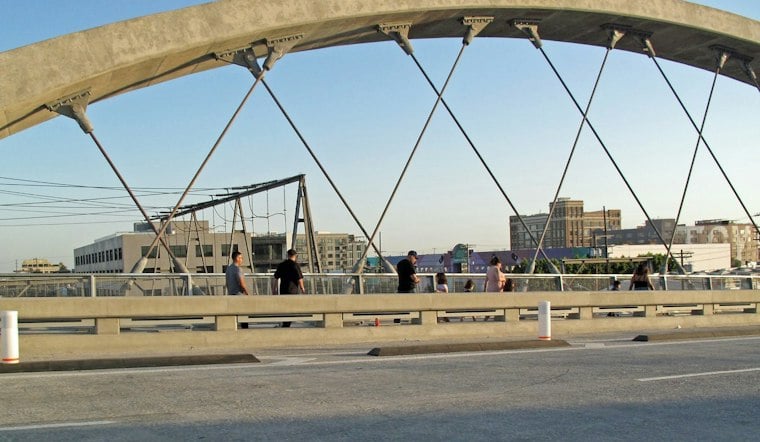
Neighbors on both sides of the Los Angeles River are pressing city officials to carve out a no-camping zone around the future Sixth Street PARC, the 12-acre park taking shape beneath the Sixth Street Viaduct that is expected to open in 2027. The Boyle Heights Neighborhood Council voted 13-1 to back the effort, joining residents in the Arts District who have been circulating a petition and lobbying city hall to designate the sidewalks and perimeter around the park as off-limits to encampments before the project opens to the public.
Neighborhood Councils Join Forces Across the River
The push unites groups on opposite banks of the river who don't always agree on much else. According to The LA Local, the Boyle Heights Neighborhood Council has joined the Arts District Little Tokyo Neighborhood Council and the Downtown Los Angeles Residents Association in urging Councilmember Ysabel Jurado, Mayor Karen Bass and city staff to designate the zone and coordinate park security. Arts District residents, meanwhile, spearheaded a petition urging the city to establish the anti-camping zone on sidewalks and around the future park site, as first reported by The LA Local and later by LAist.
Tom Trafelet, who created the petition and has lived in the Arts District for more than 20 years, said he wants equity on both sides of the bridge and residents working together for a safe family space. Jurado told the outlet her office is confirming the boundaries of any zone as they relate to the park, but she framed enforcement as only part of the picture. “Anti-camping zones are just one piece of a much larger conversation about keeping this park safe and responding to homelessness,” she said, according to the same report. She added that she is open to a serious and transparent conversation about the use and results of Section 41.18, the city code that bars people from sitting, lying or sleeping in designated public spaces.
A Decades-In-The-Making Park Nears Its Finish Line
The Sixth Street PARC — short for Park, Arts, River & Connectivity — stretches from the Arts District into Boyle Heights beneath the 2022-opened viaduct, which connects the two neighborhoods across the Los Angeles River. Plans call for an arts plaza with a performance amphitheater, garden and terrace seating, plus a café, dog park, fitness equipment and sports courts. Boyle Heights is set to get the park's largest recreational section, including a soccer field and a water splash area, the kind of amenity residents say they fought hard to secure on their side of the river.
Shmuel Gonzales, a Boyle Heights Neighborhood Council board member, local historian and community organizer, voted for the anti-camping zone designation and said he wants the park to benefit the community that pushed for its construction. He said enforcement would mean the city taking responsibility, but cautioned that proper signage should explain the anti-camping zones and ensure a fair process that helps people transition into housing rather than simply pushing them elsewhere.
Fears of Another MacArthur Park
Margarita Amador, a Boyle Heights resident and the neighborhood council's secretary, supported the council's decision to join the Arts District and downtown groups. She said she wants the park protected, safe and usable for the community, warning that without a plan in place, the space could end up resembling MacArthur Park — and that a formal zone would at least make the rules enforceable.
Under the Los Angeles Municipal Code, Section 41.18 restrictions can extend up to 500 feet from a designated location, but the area must first be designated by City Council resolution and posted with signage, and enforcement cannot begin until at least 14 days after signs go up, according to the Los Angeles Municipal Code. Violations are generally handled as infractions or through the city's administrative citation program.
A Contentious Tool With a Mixed Track Record
The push for a Sixth Street PARC zone follows a precedent nearby: the City Council previously endorsed a 41.18 zone for the Sixth Street Bridge itself, an effort that Kevin de León had initiated. But the tool remains politically contentious elsewhere in the city. In August, the Los Angeles City Council voted 10-3 to rescind a dozen anti-camping zones in Hollywood at Councilmember Hugo Soto-Martínez's request, with his office arguing that enforcement under the ordinance interferes with efforts to move unhoused residents into housing, according to NBC Los Angeles.
A city analysis cited in that report found that people who were present before enforcement returned to 81% of encampments flagged for removal under 41.18. A separate city report found that enforcing the code citywide cost at least $3 million, not counting LAPD expenses, and a prior Los Angeles Homeless Services Authority review concluded the law was “generally ineffective” in housing people, per LA Public Press. More recently, the City Council's public safety committee held a motion to expand 41.18 citywide for further study, after a community impact statement argued enforcement should be paired with outreach and a genuine offer of shelter or housing.
Who Will Actually Watch the Park
Once the Sixth Street PARC opens and holds its grand opening, LAPD is expected to provide live monitoring of security cameras at the site, according to FOX 11 Los Angeles. Day-to-day maintenance will fall to the city's Department of Recreation and Parks, while graffiti removal will be handled by the Office of Community Beautification together with Recreation and Parks, the station reported.
For now, the exact footprint of any anti-camping zone around the park remains unsettled, with Jurado's office still working out where the boundaries would fall. What's clear is that residents on both sides of the river, from longtime Arts District advocates to Boyle Heights neighborhood leaders who watched the park get built, want a plan in place well before the gates open.





