

























































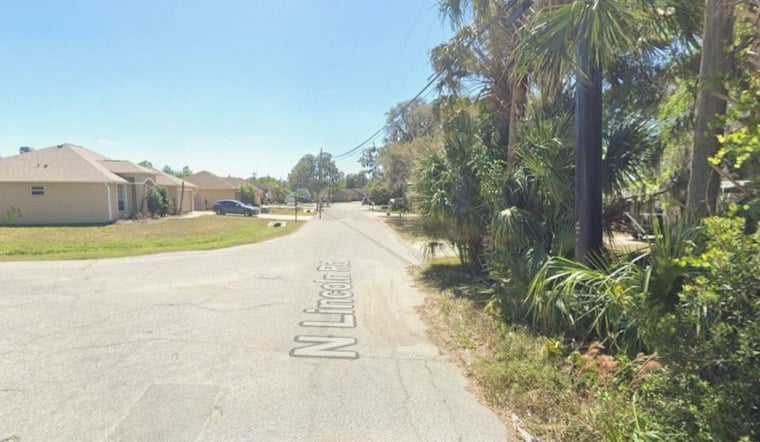
An 88-year-old Bradenton man with memory loss had been missing since Friday afternoon, after he drove away from his home on the 6500 block of Lincoln Road around 1:50 p.m. in a white 2018 Chevrolet Equinox bearing Florida license plate IL53BA. Nearly three hours later, a license plate reader camera in the 400 block of 9th Avenue West captured an image of his vehicle just before 5 p.m., giving deputies a confirmed trace of his whereabouts after he left home.
Manatee County Sheriff's Office deputies searched for Gino Battisti, who suffers from memory loss and may be disoriented, according to a missing endangered adult alert from the Manatee County Sheriff's Office on Facebook. He has since returned home safely.
The license plate hit that placed Battisti's Equinox on 9th Avenue West came from one node in a much larger network. As of August 2026, the Manatee County Sheriff's Office operated 134 automated license plate readers countywide, including 79 Flock Safety cameras, technology that has contributed to 191 arrests or recoveries between 2024 and 2026, according to Your Observer.
How Deputies Access the Camera Network
That surveillance system doesn't run unchecked. Under internal sheriff's office policies reported in August, deputies must log a case number and a specific search rationale before querying the license plate reader database, and the system undergoes biweekly audits while automatically purging collected vehicle images after 30 days, the same report notes. Those guardrails sit alongside public-safety uses of the tool and privacy concerns, even as it becomes a go-to resource in cases like Battisti's.
Operational guidelines for a State Silver Alert generally call for law enforcement to confirm the missing person is at least 60 years old, is suffering irreversible cognitive decline, and is traveling in an identified vehicle. When a Silver Alert is formally requested, the Florida Department of Transportation posts the vehicle and missing person's details on highway message signs, but only for a maximum of six hours, per the Florida Department of Law Enforcement.
Why Dementia-Related Wandering Turns Dangerous Fast
The stakes in cases like this escalate quickly. The Alzheimer's Association reports that roughly 60 percent of people living with dementia will wander away from caregivers at least once, and public health data shows up to half of those still missing after 24 hours suffer serious injury or death. Research adds another complication for searchers: a study in the Journal of the American Geriatrics Society examining 156 Florida Silver Alert cases found that 60 percent of missing drivers with dementia were ultimately located outside the county where they vanished, while only 15 percent were still behind the wheel when found.
For families seeking a preventive safeguard, Manatee County participates in Project Lifesaver, a voluntary program in which people with cognitive disorders wear radio-frequency wristbands that help responders achieve a national average recovery time under 30 minutes.
Hoodline previously reported on a similar search last month, when Bradenton police located a 78-year-old man with dementia who had also vanished while driving. As of October 2022, state agencies had issued more than 3,000 alerts, leading to 286 safe recoveries of missing older adults.
Battisti has returned home safely after deputies searched for him; a camera had captured his vehicle on 9th Avenue West.





