

























































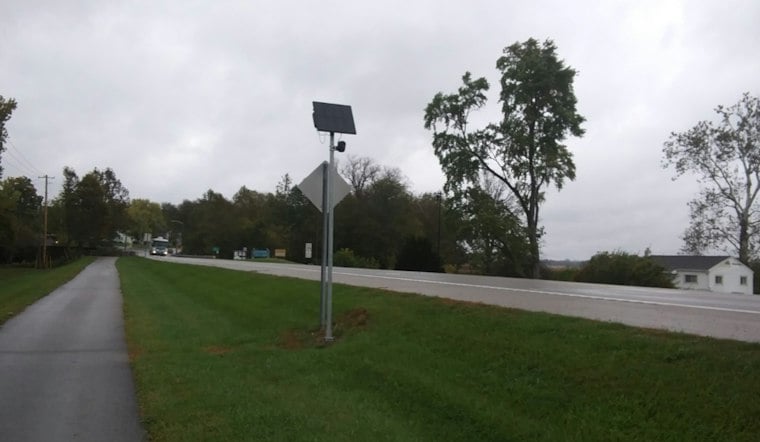
Brooklyn City Council is expected to approve a change to the city ordinance governing its license plate-reading cameras, adding a public accountability and transparency platform that would let residents see exactly how the technology gets used. The city currently operates 17 Flock cameras, and under the proposal, anyone would be able to check how often those cameras were tapped and for what purpose.
The legislation, introduced by Mayor Ron Van Kirk, would place the new disclosure platform directly on the city's website, according to cleveland.com. Van Kirk has said Brooklyn has used Flock cameras as a crime-fighting tool for nearly a decade, and he framed the update as a way to clear up confusion about what the system actually does. The cameras capture vehicle colors, vehicle types and license plates — they do not record video or take pictures of people's faces, per the outlet's reporting.
How Brooklyn Police Use the System
Brooklyn police officers are each given individual access to the Flock system, which lets them pull up photos and vehicle information gathered by other communities that use the same network, the report states. Police Chief Cindy Eschweiler has said her department supports the proposed legislation, calling Flock technology an investigative tool for law enforcement and Brooklyn officers alike.
City officials point to concrete results: Flock technology has helped recover stolen vehicles, identify suspects in misdemeanor and felony offenses, and locate missing and endangered people, according to the same cleveland.com account. In one case cited by officials, Brooklyn police used the cameras to identify a hit-and-skip suspect, and Eschweiler said that identification would not have been possible without the technology.
Van Kirk has stressed that the cameras are not a revenue tool. “No one is going to be issued any citations, no one is going to be issued any tickets,” he said, per the outlet's report. He has also acknowledged that residents may misunderstand how the system is actually used, and he has argued that Flock helps police solve crimes that would otherwise be difficult to crack — adding that people worried about government tracking already carry cell phones that track their own movements.
What Ohio Law Does and Doesn't Require
The push for local transparency comes against a backdrop of limited statewide rules. Ohio law specifically excludes images and data captured by automated license plate recognition systems and held in law-enforcement databases from the definition of a public record, cleveland.com has reported separately. That means decisions about retention, auditing and access are largely left to individual cities. Cleveland's own police policy generally limits data stored on its server to 30 days unless an exception applies, and the department requires every query to be logged and the system audited at least annually, the outlet noted.
Scrutiny Spreads Across Ohio and Beyond
Brooklyn's move follows a wave of similar steps elsewhere in the state. Columbus police launched an online Flock transparency portal detailing data retention, camera activity, the number of searches and sharing practices, according to NBC4 Columbus. In Cincinnati, City Council unanimously approved a motion directing the city manager to publicly lay out the city's surveillance systems, including deployment locations, retention periods and access rules, Axios reported.
The scrutiny has been sharper in Dayton, which suspended its Flock Safety camera program after officials found more than 7,000 outside searches tied to immigration enforcement, according to Fortune. Beyond Ohio, Lansing's City Council voted in August to ask its police department to terminate its Flock contract entirely, per WLNS, while nearly 200 Flock cameras remain deployed across Suffolk County, New York, by the county police department, sheriff's office and ten towns and villages, CBS News reported.
Flock's Response to National Pressure
The company behind the technology has faced broader backlash over data privacy. Flock Safety announced safeguards requiring law enforcement to label every search with a criminal case number, with automatic review and lockouts triggered by abnormal search activity, according to ABC News. The company has described its retention defaults differently across its own statements — ABC News reported Flock cited a seven-day retention default, while Fortune separately quoted the company saying customer data is deleted after 30 days by default and that its platform includes audit trails.
Watchdogs remain unconvinced those measures go far enough. The Institute for Justice has said it identified more than 100 incidents of automated license-plate-reader abuse nationwide, including stalking, wrongful stops and detentions, and non-law-enforcement use, per ABC News. Flock has said its network of 120,000 cameras across the country can be shared by police departments with agencies in other states, and the Center for Democracy & Technology has argued the company's safeguards don't adequately address risks like pervasive tracking and flawed AI-based vehicle stops, calling instead for a warrant requirement.





