

























































A Brooklyn property owner who lost his insurance claim after an August 2019 house fire has now lost his legal fight against the broker he blamed for the gap in coverage. The Appellate Division, Second Department ruled on October 7 that Edward A. Kurmel Brokerage, Ltd., a Greenpoint-based independent agency, had no duty to update Lincoln Fritz's policy after his living situation changed, affirming a lower court's dismissal of his negligence and breach-of-contract claims.
A Fire, a Denied Claim, and a Lawsuit
The case traces back to a fire that caused significant damage to a home Fritz owned in Brooklyn in August 2019, according to court records. When Fritz filed a claim, insurer Mountain Valley Indemnity Company discovered he no longer lived at the property at the time of the loss, and in a September 27, 2023 ruling, the Second Department sided with the insurer, holding that the policy's owner-occupancy clause barred coverage because Fritz did not reside on the premises during the relevant policy period, per FindLaw. With his primary insurance claim dead, Fritz turned his sights on his broker.
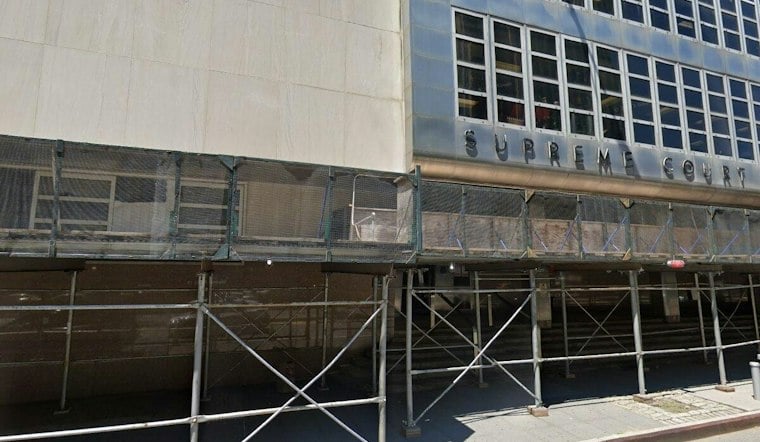
Lincoln Fritz and co-plaintiff Kenneth Fritz had filed suit against Edward A. Kurmel Brokerage, Ltd. and another defendant in Supreme Court, Kings County in May 2020, according to Program Business. Lincoln Fritz alleged the brokerage was negligent and breached its contract, arguing the broker failed to ensure adequate insurance coverage as his circumstances changed. The brokerage, in turn, sought summary judgment dismissing his claims.
Court Sides With the Broker
Kings County Supreme Court Justice Caroline Piela Cohen granted that motion on October 31, 2024, finding that the brokerage had procured the exact coverage Fritz originally requested and had received no subsequent requests to update it, according to Justia. The brokerage backed up that position with deposition testimony from its president and other evidence showing Fritz never requested specific coverage that it failed to obtain, the same report notes. Fritz appealed, but the four-justice appellate panel — Lara J. Genovesi, William G. Ford, Helen Voutsinas, and Donna-Marie E. Golia — was not persuaded.
The appellate justices found no special relationship between Fritz and the brokerage that would have created an additional duty of care, and ruled that Fritz failed to raise a triable issue of fact challenging the brokerage's evidence. The panel affirmed the dismissal of both the negligence and breach-of-contract claims, awarding one bill of costs to the brokerage. Furman Kornfeld & Brennan LLP represented the brokerage, while Aboulafia Law Firm, LLC represented Fritz, per the same court filing.
Kenneth Fritz's Appeal Also Tossed
The court separately dismissed Kenneth Fritz's portion of the appeal, ruling that the Supreme Court order under review addressed only Lincoln Fritz's claims, leaving Kenneth legally unaggrieved under New York Civil Practice Law and Rules Section 5511. In plain terms, he had no standing to challenge an order that never applied to him in the first place.
Why New York Brokers Rarely Lose These Cases
The ruling leans on a legal standard that has governed insurance brokers in New York for nearly three decades. Under the 1997 Court of Appeals decision in Murphy v. Kuhn, brokers have no common-law duty to advise or update clients on coverage changes, meaning they are not treated as personal financial counselors or risk managers, according to Anderson Kill. New York law generally imposes no continuing obligation on brokers to recommend additional insurance, though brokers are still required to obtain requested coverage within a reasonable time or notify clients when they cannot secure it.
A narrow set of exceptions can still expand that duty. The 2014 Court of Appeals decision in Voss v. Netherlands Insurance Co. recognized three circumstances creating a “special relationship”: when a broker receives extra consulting compensation, answers a specific coverage inquiry the client relies on, or maintains an extended course of dealing that signals reliance, as explained by the National Law Review. None of those exceptions applied in the Fritz case.
Legal analysts have also noted that New York's approach stands apart from neighboring states. New York common law treats brokers primarily as “order takers” with a limited duty to procure requested policies, a framework that contrasts sharply with New Jersey, where brokers face higher fiduciary standards, the National Law Review reported. Legal commentators at Hurwitz Fine P.C. added in October 2026 that professional liability suits against New York brokers for failing to secure unrequested coverage are rarely successful without written evidence of a specific policy request.
Edward A. Kurmel Brokerage, Ltd. operates out of 180 Driggs Avenue in Greenpoint, according to Plymouth Rock Assurance. For Brooklyn homeowners and landlords, the case serves as a reminder that under New York law, the burden falls on policyholders themselves to flag any changes to their living or property arrangements to their broker — not the other way around.





