

























































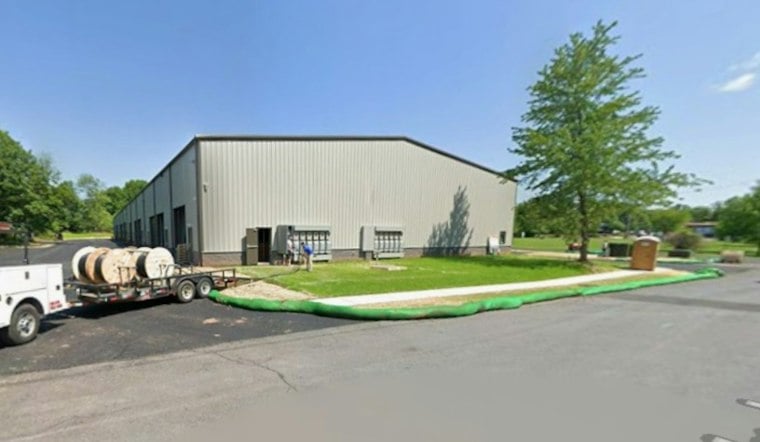
Inside a 16,000-square-foot plant off U.S. 202 in New Britain, Bucks County, a company called AIRCO is turning carbon dioxide, water and electricity into crude liquid that gets refined into diesel and jet fuel — and the U.S. military wants to be able to do it anywhere in the world. The facility currently produces about 90 gallons of crude liquid per month, which AIRCO finishes into roughly 40 gallons of diesel, according to seed facts in the original WHYY report. Company founder Greg Constantine says the goal is a mobile version of that process that troops could deploy to remote bases, ships or disaster zones.
The New Britain site, unveiled at a ribbon-cutting this year, quadruples AIRCO's prior factory capacity and is meant to house all of the company's production going forward, according to The Philadelphia Inquirer. AIRCO was founded in Brooklyn and moved its operations to Bucks County over the past year, per the seed reporting from WHYY. The company plans to scale production at the New Britain plant.
From a Shipping Container to a Battlefield Fuel Depot
The core of AIRCO's pitch is a containerized system the company calls MAD, for Mobile, Adaptable and Dynamic, which AIRCO has said it will deliver to the U.S. Air Force for the first time in 2027, according to Forbes. The same outlet reports the MAD system electrolyzes water to produce hydrogen, then reacts that hydrogen with captured carbon dioxide to build hydrocarbon fuels ranging from gasoline and kerosene to diesel and aviation fuel. A single unit can reportedly switch between fuel types, such as diesel and aviation gas, depending on what a site needs.```` AIRCO expects its first containerized unit to produce hundreds of gallons per month, eventually scaling toward tens of thousands of gallons monthly per unit, per the same Forbes report.
According to the WHYY account, AIRCO's longer-term vision is to pack an entire factory into four or five shipping containers that can be installed virtually anywhere, producing about 1,000 finished gallons monthly once a commercial unit goes live on site. The company has developed a compact system using a solid sorbent to pull carbon dioxide from the air, and it says it can also capture carbon dioxide directly from cement plants and other industrial emitters. AIRCO has said the mobile system is power-agnostic, able to run on electricity from the grid, solar, wind, geothermal sources or even an aircraft carrier's nuclear reactor.
Funding, Testing and a Murky Price Tag
Federal money has backed much of this push. AIRCO says its work involves roughly $70 million in Department of War collaborations, including a recent $15 million award, according to the company's own announcement on aircompany.com. The MAD project itself is funded by AFWERX, the innovation arm of the Department of the Air Force housed within the Air Force Research Laboratory, per Forbes. Separately, AIRCO has described a $67 million Defense Innovation Unit contract through Project SynCE, though Defense News previously reported that same DIU award as worth up to $65 million — the two figures remain unreconciled in the available record.
Per the WHYY reporting, AIRCO says it has secured about $80 million in U.S. government contracts and funding overall, plus roughly $110 million from airlines, Toyota Ventures and other investors, and that the Air Force, Navy and Army have tested its fuels, according to Constantine. The Defense Innovation Unit has separately said that small-scale, highly mobile, rapidly deployable synthetic fuel systems could decouple fuel supply from a constrained logistics environment, according to a statement on diu.mil. Forbes has also noted that experience in Ukraine, along with the spread of surveillance and attack drones, suggests future battlefield fuel resupply will grow even more difficult, underscoring why the Pentagon is interested in fuel made on-site rather than trucked or flown in.
Why the Military Wants Fuel It Doesn't Have to Defend
Constantine has argued the mobile system could make fuel cheaper for the military in practice, not by beating the price of refined fuel outright, but by eliminating the need to build and defend a complex logistics chain to get it to the front lines. Forbes has reported total costs reaching $400 a gallon when diesel is flown to forward bases by helicopter. Constantine's case for savings centers on avoiding the logistics chain, rather than undercutting refinery fuel prices.
AIRCO's ambitions extend beyond the Pentagon. The company says it hopes to eventually expand mobile-unit production for airlines as well as the military, and AIRCO's own materials list JetBlue and Virgin Atlantic as commercial partners. Airlines are among the markets AIRCO hopes to serve. AIRCO is also working with NASA on a program to produce kerosene-based rocket fuel from carbon dioxide, and the system could also serve remote islands.
Skepticism Over the Climate Math
Constantine has claimed AIRCO's fuel production process is carbon negative and that the resulting fuel burns carbon neutral. Sarah Gleeson has pushed back on that framing, expressing skepticism about the capacity and efficiency of direct-air carbon capture packed into a mobile device, and noting that direct-air capture is generally energy-intensive — large-scale projects, she said, can consume enough power to end up carbon-positive rather than carbon-negative. Gleeson has also said the overall greenhouse-gas impact of AIRCO's mobile units will likely depend heavily on the electricity source powering capture, electrolysis and fuel production.
A Luxembourg Visit and a Local Political Backdrop
U.S. Rep. Brian Fitzpatrick helped cut the ribbon at the new facility and praised AIRCO and Constantine for helping shape American innovation. Fitzpatrick is currently facing a challenge from Democrat Bob Harvie in Pennsylvania's 1st Congressional District, and a recent poll put Harvie slightly ahead in that race, the WHYY report noted.
The plant adds to Bucks County's manufacturing sector. AIRCO uses a patented metal catalyst to drive the chemical reaction that generates its crude liquid, combining purchased carbon dioxide with hydrogen produced on site through electrolysis of water. The company says its systems are designed to eventually run with increasing autonomy and minimal on-site staffing, a vision that fits its broader pitch of decentralizing fuel production so it can happen wherever it's needed most, whether that's a military forward base, a remote island or, eventually, an airport tarmac.





