

























































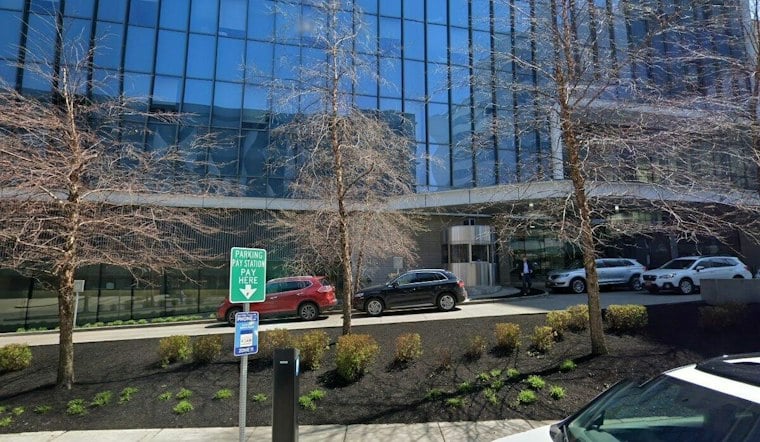
More than 200 people filled UB's Clinical and Translational Research Center Friday for the first health equity conference jointly organized by the University at Buffalo and the University of Rochester, a daylong gathering built to confront health disparities across Buffalo neighborhoods. Attendees heard a keynote from Dr. Leonard Egede on health disparities, while some participants were bused in from Rochester to join sessions on rural health, mobile health, and maternal health.
The event, titled “Bridging the Gaps: Advancing Health Equity in Western New York,” capped roughly a year of planning between teams at both institutions, according to Spectrum News. Egede, who serves as the Charles and Mary Bauer Endowed Chair of Medicine at UB and CEO of UBMD Internal Medicine, delivered the keynote address, according to Fingerlakes1.com. Organizers have already set a path forward: the University of Rochester Medical Center will host the second regional conference in Rochester in 2027, with the two cities expected to keep alternating as hosts.
A Year in the Making, With Rural Buffalo in the Mix
Dr. Heather Gardiner, professor and Carl V. Granger Endowed Chair in Health Equity in UB's Department of Family Medicine, helped lead the effort alongside her Rochester counterparts. Gardiner was appointed to the role in summer 2025, returning to her three-time alma mater after leading Temple University's Health Disparities Research Lab, per the university's own account. The endowed chair she now holds honors Dr. Carl V. Granger, a pioneering African American rehabilitation physician.
At the conference, Gardiner pointed to a less obvious dimension of the region's health troubles: large swaths of the Buffalo area are rural and already struggle with healthcare access, a problem the conference's rural-health track was designed to address, per the station's report. She also warned that healthcare coverage changes are expected next year and that cuts affecting people on Medicare and Medicaid are likely, warning that the reductions could exacerbate problems already exposed during COVID-19. Conference organizers said they hope the gathering helps prevent health inequities from growing as those changes take hold.
Rochester's Counterpart Brings Her Own Mandate
Dr. Edith Williams, director of the Center for Community Health and Prevention and the Office of Health Equity Research at University of Rochester Medicine, told the same outlet that collaboration can build better and more responsive programs, interventions, and policy. Williams became the first Black woman to lead the center in January 2024, after previously serving as the founding director of the university's Office of Health Equity Research, according to WXXI News. The center she now runs was originally founded in 2006 by Dr. Nancy Bennett.
The conference emphasized community-engaged approaches and cross-sector partnerships rather than top-down research, with sessions built around rural health, mobile health, and maternal health. The maternal health focus arrives against a backdrop of troubling regional numbers: maternal mortality rates in Erie County (35.7 per 100,000 births) and Monroe County (29.7 per 100,000) significantly exceed the New York State average of 18.5 per 100,000, according to Physicians for Reproductive Health, which notes Black families in New York face pregnancy-related death at up to five times the rate of white counterparts. Separate data from Common Ground Health shows Black women in the nine-county Finger Lakes region are 51% more likely than white women to suffer severe maternal morbidity, including life-threatening complications like severe hemorrhage and sepsis.
The Numbers Behind the Urgency
The conference addressed health disparities affecting Buffalo neighborhoods. Rochester faces its own version of the problem: residents in low-income ZIP codes like 14611 and 14608 face life expectancies up to 10 years shorter than those in suburban Monroe County towns such as Pittsford. A recent Trillium Health clinic opened on Jefferson Avenue, as Hoodline previously reported.
Part of the conference's purpose was practical: connecting researchers and community organizations with funding to address health disparities. A P-50 Center for Excellence grant provides pilot funding to early-career investigators. East Side awards totaled more than $600,000. Gardiner said she hopes attendees and conference presenters will apply for P-50 pilot funding in the next round, as the institute seeks to turn Friday's conversations into new research projects in the new year.
With Rochester now set to host the follow-up conference in 2027, organizers framed Friday's event as the start of a standing network rather than a one-off symposium. For Gardiner and Williams, the test now is whether a single day of shared research and funding pitches can translate into lasting changes for neighborhoods on both sides of the state that have waited decades for the gap to close.





