

























































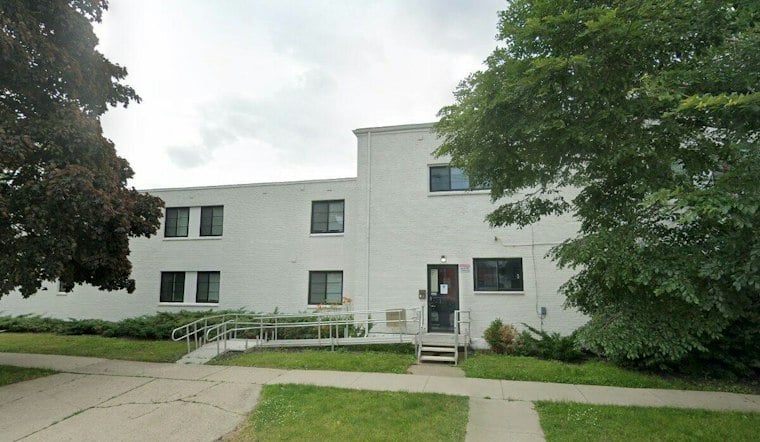
A lithium-ion battery system big enough to power an entire apartment building for several days is now humming inside Peace Bridge Place, a Buffalo affordable housing complex, in what developers are calling one of the largest indoor battery installations in any occupied U.S. residential building. The 3.75 megawatt-hour system, built by East Buffalo manufacturer Viridi, stores excess electricity when it's cheap and plentiful, then feeds the building during periods when the grid is strained and power gets expensive.
A Milestone Years in the Making
The project, first detailed by the Associated Press via Spectrum News, pairs Viridi with developer Good Carbon Co., which chose Peace Bridge Place in part because the all-electric building already relies on geothermal heating and cooling instead of natural gas and needed a resilient power source to match. Peace Bridge Place qualifies as affordable housing, serving renters earning no more than 80% of the area median income, according to Good Carbon Co., and the company has said energy storage will be an important part of future multifamily projects. National Grid supported the installation, and per the same AP account, the utility will pay the building both for not drawing power from the grid during peak periods and for sending power back if needed, which lowers the complex's overall electricity costs. Tenants can also lean on the battery during outages.
Large batteries for apartment buildings have remained rare largely because of cost and fire-risk concerns, the AP reports. Viridi CEO Jon M. Williams told the outlet that safety issues have held back installations at scale because products on the market over the past decade have caused fires. Addressing that history took time and money: Viridi spent six years and $10 million developing a fireproof battery container, with testing alone eating up half that development cost, according to the AP's reporting.
How the Fireproofing Works
Viridi's system isolates each battery cell using plates, pouches and spacing designed so that if one cell fails, the energy dissipates rather than spreading to its neighbors, the wire service reports. Williams said no gas, smoke, heat or fire escapes the container when a cell fails. In one test cited by the AP, a battery was forced to fail while cheesecloth covered the container, and per the test report, the cloth didn't char or ignite. That safety profile earned the company's RPSLinkIN 480V system an official UL 9540 Listing from TÜV Rheinland in April, a certification confirming the unit meets a widely recognized safety standard, according to Viridi Parente. The listing followed rigorous thermal runaway testing in which no fire or toxic gas escaped.
Jigar Shah, who the AP reports called the Peace Bridge Place system a milestone in overcoming safety concerns, said Viridi is the only company to consistently pass what he described as a near-impossible test. Shah also told the AP he expects far more U.S. homes to use batteries for backup power by 2030, and that strategic battery deployment can help the country meet rising electricity demand while avoiding costly grid upgrades. Separately, the Electric Power Research Institute has found that battery failure rates have decreased as more batteries get installed, per the AP's reporting.
State Funding and a Statewide Storage Target
The installation is supported through the New York State Energy Research and Development Authority's Future Grid Challenge and functions as a National Grid pilot project testing how flexible indoor battery storage can manage distribution network loads, according to Solar Power World. NYSERDA helped fund the project and focuses on including disadvantaged communities in the clean energy transition, the AP reports. NYSERDA President and CEO Doreen Harris said the project demonstrates the safety and viability of these systems, and separately said New York needs more options like battery storage to maintain grid reliability and manage costs, adding that using the existing grid more effectively instead of building new generation is valuable. Gov. Kathy Hochul has made a reliable grid and cost management a priority, according to the AP.
The project also fits within New York's statewide storage goal: in June 2024, the New York Public Service Commission expanded the state's clean energy storage goal to 6,000 megawatts installed by 2030, according to NYSERDA, split between 3,000 MW of large-scale storage, 1,500 MW of commercial and community-scale storage and 200 MW of residential-scale solar.
Buffalo's Track Record With Indoor Batteries
This isn't Viridi's first attempt at putting large batteries where people live and work. In 2021, the Hauptman-Woodward Medical Research Institute decided to implement a 600 kWh/120 kW Viridi battery system, according to Viridi Parente. That system let the institute run high-powered cryo-electron microscopes without overloading the local electric grid. Viridi has manufactured in Buffalo since 2018 and also operates a facility in Richmond, California, the AP reports; a California state grant assisted renovations at the Richmond plant.
Elsewhere in Western New York, Erie County deployed a 150 kWh Viridi RPSLink system at a Hamburg wastewater pumping station in February, replacing an aging diesel generator with up to 90 hours of clean backup power, according to Solar Power World. County officials said the battery is expected to lower maintenance costs and avoid fuel dependency. On Feb. 20, 2025, SolarBank Corporation partnered with Viridi to build a combined 3.06 MW solar and 1.2 MWh battery system on a remediated closed landfill in Buffalo, repurposing unproductive municipal land to generate clean community power, per Viridi Parente.
Betting Big on Batteries
Viridi's Buffalo plant could build enough packs annually to supply roughly 14,000 average U.S. homes with 24 hours of energy, according to the AP's reporting. The company has also been expanding well beyond Western New York: in June, energy-as-a-service firm Budderfly partnered with Viridi to deploy commercial battery storage across 100 facilities nationwide, including restaurants, retailers and manufacturing plants, according to Facilities Dive, which reported that combining on-site storage with solar and efficiency upgrades can cut commercial energy costs by 60% to 70%.
The scale of the Buffalo project is still small next to the national battery boom. David Hochschild, who co-founded the Electric Innovation Initiative aimed at pushing electricity use over fossil fuels across the broader U.S. economy, told the AP that the battery industry is just getting started and called it the most important energy industry for the next several decades. He noted that California is adding roughly 2,000 battery storage systems a week and that more than two-thirds of the state's electricity now comes from clean energy, while the world's largest battery storage system is under construction in Fresno County. Large batteries are typically paired with solar and wind projects or, as in New York's case, with hydropower; the state is one of the nation's top hydropower producers, with Niagara Falls generating most of that output, and batteries there can store excess hydropower just as homeowners elsewhere use smaller units to bank rooftop solar and provide backup power.




