

























































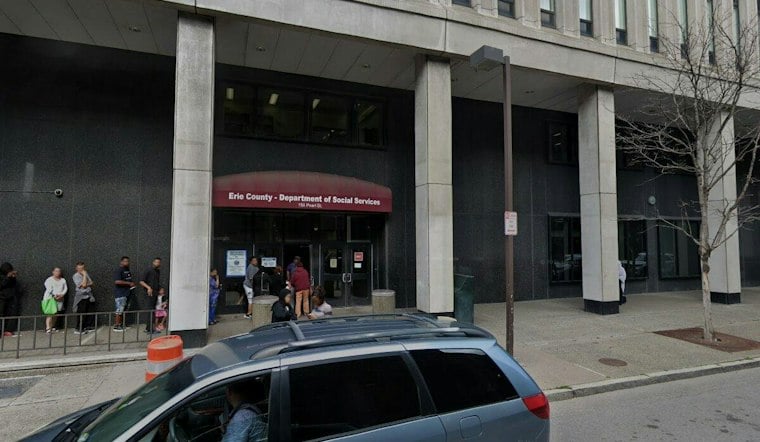
Union health care workers and local leaders gathered at 1199 SEIU offices in Buffalo Tuesday to sound the alarm over federal Medicaid changes they say could strip coverage from thousands of Western New Yorkers starting in January. The new guidelines will require many Medicaid recipients to work at least 80 hours a month beginning in January, according to the report, and advocates fear the paperwork burden alone could push vulnerable patients out of the system.
Denise Abbott, a Western New York area labor federation representative who works in an emergency room, called the looming change devastating. As reported by WKBW, Abbott warned the new requirements would overwhelm emergency rooms and said wait times could stretch from hours into days. Congressman Tim Kennedy joined union health care leaders and members at the Buffalo gathering to deliver a similar message, calling for lawmakers to keep their hands off Medicaid.
What the Federal Rule Actually Requires
The requirement traces back to the 2025 federal budget reconciliation law, which conditions Medicaid eligibility for adults in the Affordable Care Act expansion group on completing 80 hours of work or qualifying activities per month, or meeting an exemption, starting January 1, 2027, according to KFF. The Congressional Research Service traces the mandate to P.L. 119-21, enacted July 4, 2025, which set the January 2027 start date, or sooner if a state opts in early, per the Congressional Research Service and Congress.gov. New York is among five Medicaid expansion states with 1115 waiver programs covering people subject to the new rules, alongside Hawaii, Massachusetts, Oregon and Utah, KFF's tracker notes.
States must verify work or exemption status both when enrollees apply and when they renew, with checks required at least every six months, per the same KFF analysis. New York's official health marketplace, the New York State of Health, confirms that starting January 1, 2027, some adults ages 19 to 64 may need to show they are working, in school, in job training or volunteering. Exemptions apply to parents or caregivers of children under 14, pregnant people, and those with physical or mental health conditions that make working difficult, the Daily Gazette reports. The outlet also notes that New York Medicaid recipients will have to renew their benefits twice a year instead of annually once the change takes effect.
Erie County's Numbers and a Direct Rebuttal
Erie County Deputy Executive Lisa Chimera pushed back hard on the premise driving the new rules, per the report. Chimera said guardrails already exist to address potential Medicaid fraud and that she has seen no evidence of fraud among local recipients. She argued the new requirements would be harmful, adding that the rules create more bureaucracy and make accessing medical care more difficult. The article also cites a figure showing that 92 percent of Medicaid enrollees already work or attend school.
Kennedy went further, saying congressional Republicans created the bureaucratic requirements specifically to remove people from health insurance while funding tax breaks for wealthy Americans, according to the report. He urged voters to elect more Democrats to the House and said protecting health care would be a top priority if Democrats regained the majority. Congress has until the end of the year to cancel the Medicaid cuts, Kennedy said. Republican Congressman Nick Langworthy has supported the change, saying in 2025 that it aims to root out waste, fraud and abuse, and that Democrats oppose accountability and want permanent government dependency.
Other States Offer a Preview
Arkansas and Georgia are the only states to have already implemented Medicaid work requirements, and their experiences are drawing scrutiny as New York prepares its own rollout. More than 18,000 people in Arkansas lost Medicaid coverage during the roughly 10 months its work requirement was in place in 2018 and 2019, according to NBC News. Research on that program found it did not produce a higher employment rate, the outlet reported.
Georgia launched its Pathways to Coverage program in 2023 as the nation's only Medicaid program conditioning coverage on work, but uptake has been limited. As of June 2025, about 8,077 Georgians were actively enrolled, representing no more than 7 percent of uninsured, low-income adults from working households in the state, according to Emory University's Rollins School of Public Health. A study comparing Georgia with neighboring states found no measurable increase in employment during the program's first 15 months, Emory reported. In New Hampshire, where Granite Advantage enrollees — roughly 46,900 people — must document 80 hours a month of work, volunteering or school beginning in 2027, a mental health services director told New Hampshire Public Radio that patients' stress and distress had already increased ahead of the deadline. A New Futures healthcare access director added that work requirements do not necessarily measure if someone is working — they measure a person's ability to navigate administrative hurdles.
The Stakes for Local Hospitals
The Commonwealth Fund has found that low-wage jobs with variable hours, transportation limitations, caregiving duties and chronic health problems can make it difficult for beneficiaries to consistently log 80 hours a month. The organization also cites a 2023 analysis showing 71 percent of working-age adult Medicaid beneficiaries were already working or in school, while 12 percent were caregivers and 10 percent could not work because of illness or disability.
The Congressional Budget Office estimates the work requirements will cut federal Medicaid spending by $326 billion over ten years, per KFF's analysis. In New York, roughly 2 million of the more than 6 million enrollees statewide will be subject to the new rules, the Daily Gazette reports, and nearly 180,000 people who previously had Essential Plan coverage under expanded income limits had already lost that coverage without enrolling in a new plan as of August 1. The outlet also notes hospitals in the Capital Region are anticipating millions of dollars in uncompensated care in 2027 as a result. Medicaid recipients seeking guidance on the coming changes are directed to the New York State of Health webpage for assistance.





