

























































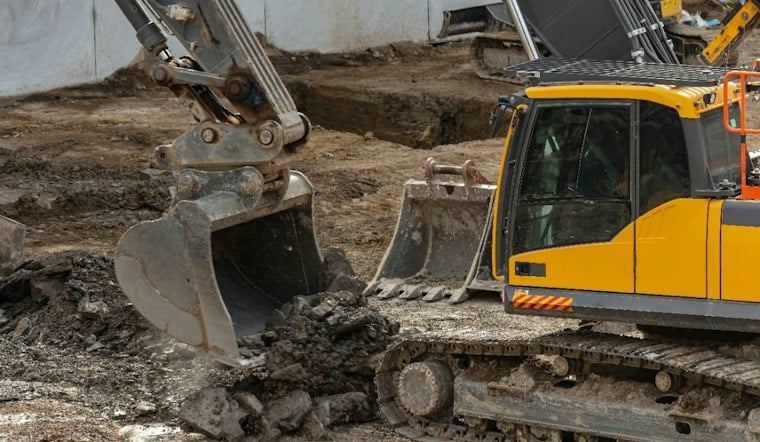
Project leaders on covered Houston projects could soon have to prove where the debris ended up. Houston City Council is expected to take up the Keep Houston Clean ordinance in November, a proposal aimed at the construction and demolition waste that too often winds up dumped in neighborhoods instead of landfills.
Council Member Alejandra Salinas introduced the ordinance to combat illegal construction-waste dumping, Community Impact Newspaper reports. The measure sets two requirements for covered projects, one before construction and one after. Salinas said people building in Houston should prove their waste was legally disposed of.
Paperwork Before the Permit, Receipts Before the Sign-Off
Before receiving a permit, project leaders would have to submit a waste-management plan spelling out how and where debris will be lawfully disposed of. When the work wraps up, they would have to hand over proof of lawful disposal, such as landfill receipts or weight tickets. Without it, no certificate of occupancy or final inspection approval.
The ordinance would apply to commercial and demolition projects of all sizes, per the same report. It would also cover building permits for projects with more than 1,400 square feet of new, added or remodeled floor area. How those two thresholds fit together is not spelled out in the available reporting.
The city, for its part, would offer a few tools to help builders comply. Those include a public directory of licensed disposal facilities and waste haulers, a standardized waste-management form and an educational checklist.
Thousands of Complaints, Heavily Concentrated
Salinas' office says Houston residents filed more than 18,000 illegal-dumping complaints through 311 over the past two years. According to her office, 92% of those complaints came from ZIP codes where Black or Latino residents make up the majority. Council members Tarsha Jackson, Mario Castillo and Edward Pollard, whose districts are among those most affected, co-signed the ordinance.
Separate data from ABC13 Houston points the same direction. Of 8,053 illegal-dumping complaints logged from Jan. 1 through Dec. 10, the station reported that 7,392 were in minority ZIP codes. It also found that 29% of cases were still open, and 95% of those open cases were in predominantly minority neighborhoods.
The pace of cleanup has slowed, too. ABC13 said cases took 9 to 12 days to resolve back in 2022, compared with roughly 45 to 46 days in the current-year data.
Residents have noticed. A 2023 survey from the Kinder Institute for Urban Research found roughly one-quarter of residents identified illegal dumping as an environmental issue in their neighborhood. In February, KPRC 2 reported 804 reports of trash dumping or illegal dump sites in just the preceding four weeks.
Money and Policy Already in Motion
The ordinance is not Salinas' first move on the problem this year. In late May, she and Jackson proposed amending the fiscal year 2026-27 budget to include $3 million for cleanup, prevention and enforcement at chronic dump sites, according to an earlier Community Impact Newspaper report. That figure lines up with a city Solid Waste Study that pegged the revenue requirement for addressing illegal dumping at about $2.9 million.
Salinas' City of Houston council page says she supports requiring developers to have solid-waste management plans and proof of lawful disposal, with escalating penalties for repeat offenders, including fines. The full ordinance text and any penalty schedule were not available for this report, so how enforcement would work remains to be seen once the measure reaches the council table.





