

























































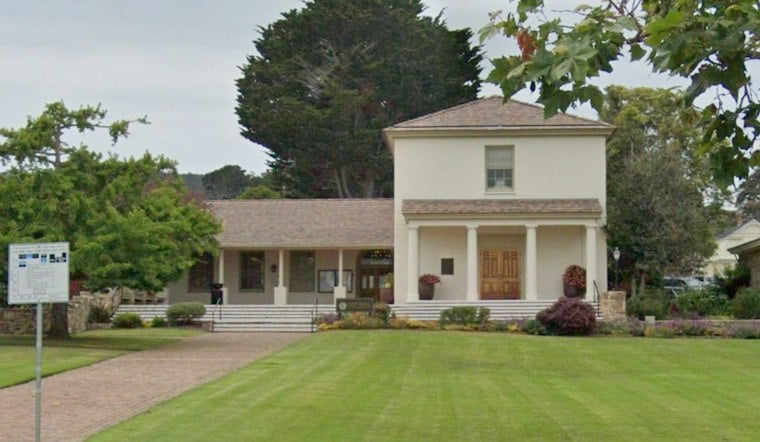
California has landed the dubious distinction of third-loudest state in the country, according to a new transportation noise analysis, with the Monterey area clocking a reading of 70.27 decibels. Los Angeles and Orange counties weren't far behind at 67.27 decibels, and noise near some of the state's busiest airports can spike into the 90s.
The ranking comes from Alpine Hearing Protection, which built its state-by-state breakdown using the U.S. Department of Transportation's National Transportation Noise Map, a dataset that tracks sound levels generated by roads, railways and airports nationwide, as reported by the New York Post. Only Texas and Nevada scored louder. Texas took the top spot with an 80.65-decibel high reading, a result researchers tied to car-dependent infrastructure, freeway expansion in Houston and Dallas, ongoing construction, and Austin's live-music scene, according to Time Out. Nevada landed second, driven largely by the Las Vegas Valley's 60.79-decibel reading, per the Post's account of the study.
Where California's Loudest Pockets Sit
Central San Diego neighborhoods and South Bay cities also register elevated noise because they sit close to major California airports, the Post's reporting notes, and the state's airport corridors in general can push sound levels into the 90-decibel range. That's well beyond what federal health guidance treats as safe for sustained exposure. The U.S. Environmental Protection Agency has long held that a 24-hour average above 70 decibels puts long-term hearing at risk, while anything above 55 decibels outdoors — or 45 indoors — can disrupt daily life, annoy residents, or interrupt sleep, according to the agency's own guidelines.
The noise study recorded readings of 70.27 decibels in Monterey and 67.27 decibels in the Los Angeles-Orange County corridor. Separately, EPA guidance identifies a 24-hour average above 70 decibels as associated with long-term hearing risk, while levels above 55 decibels outdoors can cause disturbance. Other states further down the list offer a stark contrast: Illinois ranked fourth loudest, Florida fifth, Arizona sixth, New York seventh, North Dakota eighth, North Carolina ninth and Oregon tenth, per the Post's breakdown of the full rankings.
The Quiet End of the Scale
On the opposite end, Connecticut posted the lowest maximum reading in the country at 54.85 decibels, a result researchers attributed to low-density residential planning and strict municipal zoning laws, according to WTIC-TV. Vermont wasn't far behind at 55 decibels. Florida, meanwhile, ranked fifth loudest overall with a peak of 68.26 decibels, a figure shaped by Orlando's theme-park traffic (63.09 dB) and nightlife and marine traffic around Miami and Fort Lauderdale (62.61 dB), as detailed by Secret Miami.
A noise-measurement project has focused on a Seattle neighborhood. Separately, hearing researchers have found that roughly 24 percent of U.S. adults ages 20 to 69, or up to 40 million people, already show measurable signs of noise-induced hearing loss in at least one ear, according to the National Institute on Deafness and Other Communication Disorders.
California's Rules on the Books
California has laws and regulations addressing noise. Caltrans has a Traffic Noise Analysis Protocol for state highway projects.
Noise concerns have also spilled into the courts: in San Diego's East Village, residents sued the Padres over outdoor concert noise at Gallagher Square, alleging amplified sound inside their homes routinely hit 80 to 105 decibels — far above the city's own limits of 65 decibels by day and 55 at night, as Hoodline previously reported on the trial.
Despite the noise rankings, California still shows up in other quality-of-life surveys as relatively livable. A 2024 LawnStarter survey found the state home to some of the least-stressed cities in the country, with Sunnyvale ranking second nationally, Santa Clara third, and Milpitas fourth. Whether that calm holds up against a growing body of noise data may depend on where exactly in the state someone lives — and how close that address sits to a freeway, flight path, or ballpark.
As public concern over environmental and workplace noise grows, the market for hearing protection has followed suit: the North American earplug market reached $584.17 million in 2025 and is projected to grow to $929.02 million by 2034, according to Grand View Research, reflecting both expanding workplace safety rules and rising consumer demand for ways to tune out the noise.




